
Swine plague, government deploys 177 soldiers in the field in the war on wild boars
In the decree-law on agricultural emergencies expected to be debated on Monday in the Cdm more powers to the Commissioner to fight the epidemic that is endangering Italian farms

3' min read
3' min read
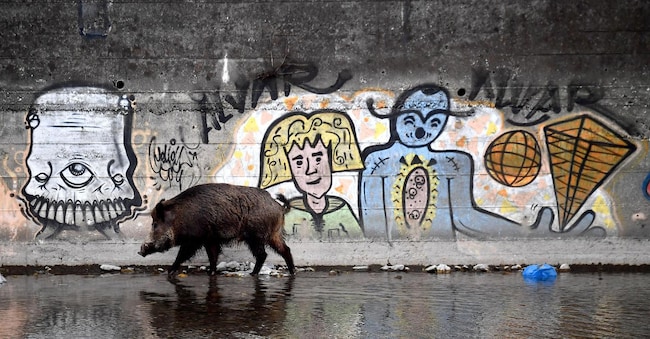
The government declares war on wild boars. The wild mammal is now considered one of the main vehicles of African Swine Fever (Psa), the spread of which has become a major emergency for Italian livestock farms. To combat the spread of Psa and prevent possible dangers to public health, the government is deploying a contingent of 177 soldiers in the field. For twelve months, the soldiers will be called upon to implement the measures adopted by the Extraordinary Commissioner precisely to contain the spread of swine fever. The intervention of the Armed Forces is envisaged by one of the emergency regulations that the executive intends to dismiss with the agriculture decree-law on the agenda of the Council of Ministers on Monday 6 May. According to trade associations, the extraordinary measure is to limit the risk of export restrictions due to the spread of swine fever, with a potential damage of 2.32 billion euros, at least according to Coldiretti's analysis of Istat data on foreign trade in 2023.
To the military the task of bio-regulation
.The contingent will consist of 177 units and will have 'bio-regulation' tasks, which in simplified terms will mean 'wild boar hunting'. For this bio-regulation activity, the military, the draft rule states, will be able to use 'the weaponry with which' they are equipped. Use of weapons against the swine plague that with the new rule is in fact authorised 'because of the danger to the health of farm animals', and to provide an immediate and effective response to 'cope with extraordinary means and powers' a targeted and coordinated action between several administrations. An activity that in any case will be time-limited: the deployment of the anti-PSA contingent will be for 12 months, renewable for one time only.
Public safety activities
.The 177 military personnel will also have public security tasks. The incoming decree-law provides, in fact, that Armed Forces personnel, not belonging to the Carabinieri, will be assigned all the functions of public security officers and will be able to identify persons to prevent or prevent conduct that may endanger the safety of persons or the security of the places where the activity takes place. They will not, however, have judicial police functions, and for the purposes of identification, completing investigations and carrying out all consequent acts, the soldiers will have to accompany the identified persons to the nearest offices or commands of the State Police or Carabinieri Corps.
Pay the Extraordinary Commissioner
.Expenses for military personnel as well as operating expenses will be borne by the Special Commissioner for the implementation and coordination of measures to contain and combat the spread of African swine fever. The personnel employed in the context of the activities to combat ASF may be paid compensation for overtime services beyond the maximum limits already provided for by law. Not only the costs will be borne by the Special Commissioner. The military personnel will to all intents and purposes be seconded to the commissioner's unit and therefore all prevention and safety obligations of the personnel will be borne by the Commissioner.
Resources
.The incoming decree provides additional resources for the deployment of the army, which will feed the Capital Fund for structural and functional biosecurity interventions. Specifically, the incoming decree provides for an allocation of 5 million for 2024 and 15 million for 2025. For the 20 million, the minister will draw from the reserve and special funds of the reserve funds mission of the Mef by reducing the provision of the Ministry of Agriculture.

