The refugee issue

Syria, millions of refugees dream of returning: how many and where they live

Around three million in Turkey, many now hope to repatriate. Meanwhile, Germany and Austria suspend asylum applications

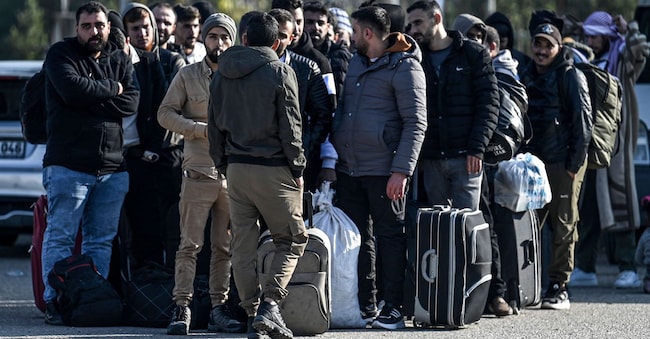
Rifugiati siriani in coda al valicio di Cilvegozu per rientrare in Siria

3' min read

3' min read

Hopes but also many uncertainties for the millions of Syrian refugees who fled the regime of Bashar al Assad and the civil war that has bloodied the country for the past 15 years. The fall of the dictator fuels the dream of being able to return home after years of forced exile but the situation is still very uncertain and fragile and the European Union itself advises Syrians against returning home immediately.

The UNHCR, the UN refugee agency, estimates the number of internally displaced persons at around 12 million, of which 6.8 million are within the country and 5.2 million have fled to neighbouring countries in what remains one of the most serious humanitarian crises of recent decades.

Loading...

In Turkey 3 million Syrians

Turkey is home to as many as 3 million Syrian refugees. Anyone who has visited Istanbul and other Turkish cities in recent years has seen for themselves the extremely precarious situation in which they live, camped by the side of the road and reduced to begging in tourist spots together with their children.

Another 770 thousand are in Lebanon, 620 thousand in Jordan, 300 thousand in Iraq and 150 thousand in Egypt. Among the European countries, Germany is the one with the largest number of Syrian citizens, taken in during the height of the civil war due to a much-discussed decision by the then Chancellor Angela Merkel: around one million Syrians currently live in Germany.

The sudden fall of Assad still makes speculation about what will happen on the migration front premature. The rebels in power have invited refugees to return to 'free Syria'. And already since yesterday - according to local media reports - thousands of Syrians, many of whom have been refugees in neighbouring Lebanon for more than 10 years, have been heading for the border crossings with Syria. The authorities in Beirut are now facilitating the mass exodus of camp residents long regarded in Lebanon as an unsustainable burden on the economy. However, the rebel advance has created great uncertainty and risks for the NGOs working in the country. The UNHCR has reduced its staff, reporting that the hostilities have caused the displacement of more than 370,000 people.

First refugees queuing up from Turkey to Syria

Hundreds of Syrian refugees, who fled to Turkey after the start of the conflict in their country, lined up at the Cilvegozu border crossing on the Turkish-Syrian border to try to return to Syria after the fall of Bashar Al Assad. Refugees who have completed the procedures to return to the country are allowed to pass, Turkish media report, without providing figures on how many people have managed to cross the border so far. "I came to Turkey from Syria in 2014. Our life was over. God willing, our future will be good. Syria is getting back on its feet but we won't start from scratch,' said one of them, Hamid Mahmud, as reported by Hurriyet, according to which migrants have been lining up since the early hours of the morning at the crossing point located in the Reyhanli district of Hatay province, about thirty kilometres west of Aleppo.

According to the Turkish media, as early as yesterday, immediately after the news of Assad's fall, many Syrians had been heading towards the border areas to return to their home country, not only through the Cilvegozu crossing but also through the Oncupinar crossing, which is located some forty kilometres north of Aleppo, in the province of Kilis.

For the European Union, repatriations are not safe at the moment

.

The European Union, however, is cautious. "Syrian refugees have been dreaming for 10 years of being able to return to their country and there are hopeful elements but at the moment it is too early to assess the effects on the migration dimension," said a European Commission spokesperson. "Whether or not to return to the country is an individual decision, for now we judge that the conditions for safe and dignified returns to Syria are not in place," the spokesperson pointed out.

First stop for asylum applications

If returning to Syria is not considered safe, seeking asylum abroad is however no longer possible in some countries, a confirmation of how uncertainty and confusion reign not only in Syria but also in Europe. Italy, Germany, the United Kingdom, Austria, Greece, Sweden, Denmark and Norway have in fact suspended the processing of asylum applications from Syrian refugees, a list of countries that grows longer by the hour. The decision was taken because of the situation in Syria, where what will happen politically is too difficult to predict, so no serious assessments can be made at the moment. According to the authorities, 47,270 asylum applications submitted by Syrians and not yet processed are affected in Germany, of which approximately 46,000 are at the initial stage.


Copyright reserved ©
Loading...

Brand connect

Loading...

Newsletter

Notizie e approfondimenti sugli avvenimenti politici, economici e finanziari.

Iscriviti