Middle East

Syria, mosque bombing claimed by fundamentalists. Attack in northern Israel, Ben Gvir: Citizens arm themselves

The Syrian Foreign Ministry called the attack a 'desperate attempt' to destabilise the country and promised to hold those responsible to account

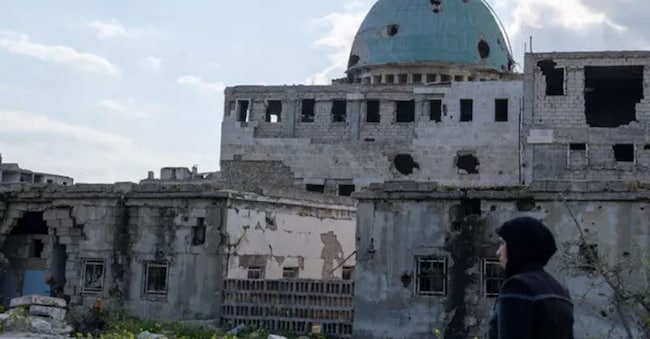
Homs, città siriana in cui si è verificato un attacco kamikaze a una moschea del quartiere alawita Wadi al-Dahab

5' min read

Translated by AI
Versione italiana

5' min read

Translated by AI
Versione italiana

Always dramatic the situation in the Middle East. A explosion at a mosque in an Alawite-majority area of Homs, in Syria, killed 0tt0 people, according to state media citing a preliminary tally. The state news agency Sana reported 'an explosion inside the Imam Ali Bin Abi Talib mosque in the Wadi al-Dahab district, the nature of which is being investigated'. According to preliminary information, it was a suicide bomber who detonated his explosive device inside the Imam Ali Bin Abi Talib mosque.

Siria, cristiani ricordano vittime di un attentato in una chiesa a Damasco

The Syrian Foreign Ministry called the attack a "desperate attempt" to destabilise the country and promised to hold those responsible to account. In a statement, the ministry condemned the "cowardly criminal act", saying it occurred "in the context of repeated and desperate attempts to undermine security and stability and spread chaos among the Syrian people". It then reiterated its "firm stance in the fight against terrorism in all its forms", stressing that "such crimes will not deter the Syrian state from continuing its efforts to consolidate security, protect citizens and hold those responsible to account".

Loading...

Islamic fundamentalist group claims Homs attack

An Islamic fundamentalist group has claimed responsibility for the attack on the mosque. In a statement posted on Telegram, Saraya Ansar al-Sunna claims that its fighters "detonated several explosive devices" in the Imam Ali Bin Abi Talib mosque, located in an area inhabited mainly by Alawites. The group was formed after the removal of Syrian leader Bashar al-Assad, a member of the Alawite community. The militant formation had already claimed an attack against a Damascus church in June.

Israel attacks Hezbollah

Meanwhile, the Israeli army announced a series of attacks against Hezbollah targets in Lebanon, including weapons depots and a training complex. "Several weapons depots and terrorist infrastructure sites, used by Hezbollah to conduct terrorist attacks against the State of Israel, were hit," the IDF said in a note, in which it claimed that the affected infrastructure was used for training the elite al-Radwan unit of the Lebanese pro-Iranian Shia militia.

Despite a November 2024 ceasefire, which was supposed to end more than a year of hostilities between Israel and Hezbollah, Israel has continued to strike in Lebanon and has maintained troops in five areas it deems strategic, pointing the finger at what it deems violations of the truce by the Lebanese God Party. In the 13 months since the agreement, some 340 people have been killed by Israeli fire in Lebanon, according to an Afp count based on reports from the Beirut Health Ministry.

L'esercito israeliano distrugge tunnel di Hamas a Gaza: il video

Katz: Idf will act immediately to strike terrorist infrastructure in Qabatiya

It is then reported that a Palestinian killed a woman and a man in northern Israel before being wounded by gunfire. This was announced by the Israeli authorities, pointing out that driving his vehicle the assailant first ran over a 68-year-old man in Beit Shean, then stabbed a young woman in Ein Harod. The two victims died of the consequences of their injuries. Two other people were injured, among them a 16-year-old boy, who was also hit by the bomber's car.

Israeli Defence Minister Israel Katz said he had ordered the Israel Defence Forces to act "forcefully and immediately" in the northern West Bank village of Qabatiya, the place where the assailant came from. A statement from Katz's office announces that the security forces will work to"locate and counter any terrorist and strike terrorist infrastructure", and warns that anyone who assists or provides support for terrorism "will pay the full price". Katz also expresses his condolences to the families of the victims of the attack, calling the loss 'unimaginable'.

Ben Gvir calls on citizens to arm themselves

Also speaking on the matter was the Israeli Minister of National Security, Itamar Ben Gvir, who called on Israelis to arm themselves and advocated the death penalty for terrorists while speaking to the press at the scene of the tragic attack.

"I call on the citizens of Israel: arm yourselves", the far-right minister appealed. Ben Gvir emphasised that the attack proved that 'weapons save lives', as the attacker was shot and neutralised by a civilian bystander. He also encouraged Israelis to take advantage of the simplified gun licensing criteria to join civilian rapid response teams. "The second thing that I believe would save even more lives is a law imposing the death penalty for terrorists," he pointed out, arguing that attackers are not seeking to die but to survive and serve prison sentences. "We need to pass a law on the death penalty for terrorists, and I am doing everything I can to make that happen, he added.

Ramallah contro il progetto di legge israeliano sulla pena di morte

Trump considers new meeting with Netanyahu useful

On the diplomatic front, U.S. President Donald Trump was unsure whether another meeting with Israeli Prime Minister Benjamin Netanyahu was necessary, but now believes it could be useful. Axios reported this, citing White House officials. Last week the tycoon announced that 'Bibi' would probably visit him at his Florida residence. The meeting between the US president and the Israeli prime minister is scheduled for 29 December and could have relevance on the eve of Trump's convening of the Board of Peace in January, according to the reconstruction.

The US administration has reportedly made no secret of its frustration with Israel after observing its aggressive actions in the Gaza Strip: it now fears that the Jewish state will undermine future peace efforts. ''Bibi'' is trying to convince an audience of one. The question is whether Trump will take his side or that of his top advisors regarding Gaza. Who can say what Trump will choose?" said an Israeli official quoted by Axios.

On Tuesday, Ghazi Hamad, a senior member of the Hamas political bureau, stated that Israel has violated the ceasefire in Gaza more than 900 times since October, questioning the seriousness of the Jewish state government's intention to move to the next phase of the truce. "We have outlined to Netanyahu all the opportunities and challenges. President Trump is confident he can help him through this, but not if the policy continues as it is now," a White House official told Axios.

The ceasefire agreement between Israel and Hamas came into force on 10 October. On 13 October, US President Donald Trump, Egyptian President Abdel Fattah Sisi, Qatari Emir Tamim bin Hamad Al Thani and Turkish President Recep Tayyip Erdogan signed a declaration on the Gaza ceasefire. Trump planned to announce the start of the second phase of the Gaza peace process before Christmas, Axios reported. As envisaged in Trump's 20-point peace plan, the second phase includes Israel's withdrawal from further Gaza territories, the deployment of an International Stabilisation Force (ISF), and the establishment of a new government structure, including the Board of Peace led by the US president.

Israel first state to officially recognise Somaliland

Israeli Prime Minister Benjamin Netanyahu announced the official recognition of the 'independent and sovereign state' of Somaliland. This is a first for this self-proclaimed republic, which separated from Somalia and which until now had not been recognised by any other country. "Prime Minister Netanyahu, Foreign Minister (Gideon) Sa'ar and the president of the Republic of Somaliland signed a joint and mutual declaration, reads a statement from the Israeli head of government's office.

Gaza: Al-Awada hospital suspends many services due to fuel shortage

Gaza's Al-Awada hospital today suspended many of its services due to a shortage of fuel to run its generators. "Many of the services are temporarily suspended due to the lack of fuel", said Ahmed Mehanna, from the management of the hospital in the Nuseirat district, which has 60 beds and provides health care to about a thousand people a day. "Only the essential departments, the emergency room, maternity and paediatrics remain operational, he added, explaining that the hospital had to rent a small generator to cope with the emergency.

Copyright reserved ©

Brand connect

Loading...

Newsletter

Notizie e approfondimenti sugli avvenimenti politici, economici e finanziari.

Iscriviti