
Exodus of Syrian refugees, a challenge for post-Assad Europe
The fall of the Assad regime has brought millions of Syrian refugees to Europe. Now the scenario of returning home is uncertain
by Silvia Martelli (Il Sole 24 Ore) and Kim Son Hoang (Der Standard, Austria)
 Aggiungi Il Sole 24 Ore
ai preferiti su Google
3' min read
3' min read
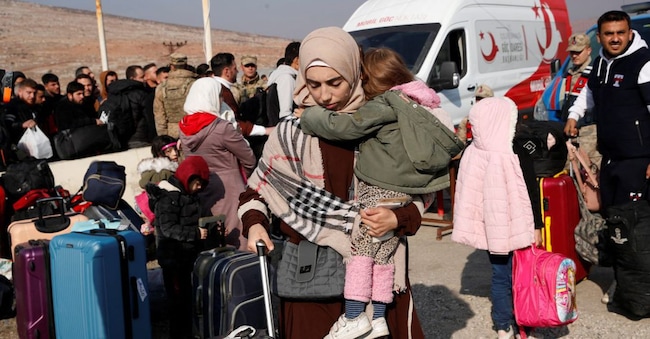
The fall of the regime of Bashar al-Assad is a crucial turning point for Syria and the millions of refugees who have left the country since 2011. At the moment, there are about 6.3 million Syrian refugees abroad - a figure that is equivalent to a quarter of the Syrian population estimated at the beginning of the year. In Europe, as well as in the rest of the world, the return of Syrian refugees to their homeland is therefore an issue that is raising profound questions both politically and humanitarian-wise.
The global context of the Syrian crisis
Since 2011, the Syrian civil war has driven millions of people to seek refuge in more than 137 countries. Most refugees are in Syria's neighbouring countries: Turkey (3.1 million), Lebanon (up to 1.5 million, including non-registered), Jordan (649,000) and Iraq (286,000). However, Europe has been a significant destination for many, with Germany leading the way (716,000 Syrian refugees) and other countries - such as Greece, Italy, Sweden and Austria - taking in significant numbers.
The European challenge: between integration and repatriation
The European Union faces a complex challenge in managing the fate of Syrian refugees after the fall of the regime. Although some political leaders have welcomed the prospect of return, conditions in Syria remain highly uncertain. Despite political change, destroyed infrastructure, economic instability and social tensions make repatriation a sensitive issue.
Germany: the weight of integration and the political debate
Germany is the main European country for receiving Syrian refugees, with more than 716,000 people. Here, integration has produced significant results: more than 100,000 Syrians have obtained German citizenship. But the massive arrival of refugees has been a determining factor in the rise of the far-right Alternative für Deutschland party, which openly criticises migration policies.
Recent calls for repatriation by some German politicians have raised concerns among well-integrated refugees. According to Gerald Knaus, a migration expert, possible deportations would be difficult to realise for legal and humanitarian reasons. Despite this, more than 47,000 Syrian asylum applications have been suspended, leaving thousands of people in a situation of uncertainty.

