
Taiwan, chips and rare earths: the Xi-Trump summit did not change the balance
Markets disappointed after summit close: Boeing brings home modest results, Tesla none. And even Nvidia and AMD stand by and watch
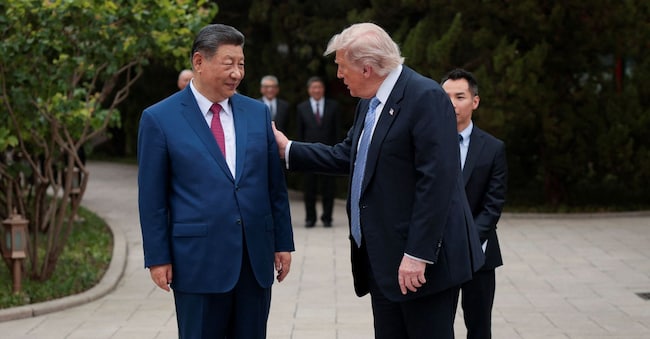
For two days, in Beijing, the scene looked like the one that Donald Trump wanted to build. Air Force One landed in China with the big American ceos on board, ready to sit at the tables of Chinese power. Jensen Huang of Nvidia, the top brass of Boeing, Apple's Tim Cook, Elon Musk and other well-known names from Silicon Valley. The giants of US finance and technology, in short, alongside the White House. The idea was simple: to show that the United States remains the economic centre of the world even within the most difficult relationship on the planet.
But when diplomacy replaced the ritual images, there remained above all a sensation of coldness. The Chinese posture appeared immediately clear. Clear in showing itself available on the symbolic and protocol level, but also very rigid on strategic dossiers. Like Taiwan, defined without half-measures the most delicate point in relations between Washington and Beijing. And the fact that Xi Jinping openly evoked the "Thucydides' trap" during the summit appeared as a very heavy political signal. A concept that the Chinese leadership rarely uses so directly in high-level face-to-face meetings.
According to several analysts, Trump leaves Beijing with many diplomatic smiles and few concrete victories. And it is no coincidence that after the summit was over, the markets reacted by turning negative.
Chip & Tech
One of the most obvious signals concerns Nvidia. Jensen Huang was part of the US delegation, not least because Washington hoped to unblock at least part of the exports of advanced semiconductors to China by seeking loopholes on rare earths. But in the last few hours US Trade Representative Jamieson Greer admitted that export controls on chips were not a central theme of the talks. Translated: no real opening.
For Nvidia and AMD, the knot remains huge. China continues to be a crucial market for artificial intelligence and data centres, but US restrictions remain in place and Beijing is accelerating in parallel on the development of increasingly competitive domestic industries, so much so that US technological leadership could be challenged within a few years.


