Diplomacy

Taiwan’s opposition leader to the US and China: ‘Don’t use my country as a pawn’

The Kuomintang chairwoman has called for greater dialogue between Taipei and Beijing in an interview with the Financial Times ahead of her visit to Washington
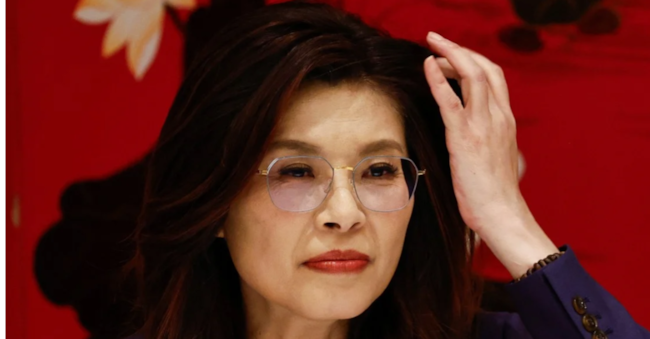
Cheng Li-wun, leader del Kuomintang (KMT), il principale partito di opposizione taiwanese.

4' min read

Translated by AI
Versione italiana

4' min read

Translated by AI
Versione italiana

Taiwan must not be turned into a bargaining chip in negotiations between Washington and Beijing. This is the message that Cheng Li-wun, leader of the Kuomintang (KMT), Taiwan’s main opposition party, wished to convey to the United States and China at a time of high tension in the Taiwan Strait and just a few weeks after the summit between US President Donald Trump and Chinese leader Xi Jinping.

In an interview given during a visit to the United States, Cheng responded to recent comments by Trump, who, during his trip to Beijing, had described US arms sales to Taipei as a ‘useful negotiating tool’ in relations with China.

Loading...

“Taiwan must never become, nor be reduced to, a bargaining chip at the negotiating table between major powers,” said Cheng, who has led the KMT since last November and is regarded as a potential candidate in the 2028 presidential election.

The opposition leader is spending two weeks in the United States to strengthen ties with the US administration and Congress, at a time when the KMT continues to raise concerns in Washington due to its stance, which is more favourable to dialogue with Beijing than that of Taiwanese President Lai Ching-te and the ruling Democratic Progressive Party (DPP).

When asked what the main message of his US mission would be, Cheng replied with a single word: ‘Peace’.

According to the KMT leader, the freeze in relations between Taipei and Beijing over the past decade has helped to fuel tensions across the Strait. “There has been no dialogue and the situation has come close to the brink of war,” she said, adding that many Taiwanese citizens fear the island could “become the next Ukraine”.

Whilst supporting the need to reopen channels of communication with China, Cheng reiterated the central role of the United States in regional security. In his view, particularly following the recent meeting between Trump and Xi, Washington should take on ‘an even more constructive and positive role’ to promote stability in East Asia and the Taiwan Strait.

Last April, Cheng became the first Kuomintang leader in ten years to visit China and meet Xi Jinping. A decision which, in her view, helps to reduce the risk of conflict. But it is precisely this openness towards Beijing that is fuelling the concerns of many US politicians, who are convinced that excessive dialogue could weaken Taiwan’s deterrent capability.

The KMT leader has dismissed such criticism. “Improving relations across the Strait does not mean giving up our defence capabilities,” she argued, describing US concerns as “completely unfounded”.

Cheng also highlighted the historical ties between his party and Washington. “Since the end of the Second World War, the Kuomintang has been a very important partner of the United States. This will not change,” he said, emphasising the desire to strengthen mutual trust with the American ally.

One of the most sensitive issues, however, concerns military spending. In recent months, several US lawmakers have criticised the KMT for helping to reduce a special defence package from $40 billion to $25 billion. The programme included the purchase of US weapons and funding for the domestic production of drones, which Washington considers an essential tool for strengthening deterrence against China.

Cheng rejected the allegations, arguing that his party is not opposed to investment in drones and attributing the scaling back of the plan to the dynamics of Taiwanese domestic politics and to a government proposal deemed procedurally unacceptable.

Internal political tensions remain high. The KMT leader has revealed that she has had no contact with President Lai Ching-te since taking over as party leader, despite requests for a meeting made prior to her trip to China.

During his visit to the United States, Cheng is expected to meet with White House officials and members of Congress, but not President Trump. According to US sources, the most important meeting will be with Matt Tritle, an aide to the White House’s Asia director, Ivan Kanapathy.

On the future of relations with Beijing, the Kuomintang leader’s stance remains one of pragmatism. The aim, she explained, is not to immediately redefine Taiwan’s political status, but rather to ‘eliminate any possible factors that could provoke a war’ and to ‘institutionalise a peaceful relationship’ between the two sides of the Strait.

Cheng also maintains that any change to the status quo can only take place with the consent of the populations concerned. Whilst refraining from expressing personal confidence in Xi Jinping, he stated that the Chinese president had shown ‘great openness’ during their meeting, interpreting this attitude as a sign of Beijing’s willingness to pursue a peaceful solution to the Taiwan issue. This assessment contrasts with that of much of the American political establishment, which is increasingly convinced that China is stepping up preparations for a possible military confrontation over the island.

Copyright reserved ©
Loading...

Brand connect

Loading...

Newsletter

Notizie e approfondimenti sugli avvenimenti politici, economici e finanziari.

Iscriviti