Roofing

The budget and funding from the banks. Tajani: ‘Contributions from the entire financial sector’

The Deputy Prime Minister explains that the 5 billion euros included under the heading ‘resources’ for the forthcoming Budget Bill within the Draft Budget Bill (DPB) refer to ‘the entire financial sector’

 ANSA

3' min read

Translated by AI
Versione italiana

3' min read

Translated by AI
Versione italiana

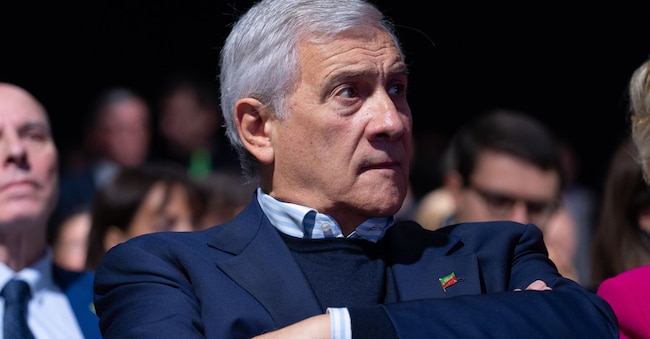
The 5 billion euros included under the ‘resources’ heading for the forthcoming budget law within the Draft Budget Bill (DPB) relate to the entire financial sector, ‘including Cassa Depositi e Prestiti’. This was stated by Deputy Prime Minister Antonio Tajani, speaking on the sidelines of the ‘Welfare, Italia’ Forum on the funding of the budget bill. A hot topic, which was at the centre of the summit held at Palazzo Chigi on Monday evening.

Tajani did not comment on the allocation of the 5 billion. However, he made it clear that ‘it will not only concern banks and insurance companies’, but also CDP ‘and other organisations’. He emphasised that the aim of the contribution would not be ‘punitive, and would not target so-called windfall profits’.

Loading...

Beware of cooperative credit banks and community banks

Tajani pointed out that it will therefore be necessary to consider ‘a different kind of measure’ from the taxation of profits, ‘taking particular account of the specific nature of local banks, cooperative credit banks and people’s banks, which must be protected because they are the ones that provide loans to small business owners and households’.

“We must be careful,” he explained, “to ensure that the measures do not have a severe impact on and cause problems for cooperative credit banks and other local banks,” he concluded.

Messina (Intesa): ‘There was a three-year agreement. We’re paying 25 billion in tax’

A few hours later, at the International Forum on Agriculture and Food, Carlo Messina, Chief Executive of Intesa Sanpaolo, spoke on the subject, recalling that ‘last year we reached an agreement on a three-year contribution, which was the amount the banks would be required to pay over the next three years. I believed in it. We had proposed making it an annual contribution, but we were told to make it a three-year commitment because this would provide stability for the public finances and also for the banks’.

“Then,” he added, “if various measures are to be assessed, then all companies with profits in excess of 500 million will be able to contribute.” There is also an aspect, Messina explained, concerning constitutionality: “Because you cannot go against a sector, against a category. That is why care must be taken to ensure that the approach to these measures is broad-based.’ Messina went on to argue that ‘the banks’ willingness to support various schemes for the disposal of public assets is absolute. The banks are ready to do everything possible to ensure this country runs smoothly, but we have shareholders; we are directors acting on behalf of our shareholders, and we cannot take responsibility for matters that are handled in a non-transparent manner and are inconsistent with the agreements that were originally reached.”

“What isn’t being said,” Messina concluded, “is that, against 50 billion in profits, the State will collect 25 billion in taxes” from the banks. “This year, 25 billion euros of public spending will be financed by the banks, so I would like it if, when we talk about profits, we also mentioned the 25 billion.”

The government’s spending forecasts

Funds that the government intends to use primarily for social spending and, more specifically, for the ‘most vulnerable’ families, as set out in the Budget Policy Document. This item amounts to just under 5 billion euros, with particular emphasis on the extension of measures already implemented in the previous budget – such as the increase in the bonus for working mothers – and possible new initiatives, such as the healthcare cashback scheme called for by Forza Italia.

Energy measures for businesses

But there is also support for businesses, to which the Draft Budgetary Plan allocates around 3.4 billion. This includes various incentives, many of which relate to energy. Tajani, in fact, said that the plan is for “a sort of ‘energy release’ aimed at the greatest possible number of small and medium-sized enterprises”.

In addition to this, the Deputy Prime Minister explained, the government wants to take “decisive action to help young people and older people, and we will also look at what can be done to support the middle class”.

Copyright reserved ©

Brand connect

Loading...

Newsletter

Notizie e approfondimenti sugli avvenimenti politici, economici e finanziari.

Iscriviti