Sea legends

The talent of the leader: Paul Cayard, the art of being at the helm, in a boat and in life

The most beautiful seas, between New Zealand and Cape Horn, the toughest challenges, from the America's Cup to the Rolex Swan Cup, the secret of teamwork: the great yachtsman talks about building success.

by Paco Guarnaccia

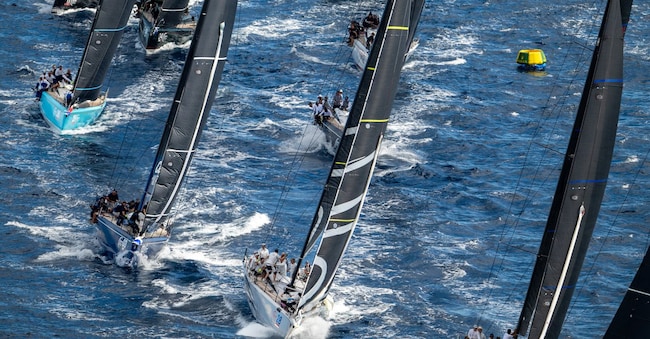
Una fase dell’ultima Rolex Swan Cup a Porto Cervo. A questa regata, riservata solo agli Yacht Nautor Swan, ha partecipato anche l’americano Paul Cayard, brand ambassador di Rolex, maison legata all’evento da 40 anni. ©Rolex/Kurt Arrigo

5' min read

5' min read

Paul Cayard, unforgettable star of the 1992 America's Cup at the helm of Il Moro di Venezia: that was the first time an Italian boat won the Louis Vuitton Cup. Now a brand ambassador for Rolex, the legendary sailor was the star of the Rolex Swan Cup, a regatta reserved for Nautor Swan yachts and organised by the Yacht Club Costa Smeralda, which celebrated 40 years of partnership with the House of the Crown.

How did you get into sailing? I have always been attracted by adventure, by the idea that when you set off from the jetty you never know exactly what course you are going to take that day. Then dealing with the wind, the sea, the waves - everything always changes. I imagine that someone who plays tennis knows that the net is always at the same height, just as the lines on the court are always in the same place... With sailing everything is much more adventurous.
Loading...

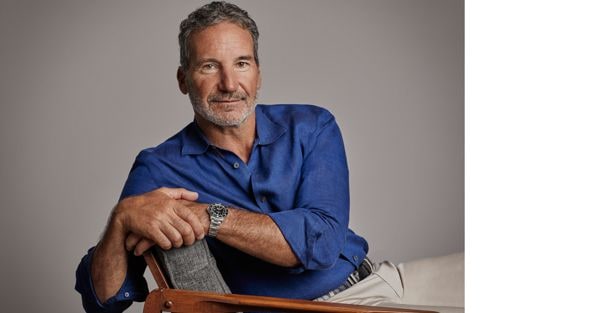
Paul Cayard.

What are the indispensable characteristics to become a great yachtsman? Desire and commitment. There are people who have talent but burn it away. I have seen people with less talent commit to study and training by planning their goals without distractions. My suggestion for young people is to understand that this is a job and results do not come by themselves. Competing today means being very prepared.

From what do you see the talent to compete? First of all from the feeling to make the boat go: either you have it or you don't. To be the helmsman you have to have a certain feeling for the boat, feel it through the helm. The second is being able to guess the wind. So by watching young people race, one can tell whether they have this ability or not. It's almost an instinct, but then you have to cultivate it by going to school because there are so many aspects to learn, like understanding the pressure, studying the clouds and so on.
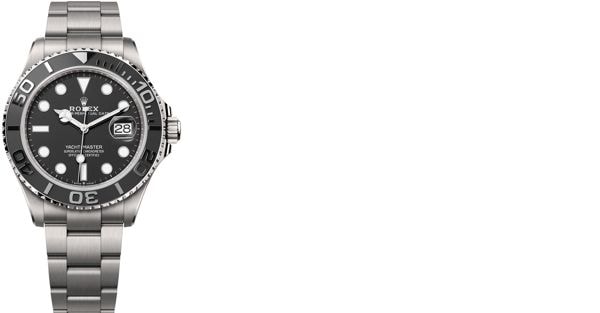
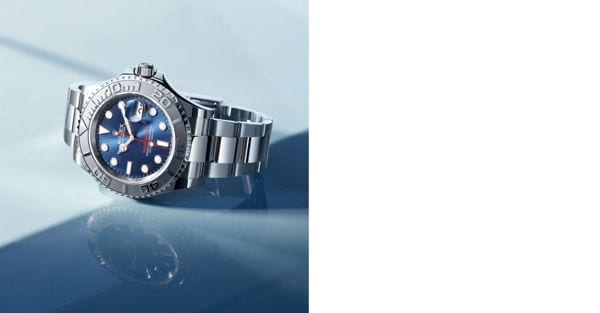
Lo Yacht-Master 42 di Rolex con cassa e bracciale in titanio RLX (14.750 euro).

What is the best thing about helming? Being in control of the boat and feeling it a lot more. For example, a tactician uses his eyes but does not have the ability to hold the helm, to feel it and guess how to make the boat faster. If you are at the helm you are the leader and give the direction. But being the leader of a team, for me, is empowering the team to develop its own characteristics so that everyone knows what direction to take. In general, being a leader is about motivating your team without always having to tell them what to do. Not everyone in every sector has understood this. I cite the film The Gladiator as an example. After the death of Marcus Aurelius, Commodus, once crowned emperor, thinks he is the leader for the role. The protagonist Maximus, on the other hand, is recognised as such by everyone because he has earned leadership and respect in the field.
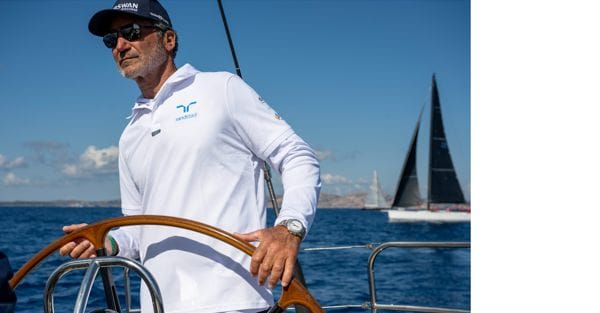
Sailing has to do with the sea and the wind: what do they represent for you? They are like the blood in your veins. This morning I swam. I like being in the water: it is not traditionally usual among sailors, but I think we are all born in the water... I also like the wind, because it is the element that gives me direction.

Paul Cayard al timone dello Swan 82 Kallima - Randstad Sailing Team alle regate di Porto Cervo.

Time is also of the essence in racing and you know that as a Rolex brand ambassador... We're always competing against each other and time counts when you're manoeuvring, especially at the start and more specifically in America's Cup racing: here finding the right time and being as precise as possible is something impressive. Just think at what speeds you get to the line, and no further. No other sport has this characteristic. Formula 1 cars, for example, are stationary at the start, whereas here you are in motion: you have to calculate perfectly your arrival at a line that you can't even see because it is between two buoys, not overtake it, but get as close as possible to it at maximum speed. The precision in calculating time and speed are the special features of this sport.

What kind of regatta is the Rolex Swan Cup? There are more than 100 boats, all from the Nautor Swan manufacturer. Also, it is a regatta with a great tradition. I have been coming to compete for years and it always gives me great pleasure to be there. The environment is different from other competitions: it is neither the America's Cup nor the Olympic classes, where the intensity is always first, where there is only competition and ashore there is no great friendship between the participants. Here it is a mix, the situation is more familiar. There are people with their own boats who come with family and friends. You compete, but it's not the end of the world if you don't win.

Tra i premi per i vincitori della Rolex Swan Cup anche uno Yacht-Master 40 in acciaio e platino (12.650 euro).

What do you think of Nautor Swan sailboats? They are unique, very beautiful, comfortable and luxurious, but they sail well. They are racing boats and this mix is hard to find.

About the America's Cup, what do you think of the last edition with foil boats? Let's say I'm glad I did the Americas'Cup back in the days when I participated... The battles were better for me because from the crew's point of view there were 16 people on board involved and if one made a mistake you all sank together. Here you can see very little, but it's something else.

What was the most beautiful and difficult sea in which you raced? The South Sea, between New Zealand and Cape Horn. There are much bigger waves, the wind is strong, it is cold and sometimes it can even snow. Years ago I decided to compete in the World Tour for this very reason. For me it was a challenge.

Un giro di boa alla Rolex Swan Cup.

And how did it go? I grew up in the drift world and then in the Olympic classes. They knew me from my four participations in the America's Cup. Then they asked me to participate and, although undecided, I finally accepted. I brought my team, the America's Cup team. We were all focused on the intensity, the shape of the sails, the development of the boat. Then, when we arrived in the first part of the South Seas, for 10 days we had our foot on the accelerator like we were in Formula 1. But that race was more like a Paris Dakar. I learnt my lesson: it took a different kind of management. I realised that you had to go at 97% of the maximum speed 100% of the time and not 100% of the speed 20% of the time... In the end, I won a trophy: for me, given my experience, winning even in offshore racing was a great recognition.


Copyright reserved ©
Loading...
Loading...

Newsletter

Notizie e approfondimenti sugli avvenimenti politici, economici e finanziari.

Iscriviti