
Tamagnini: 'Two billion for the new Fsi fund. Anima? Happy with the investment'
Fsi's founder: 'Record demand from foreign investors, ready to increase the fund's endowment beyond the 1.5 billion limit'

3' min read
3' min read
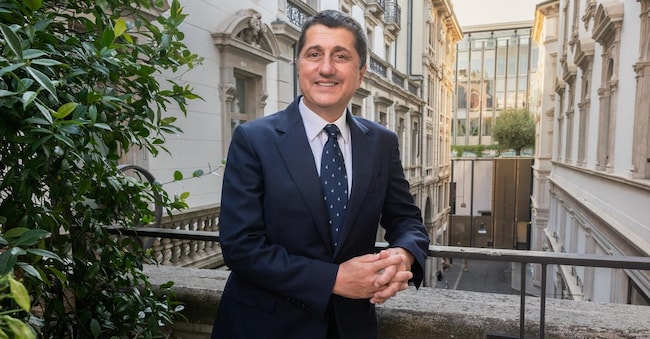
Fsi has filled up. Two billion euros in applications for the new fund that will invest in critical areas of innovation and business growth in Italy. Investor demand has been record (500 million above forecasts) and, thus, these days the group founded by Maurizio Tamagnini is requesting authorisation to increase the fund's endowment beyond the limit initially set at 1.5 billion. This is important because previous investments by the FSI team, some 3 billion on 21 companies with 70,000 employees, have brought important financial results (an average annual growth in Ebitda of 24%) and social results (+14% employees). Now it's time to start again, with a new fund. And alongside the group's core projects, there is also a plan, launched with the Milan Polytechnic, Bocconi, Ion and the Milan Chamber of Commerce, to raise a billion euro in philanthropic funds and launch about a thousand new start-ups a year in the technology sector.
It is Christmas time, and the halls of FSI's Milan headquarters, between Piazza Affari and Piazza Cordusio, are brushed by holiday traffic, as well as the clash raging on the stock market over control of Banco Bpm and its subsidiaries - including Anima, in which FSI holds 9.7% of the capital -, while inside, a message of confidence in Italy is coming through loud and clear: the bulk of the new fund's subscription requests have come from abroad. "2024 has been a great year for Italy, which is cashing in on the dividend of political stability," explains Tamagnini, and more than half of the new "gasoline for growth with which FSI wants to make Italian companies run," the entrepreneur explains, "has come from international investors. It is the 'largest European fund entirely dedicated to a single country and has an important multiplier effect', the ability to involve co-investors in major projects.
Where will the collected resources be directed?
The estimate is to invest at least two-thirds of the budget in two sectors, technology and life science, which are also the focus of the NRP investment and which are driving the country's productivity. In particular, we focus on technologies for digital transformation. It is fuel for business growth and we are leveraging digital, access to cloud services and artificial intelligence to help our SMEs scale up. Just as we aim to support the fintech sector, very good Italian companies and managers that we want to help realise a European dimension.
Two billion is a lot to try to narrow the technology gap with the US, but sure Softbank has just announced a $100 billion investment plan to President Trump
.Fsi is the only Italian private equity fund in the club of the 300 largest private equity funds in the world. We have raised capital in Italy and abroad from pension funds, insurance companies, banks, foundations, large sovereign and supranational funds, including the European Investment Fund, the Singapore Sovereign Wealth Fund, Temasek, and Kuwait Investment Authority, our founding partners, and large European financial institutions, over 50 investors. Two billion is not a lot, but it is the basis on which we can invest together with our historical co-investors, who can put in additional resources. We certify, with our intervention, the validity of the projects, but we have had partners for 15 years now and can estimate a multiplier effect equal to three times our funds. Of course, it is important to create the conditions.
Which ones?
.We want to help our medium-sized companies, which are great for Italy, to become medium-sized for the world. That is why we make resources available to these companies, even over a long period of time, to support their growth. And we do not do this by underwriting debt, but mainly by increasing capital resources. Foreign investors follow us because they put money alongside those who first believe in their assets. The rest is done by a favourable macroeconomic context: GDP in Italy is growing, albeit not explosively, inflation is under control, the employment rate is at an all-time low, and interest rates are falling with improved access to credit thanks also to healthy Italian banks.


