The Ukrainian crisis

Targeted strikes from Kiev against Russia, here are those in favour and those against

Foreign Minister Tajani: 'We will not send any troops to fight against the Russians on Ukrainian territory, nor can Italian weapons be used to strike in Russia: the Constitution prevents this'
by Redaction Rome

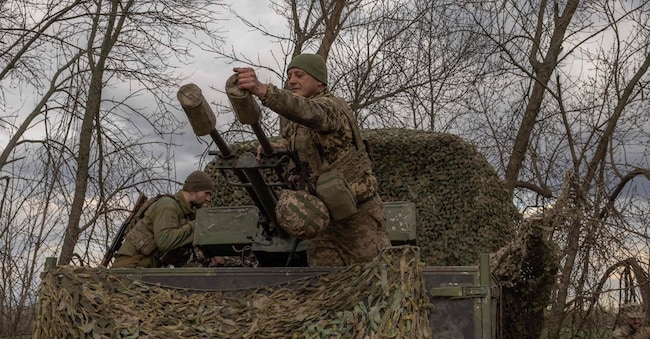
Soldati ucraini in un carro armato nella regione di Zaporizhzhia.

3' min read

3' min read

NATO foreign ministers are meeting in Prague at the Foreign Ministers' Meeting to take stock ahead of the summit in Washington in July. There are various topics on the table but it is once again Ukraine that dominates the discussion. Because the offensive in Kharkiv causes 'serious concern' and the situation on the ground remains tense. Hence. The debate on the restrictions on the use of weapons supplied to Kiev - to remove them or not - comes into focus, with by now the majority of the allies in the 'hawks' camp.

Stoltenberg: Kiev to be responsible with strikes in Russia

Nato Secretary General Jens Stoltenberg made it clear that the allies expect that the use of weapons given to Ukraine against Russia, i.e. hitting military targets across the border, will be done 'in line with international law and in a responsible manner'. As for the risk of escalation, Stoltenberg pointed out: 'Every time we have given means to Ukraine Vladimir Putin has threatened us, it has been the case with artillery pieces, tanks, missiles, F-16s. It is Russia that started the escalation, first by invading another country and now by opening the new front in Kharkiv'.

Loading...

Those in favour, those against and the undecided

This is how NATO allies - at least those sending military capabilities - view the possibility of removing restrictions on the use of weapons supplied to Ukraine, thus contemplating the possibility of striking military targets in Russia and not only in the occupied territories (including Crimea).

Based on the latest declarations in this field, the group of states in the favourable camp includes Finland, Sweden, the Baltic States, Poland, the Czech Republic, Denmark, the Netherlands, the United Kingdom, Canada, France and Germany (most likely also Romania). Italy, Spain, Belgium, Hungary, Slovakia and probably Bulgaria are against.

The turning point may come from the United States. The Biden administration has hinted that it is willing to give Ukraine the green light to use American weapons on Russian soil.

Moscow observes the evolving picture with some apprehension. Because it knows that, if the interventionist line prevails, it will no longer be able to move its troops casually across the border (and safely drop glider bombs). So he threatens retaliation and accuses NATO of fomenting escalation. Foreign Minister Serghei Lavrov evoked plans for 'nuclear deterrence' if the Americans implement the 'deployment of medium- and short-range land-based missiles', while the Kremlin spokesman pointed the finger at the allies for 'pushing Ukraine in every possible way to continue this senseless war'.

Tajani: Constitution prevents use of arms against Russia

On the issue of the use of western weapons in Russia, Foreign Minister Antonio Tajani clarified that in NATO "there is no joint decision, the lowest common denominator is to help Ukraine, then each country decides how to have its own weapons used. For us the Constitution prevents making war on other countries, so Italian weapons must be used on Ukrainian territory to defend ourselves'. The minister reiterated Italy's position: 'We will not send any soldiers to fight against the Russians on Ukrainian territory, nor can Italian weapons be used to strike in Russia: the Constitution prevents this'.

Crosetto, aid to Kiev, but weapons must be used for defence

A similar line was expressed by Defence Minister Guido Crosetto. As for sending aid to Ukraine, 'I do not comment on the decisions of other states, which are sovereign and have their own legislation. I believe that the application of the Constitution tells us that weapons must be used for the defence of Ukraine, but they cannot be used for other purposes," he said speaking at the 53rd National Conference of Young Entrepreneurs Confindustria, in Rapallo. "Italy's position is clear," he continued, "I think the Constitution tells us, in Article 11, two precise things, that Italy repudiates war and that we participate in the historical alliances in which we believe. We provide aid, including military aid, to an attacked nation to defend itself and regain its violated sovereignty. The Constitution, the laws, and our international posture do not, in my opinion, allow us to do anything else,' Crosetto said, emphasising that 'we will say this to our allies in a frank, loyal, serene manner, without raising the tone'. The minister stressed that 'we are talking about things that have no precedent in our history. We are talking about legislation that is years old, which will have to be adapted because we are dealing with situations that have never been seen before'. This is why it is necessary 'to seek a solution of peace and truce, I hope that sooner or later a window will open, but there does not seem to be a willingness on the part of Russia in this sense. Either we restore the idea that international law has value or the alternative is the law of the strongest and we are not the strongest,' Crosetto said.

Copyright reserved ©
Loading...

Brand connect

Loading...

Newsletter

Notizie e approfondimenti sugli avvenimenti politici, economici e finanziari.

Iscriviti