The trade war

Tariffs, glimmer of hope for Europe in negotiations with the US

Trump's letter to partner countries, for those who do not align new threats of unilateral tariffs and to hit auto. But Lutnick is optimistic about talks with Brussels

by Marco Valsania - New York

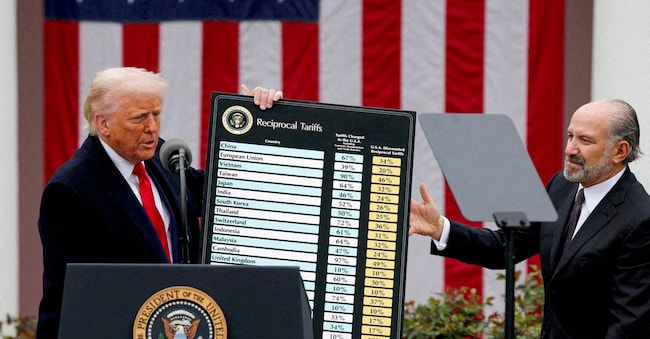
 Donald Trump mostra la tabella dei dazi contro il mondo assieme al segretario al Commercio Howard Lutnick

3' min read

3' min read

Donald Trump throws fuel on the fire of his global trade war, threatening tariffs hikes on cars and imminent ultimatums of unilateral tariffs against dozens of nations around the world. Even as he leaves open the door for agreements with a number of major partners, perhaps fifteen in number, from Japan to South Korea. 'We are doing very well when it comes to deals,' he assured. Among the possible deals in extremis, his close associates added, is one with the European Union.

On car imports, already subject to 25% barriers, the president cited his plans to reindustrialise the US: 'I may raise tariffs in the not too distant future', because 'the more we raise them the more likely it is that plants will be built here'.

Loading...

Trump then pressed on tariffs against individual nations: 'We will send letters in a week and a half or two to countries saying what our terms are'. A missive that will set tariffs without appeal against allies and adversaries alike: 'This is the deal, take it or leave it'. He added, reflecting an aggressive negotiating style: 'Like we did with the European Union.

Just with the EU, Commerce Secretary and protectionism hawk Howard Lutnick added a dose of heart-stopping optimism: 'Europe will probably be among the very last' deals, given 'more than thorny' negotiations, and yet the fact remains that Brussels 'has somewhat converted to our beliefs and made a sensible offer'. Lutnick cited the 'hard work' going on in front of 'more than 15,000 lines of codes for every product and every tariff' with the aim of improving Washington's trade position.

The minister, in transatlantic relations, also held up as an example of success the first and so far only agreement reached with Great Britain: he said it would really start to come into force in a few days, with quotas in favour of the US in sectors such as cars, beef, ethanol.

The EU is now at risk of tariffs of 50 per cent according to Trump's threats - starting on 9 July, if there is no agreement or extension of the deadline - who has suspended the US global crusade armed with so-called reciprocal tariffs to give diplomacy time. The EU has indicated it hopes for flexibility in the timetable and Treasury Secretary Scott Bessent, considered the White House's most pragmatic economic ambassador, has suggested that extensions are 'very likely' for partners engaged in serious talks.

But the US double message, negotiations under the Damocles sword of tariffs wielded like sanctions, has kept alarm high among investors and companies worried about shocks to international supply chains. Bessent himself, testifying before the Senate, has defended the trade strategy to the hilt by downplaying the risks to the US economy: he has boasted "no inflation and no recession" to date and accused the Democratic opposition of being afflicted by tariffs mental illness.

Many analysts and the Federal Reserve - not just critics - fear that such reassurances are premature, with repercussions still to come. The nations in the crosshairs of Trump's new epistolary ultimatum, already speculated last month, are up to 150. And the newly renewed truce with a major strategic rival as well as economic partner, China, has become a symbol of the knots to be unravelled. Trump celebrated it again yesterday: 'I am very pleased'. In reality, the provisional armistice, which maintains a halt to drastic bilateral trade barriers until August, appears as fragile as the handshake between delegations that sanctioned it in London: details are still vague and Beijing has guarded against new escalations by only granting six-month licences for the export of rare earths and magnets needed by the US.

This is not enough. Beijing is demanding, according to the Financial Times, more in-depth information on foreign businesses seeking supplies of critical minerals, raising questions about security and trade secrets. The Asian power dominates the extraction and production of rare earths, a fact it has tried to turn into one of its strengths in the uncertain negotiations with Washington.

Copyright reserved ©
Loading...

Brand connect

Loading...

Newsletter

Notizie e approfondimenti sugli avvenimenti politici, economici e finanziari.

Iscriviti