
Tariffs, Orsini: 'There is confusion but caution is needed, real problem is euro-dollar exchange rate'. Energy first cost
For the president of Confindustria, maintaining manufacturing in Europe is a priority

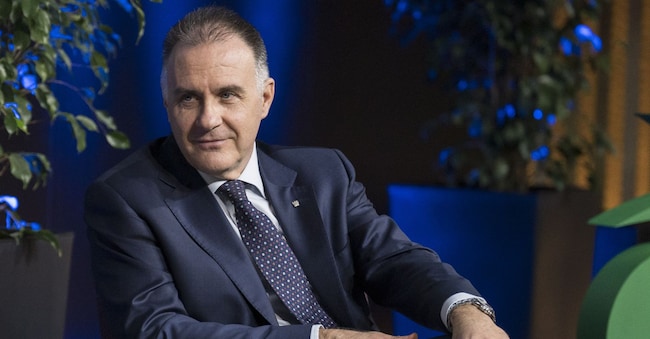
"The confusion is great, but I urge caution. After all, the world average of tariffs is around 12%. It is no coincidence that Made in Italy has continued to sell. The real issue is the euro-dollar exchange rate: with a currency that is too strong we lose competitiveness compared to countries like Japan'. Thus the president of Confindustria Emanuele Orsini in an interview with il Giornale.
"Undoubtedly we have a problem" with China, continues Confindustria president Emanuele Orsini, "suffice it to say that in 2025 Italia had a positive trade balance of 34 billion with the United States and a negative balance of 46 billion with China, which is also increasing. Something is clearly not working. Competition must be fair: same social and environmental rules'. Governor Fabio Panetta says that we do not grow only with exports: 'He is right,' says Orsini, 'we need a strong domestic market. Industrial production today is also held back by the wait for incentives. When they start, we will see a recovery'. And the role of the State? 'Tools such as development contracts can be a good solution if the rule of the measure of incentives is improved: every public euro activates much higher private investments. It is a win-win mechanism'. Is the relationship with Germany still decisive? 'Yes. 52% of our exports go to Europe. The industrial axis with Berlin is fundamental'. Eurobonds and the capital market: there are those who believe it is premature to start before having set rules. His opinion? 'If you don't start you won't get there. We've been talking about it for forty years. it's time to start. With a strong currency we can attract global capital, but we need a single capital market and instruments like a common debt. It is time to act'. On the domestic front Housing plan and wages: social emergencies.
"On the housing plan the challenge is enormous. By 2040 we will have 5 million fewer workers. We have to attract skills also from abroad and offer affordable housing: rent cannot exceed 25-30% of salary'.
And wages? "The dialogue with the unions is constructive: Confindustria has signed 94% of the contract renewals. But wages grow with productivity, that is, with investment, infrastructure and innovation. Not by decree'.
"There is only one priority: maintain manufacturing in Europe and avoid deindustrialisation. That is the real issue. Then it all comes down to industrial policy, energy, bureaucracy, competitiveness. But without a clear vision of where we want to go, we will not be able to build anything,' says the president of Confindustria.

