Use

Tariffs, what happens now: consequences of the Court's rejection and key dates

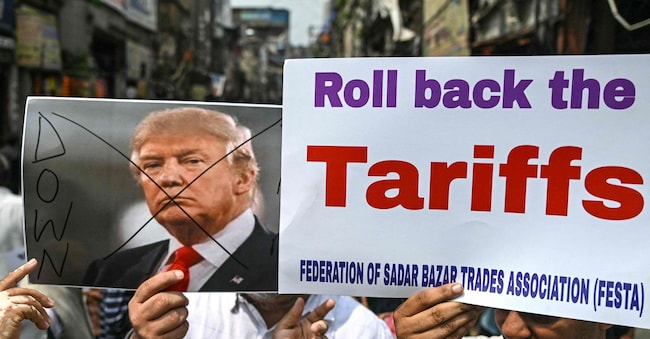
The Federal Circuit ruled Trump's IEEPA-based tariffs illegal, but left them in place until 14 October. The White House is preparing an appeal to the Supreme Court. At stake are the extent of presidential powers and the role of Congress

by Angelica Migliorisi

5' min read

5' min read

On 29 August, a en banc panel of the Court of Appeals for the Federal Circuit (Federal Circuit) ruled, by a 7-4 vote, that the'"International Emergency Economic Powers Act" (IEEPA) does not authorise the President to impose nearly unlimited global tariffs. In other words, it largely upholds the International Trade Tribunal's (ITC) decision of late May and, at the same time, delays the practical effects of its own ruling by leaving the tariffs in place until 14 October to allow the executive to appeal to the Supreme Court. The basic ratio is that IEEPA permits regulatory measures, not a generalised taxing power.

The White House reaction

.

Politically, the White House's reaction was immediate. Donald Trump announced the appeal to the Supreme Court and claimed on Truth that 'all tariffs are still in place', calling the appellate decision 'erroneous' and predicting catastrophic effects should it be upheld. Spokesman Kush Desai defended the legality of the tariff system and anticipated "a final victory" in the legitimacy.

Loading...

How it got to this point

Since February, a series of executive orders introduced, on the one hand, the package dubbed 'Liberation Day' - a basic tariff on almost all imports with reciprocal surcharges for countries with which the US runs deficits - and, on the other hand, 'trafficking tariffs' against Canada, Mexico and China, motivated by trade deficits and illicit flows of drugs and migrants qualified as 'national emergencies'. In a single consolidated decision on 28 May,the International Trade Tribunal ruled that IEEPA does not confer such a broad tariff power and annulled the measures; the following day the Federal Circuit granted a stay and, on 29 August, ruled on the merits in favour of the plaintiffs, but suspending the effects until 14 October.

The Role of the Supreme Court

The game now shifts to the Supreme Court, before which the administration will in all likelihood ask for a stay beyond 14 October and, in parallel, to examine the issue in depth. The Court's recent guidance is crucial: with West Virginia v. EPA (2022), the majority revived the major questions doctrine, i.e. the demand for clear congressional authorisation for choices of "major" economic and political importance; with Loper Bright v. Raimondo (2024) it overcame Chevron deference (under which, if a law was ambiguous, judges had to accept any 'reasonable' interpretation provided by the relevant federal agency), drastically reducing judicial deference to expansive agency and executive readings of statutes. Applied to tariffs, these two guidelines push for a strict reading of the text: if Congress did not write 'tariffs' or 'tariffs', the Court is unlikely to accept that a generic delegation to 'regulate imports' authorises massive and permanent taxation.

The emergency road

.

The White House can, however, conjure up an opposite strand. In Dames & Moore v. Regan (1981) the Court recognised broad presidential powers in international crises under the IEEPA (albeit in the context of freezing and transferring goods, not tariffs); in Trump v. Hawaii (2018) it accepted strong discretion over the travel ban on security grounds. The administration will try to place tariffs in the same emergency and foreign policy framework, arguing that deficits and trafficking constitute an extraordinary threat. The problem, for the judges, will be to decide whether generalised taxation on imports can really be equated with targeted sanctions and controls on goods, traditionally covered by IEEPA.

What might happen

.

Three outcomes are legally plausible. The first, confirmation of the ban: the Court affirms that IEEPA does not authorise tariffs and closes the door on the use of the economic emergency as a fiscal lever, with tariffs being dropped (perhaps with progressive management of refunds) and a clear message to Congress: if you want horizontal tariffs, legislate. The second, intermediate way: the courts would recognise some targeted tariffs power to the president, as long as it is closely linked to an "unusual and extraordinary" threat and accompanied by time limits, timely justification and an objective calibration of the measures. In this case, the overall scheme would fall and only surgical measures would survive. The third, rebuttal: the Court accepts the use of IEEPA even for extended tariffs, emphasising the economic security dimension and the traditional latitude of the executive in foreign policy; it is the least consistent outcome with major questions and Loper Bright v. Raimondo, but not impossible if the majority deems the trade crisis a special case.

The possible consequences

.

If the Supreme Court were to uphold the Federal Circuit, tariffs would fall and a potentially huge refund front would open up for importers, impacting on accumulated revenue (journalistic estimates are around 159 billion). Legal uncertainty would result in litigation, but also in possible cost relief for supply chains and consumers. Politically, Congress would be pushed to take back the tariff power with explicit regulation. If, on the other hand, the High Court were to save tariffs,the presidency would consolidate a far-reaching bargaining tool towards partners and rivals, with predictable backlashes on markets and multilateral relations. In any case, the legislative arena will not stand still: already in the spring, reports by the Congressional Research Service precisely outlined margins and constraints.

The alternatives

.

On the alternative bases remain Section 122 of the Trade Act of 1974 (up to 15% for 150 days, typically for balance of payments imbalances) and Section 301 (tariffs in response to 'unjustifiable' or 'unreasonable' trade practices after investigation by the Office of the Trade Representative). These are more circumscribed instruments, with procedural and time constraints, butpolitically expendable if IEEPA were to be shut down by the courts. The choice to pursue them, however, would impose timely dossiers (investigations, consultations, Federal Register), longer timeframes and a measured perimeter, far from the protectionist wall of 2025.

In the meantime, the Court of Appeals opinion remains the guiding text for what the executive's scope of action will be pending before the Supreme Court. The justices remarked that Congress, when it really intends to grant tariff powers, says so and imposes stakes: think of Sections 122, 232, 301 of the Trade Act. Not only does IEEPA not contain terms like 'tariffs' or 'duties', but it was created to address specific foreign threats (finance, property, sensitive trade) through freezes and sanctions, not to rewrite the tax structure of US trade.

The calendar

.

Until 14 October the tariffs remain in place due to the stay. By that date, the administration must move forward with its request for a stay.If the Supreme Court denies the request, the tariffs will fall immediately, with both legal and political effects; if it grants it, a season of expedited briefing and, perhaps, oral arguments will begin as early as the winter semester. Downstream, the verdict would set a precedent destined to affect not only trade relations, but the material constitution of presidential power in the economy: to what extent can an emergency alone rewrite US tariff policy?

In more than forty years of implementation, the 'International Emergency Economic Powers Act' has been the mainstay of financial tariffs and export controls on strategic adversaries and has never been used as a key to introduce a widespread import tax. This twist, attempted in 2025, has already produced the largest judicial reaction on trade since the 1970s. If the principle set by the Federal Circuit is upheld, the logic of the major questions will be fully extended to the - hitherto elusive - area of economic emergency, returning to Congress the final say on a matter that directly affects prices, global chains, and alliances. If, on the other hand, the expansive reading of IEEPA prevails, any economic crisis may become the pick for a long-term presidential tariff policy, with an implicit redefinition of the balance of federal powers.

Copyright reserved ©
Loading...

Brand connect

Loading...

Newsletter

Notizie e approfondimenti sugli avvenimenti politici, economici e finanziari.

Iscriviti