The Phenomenon / Pulse

Tattoos, a growing phenomenon: 7 million Italians and 60 million Europeans

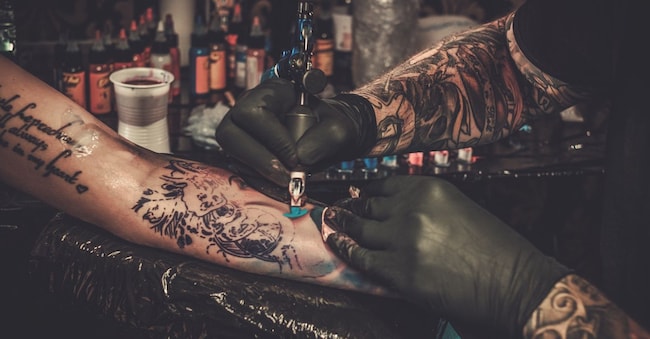
Tattooing is becoming increasingly popular in Europe and is no longer just a fashion, but a personal choice. Health and safety issues remain open

by Davide Madeddu (Il Sole 24 Ore), Francesca Barca (Voxeurop, France) and Ana Somavilla (El Confidencial, Spain)

 (Adobe Stock)

5' min read

Translated by AI
Versione italiana

5' min read

Translated by AI
Versione italiana

For some it is a quirk, a coloured or simply black 'drawing' on the skin. For others it is a way of life because 'behind every tattoo there is a precise choice'. And behind this panorama that unites some 7 million people in Italia and 60 million across the European continent, there is a varied and transversal world, capable of uniting 20 and 80-year-olds alike.

'Over the past 50 years, tattooing has undergone a technical evolution,' says Massimiliano Crez Freguja, head of the Tattooists.it association representing the Veneto region. 'Today, there is a complexity of styles in which historical technique is combined with modern ones. And the result can also be seen in modern graphics that have been influenced by this change. It is certainly no coincidence to find framed tattoo designs'. As for the subjects, there is no standard. "We go from traditional Japanese to tribal tattoos," he adds, "but there is no lack of subjects related to new techniques and particularly elaborate ones. And then there is what is called transversality: "The panorama of those who get tattooed ranges from 20-year-olds to 80-year-olds," he adds, "from workers to doctors.

Loading...

For Stefania Cagnin, tattoo artist with the stage name Maneki Stefy, it is not a matter of fashion. "We work a lot with people who are passionate about this practice, we are not a commercial studio," she says, "also because, as we understand it, tattooing is not a product to be sold. You deal with people and every time you get a tattoo you start a process of transformation of the person'.

However, the whole system has to reckon with the pitfalls that lurk behind those who work without authorisation. "It is not just a question of black but also of safety," adds Massimiliano Crez Freguja. Anyone can buy tattooing tools online, and theoretically could do it that way. It is clear that if you do not have training and preparation behind you, you run the risk of doing harm to people'. Hence also an appeal for more attention from the institutions. 'It would be good if there were consistent legislation for all regions,' he adds, 'so that those who start doing this practice have serious training. Also because, and I have been saying this for a long time, Italian tattooists are among the best in the world'.

The world of tattoos is being watched very carefully by the scientific community, also in the light of significant numbers. "In Italia, the most solid estimates speak of about 7 million tattooed people, equal to about 12-13% of the population, but it is likely that the number is even higher today, especially among young adults,' he says. In Europe there are estimated to be over 60 million tattooed people, with a growth rate that is destined to continue,' says Ignazio Stanganelli, associate professor of clinical dermatology and director of the dermatology specialisation school at the University of Parma. 'This tells us that tattooing is no longer a marginal or niche practice, but a widespread social phenomenon'.

Over the years, tattoos have evolved. "Tattoos today are often larger, more complex, richer in pigments and colours, and this poses new dermatological issues. More tattooed surface area means more exposure to pigments, but it also means, in some cases, more complexity in the control of the skin,' he adds. 'A very large tattoo can make it more difficult to observe moles or pigmented lesions. Moreover, there is a little-known aspect: tattooing is not simply colour on the skin, but an invasive procedure that introduces pigments into the dermis, and studies have shown that a proportion of particles can also migrate to the lymph nodes'. Then there are the tricks and tips from the director of the School of Dermatology: "The first trick is to choose only authorised practices and qualified professionals. The second, which is very important to me, is to avoid tattooing over a mole or pigmented lesion. If you have many moles, or are thinking of a very large tattoo, a prior dermatological evaluation can be a very useful option. It is important to ask about the inks used, carefully follow after-care instructions and protect the tattoo from the sun. These are simple tricks, but they make a big difference'. As for advice, 'I would say three things,' concludes the lecturer. First: don't just choose the design, choose the professional well. Second: don't tattoo areas with many moles without having them assessed. Third: consider tattooing not only as an aesthetic gesture, but as a choice that also concerns the health of the skin. A well thought-out tattoo is also a tattoo done with awareness'.

A look at Europe

The phenomenon is also growing in other European countries, with different characteristics and regulations.

In France, tattoos and piercings are increasingly common: in 2017, 14% of the population already had at least one tattoo, a percentage that rose to 27% among the under-35s (it was 10% in 2010). The regulations are quite strict especially for minors, for whom the consent of a parent or guardian is required, which must be documented and kept for three years. The French health authorities also emphasise the risks associated with the practice: bacterial and viral infections, including hepatitis B, hepatitis C and HIV, which can only be prevented through strict hygiene measures. The regulations also limit the use of certain substances in inks to reduce toxic risks.

In Spain, on the other hand, tattooing is now a widely accepted practice: in 2021, 75 per cent of respondents said they had at least one tattoo and the remaining 25 per cent said they intended to get one. The country has between 2,800 and 3,000 registered studios, concentrated mainly in Andalusia, Catalonia and the Valencian Community, with average costs of between 80 and 150 euros per hour. However, regulation is fragmented, left to individual regions, although there are national and European regulations on inks, such as the EU regulation limiting the use of carcinogenic or toxic substances.

Practices must meet stringent requirements in terms of hygiene, sterilisation and staff training, but controls may vary from region to region. There is also the problem of abuse: unlicensed operators working in private settings, raising safety concerns. An investigation by the Consumers' Organisation (OCU) also highlighted critical issues regarding the use of inks, noting that many studios continue to use unlicensed colours.

Among the main risks reported by health experts, besides infections, are allergic reactions to inks and complications related to poor healing. Therefore, the importance of relying on qualified professionals and licensed facilities, as well as increased consumer information, is emphasised throughout Europe.

*This article is part of the European collaborative journalism project "Pulse"

Copyright reserved ©
Loading...

Brand connect

Loading...

Newsletter

Notizie e approfondimenti sugli avvenimenti politici, economici e finanziari.

Iscriviti