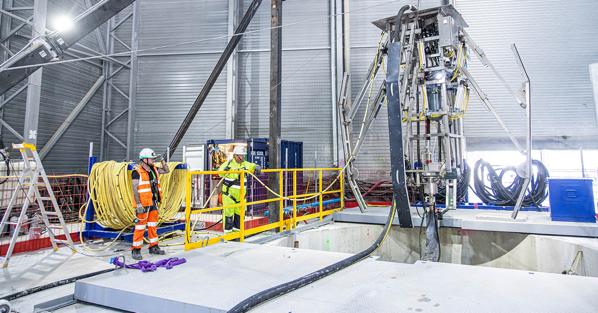
Turin-Lyon Tav, costs rise from 8.6 to 11.1 billion, will be operational in 2033
Italy's share is 6.2 billion, not counting EU aid - Ten construction sites are open between Italy and France with 2,500 workers at work
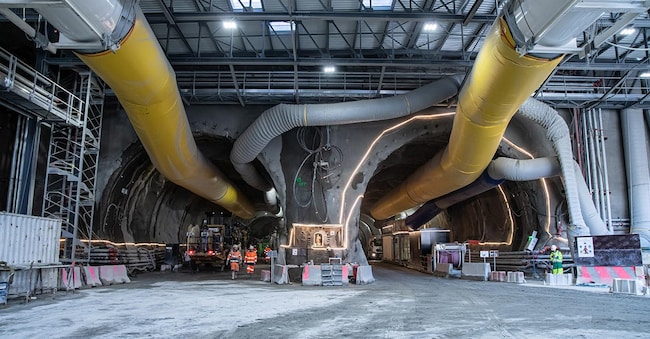
3' min read
3' min read
The cost of the international section of the Turin-Lyon railway line being built across the French-Italian border has risen to EUR 11.1 billion from EUR 8.6 billion, an increase of around 30%. Telt, the public promoter in charge of the works, in which Italy and France have a stake, presented the board of directors with the discounting of the expected cost for the construction and equipping of the railway line, a step validated by a third party, the consultancy firm Grant Thornton Financial Advisory Services.
The updating of costs is one of Telt's commitments to the Italian and French states and takes into account both the awarding of major works contracts and their progress, as well as the precise calculation of provisions for risks and contingencies, and the economic environment. The delivery of the entire equipped and tested cross-border section, initially assumed for the end of 2032, is now planned for the end of 2033.
Update
It is mainly the changed macroeconomic conditions and the upward cost dynamics of raw materials, such as steel for the construction of machinery such as tunnel boring machines and ammonia (of which Ukraine is one of the main producers) for blasting, that have weighed on the cost dynamics. The same happened last year for the other major Alpine crossing under construction at the Brenner Pass, with construction costs rising from 8.8 to 10.5 billion, for which the tenders for the civil works were awarded before the crisis.
"We went through a complex economic phase," explains General Manager Maurizio Bufalino, "and after all the tenders for the civil works were awarded, it was necessary to adjust the cost plan for the work, which will come into operation, according to our estimates, in 2033. A particular complexity faced at one of the French construction sites also contributed to this delay" Europe, which contributes to the project with multi-year funding of up to 50% for international infrastructures, has just allocated more than 700 million for the base tunnel for works until 2027.
The new allocation envisages around EUR 6.2 billion for Italy, EUR 4.9 billion for France. "The international agreements provide that the total financial coverage is to be borne by the two states,' Bufalini explains, 'which in turn participate in European calls, in this case the EFC, to request the European contribution, which then relieves the two states of direct expenditure.