
Tax credits for road haulage: the platform is now live – how to apply
Meanwhile, the government is working to find new resources and refinance the support schemes for the sector

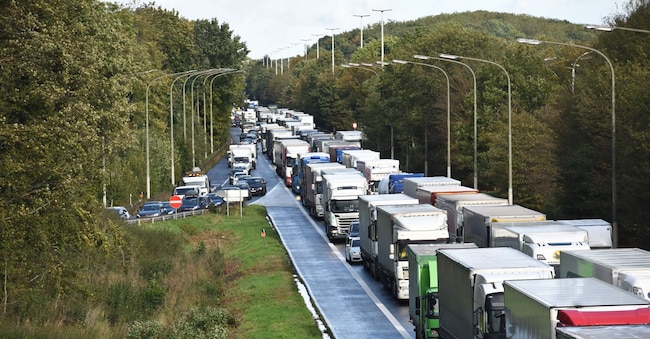
It is not just measures to support the public that are at stake in the battle against high fuel prices, a situation set to continue as tensions in Iran show no sign of abating and, as a result, oil prices remain high (the price of Brent crude is hovering around 90 dollars a barrel). As the countdown to Saturday 5 September – the last day on which the 17-cent discount per litre on diesel will apply – draws ever closer, the government is also working on a second front: providing aid to the businesses most affected by the price rises, which so far totals 526.2 million euros, of which 386.2 million is earmarked for the road haulage sector.
The latter is the sector most at risk of passing on rising costs to final prices, with consequences for inflation and the cost of living, and it is also the sector the government intends to target with new measures, given that the relief measures already in place are valid until August. As always, it will all come down to economics, not least because the options under consideration include targeted support for the most disadvantaged sections of the population, perhaps in the form of fringe benefits. To fund these, the government will need to find new sources of revenue, though there is currently no certainty regarding these. The only certainty at present comes from VAT windfall revenue (the August figure will be accounted for in early September), which will therefore need to be supplemented with additional funds. This latter issue has already sparked internal debate within the ruling coalition, with the proposal to tax the profits of energy companies.
The platform
Whilst we await news on whether the fund will be topped up further, hauliers can come forward to claim their refunds. This is because the platform (www.creditocarburantetrasporto.adm.gov.it) of the Ministry of Transport, set up by the Customs and Monopolies Agency and managed by Sogei, is now operational, allowing claims to be made for reimbursement of diesel consumed between March and August.
The operational rules were finalised almost at the last minute, as the process also required the involvement of technical experts from the Ministries of the Economy and the Environment. The operational rules complete the process that began in March with Decree-Law 33/2026 and continued with subsequent refinancing measures and extensions of the scope, including bus hire companies with drivers operating Euro 5 and Euro 6 vehicles, as set out in the conversion of the ‘Accise Ter’ decree.
The procedure
The scheme works as follows: road haulage and freight companies with Euro 5 and Euro 6 vehicles can claim up to 70 per cent of the additional costs incurred for diesel (the comparison is based on February’s price lists). To qualify, companies must be registered with the National Electronic Road Haulage Register, with an active status as at 31 July, and log in to the platform using the SPID or CIe credentials of the owner or legal representative. The application process consists of just a few steps: select the number plates of the eligible vehicles, declare the litres of diesel purchased month by month, and upload an Excel file detailing the invoices, distinguishing between the total net amount and the amount relating solely to the reimbursable fuel. The Ministry, however, reserves the right to carry out spot checks after the funds have been disbursed, with the possibility of revoking the sums in the event of irregularities.

