National Future

Tax cuts, the family allowance and ‘golden power’: Vannacci’s programme beyond remigration

The first part of the “Ideological and Policy Framework of Futuro Nazionale for the Italia of the Future” has been published online (two further parts will follow in the coming weeks), focusing on the economy, international politics, security, immigration, justice and energy.

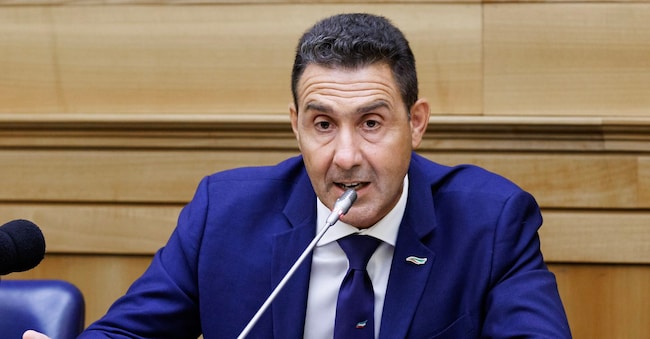
Il leader di Futuro nazionale Roberto Vannacci nella sala stampa della Camera dei deputati durante la conferenza stampa su immigrazione e crisi energetica, Roma, Mercoledì 5 Agosto 2026 (Foto Roberto Monaldo / LaPresse)  LAPRESSE

6' min read

Translated by AI
Versione italiana

6' min read

Translated by AI
Versione italiana

The “patriotic and identity-based” right-wing movement led by Roberto Vannacci has launched its programme. Following a initial presentation during the Constituent Assembly in Rome on 14 June, a couple of months’ fine-tuning was required before the online publication of the first part of the “Ideological and Policy Framework for a National Future for Italia” (two further parts will follow in the coming weeks), focusing on the economy, international politics, security, immigration, justice and energy. The timeframe for implementing the proposals is ten years, spanning two parliamentary terms, explains the general, who summarises the “non-negotiable red lines” as follows: ‘life from conception to natural death, the natural family, Christian identity, and the Roman conception of law’. A programme (co-ordinated by the former Lega Nord city councillor Lorenzo Gasperini (a professor of philosophy, regarded as the general’s ideologue)) which, according to Vannacci himself, ‘is not set in stone but is a living document that will be adapted and amended whenever circumstances and the situation so require’.

Tax cuts and the family allowance

The substantial opening chapter on economic policy begins with tax issues, in relation to which the party proposes, amongst other things, tax simplification, a structural reduction in the tax wedge and a cut in personal income tax rates, as well as the introduction of a ‘genuine family quotient’, which takes into account, for the purposes of determining the tax rate, ‘how many people the income actually supports’. The family is at the heart of other proposals put forward by Futuro Nazionale, such as ‘the gradual reduction in VAT on essential goods’, as well as the ‘blue quotas’ in public sector recruitment, whereby a portion of the available posts is reserved for parents of large families. Among Futuro Nazionale’s policy objectives, it is worth noting the possibility of allowing retirement after 41 years of actual contributions, ‘through a gradual process compatible with the financial and demographic balance of the pension system’.

Loading...

Cash limit doubled to 10,000 euros

But it is also SMEs and self-employed individuals that are the focus of attention for the General’s supporters, who propose, amongst other things, the ‘gradual phasing out of the balance and advance payment system for the self-employed and small businesses’, ‘the extension of the cash basis of accounting to professionals and smaller businesses’, as well as a review of the deductibility of business costs and the depreciation system, ‘encouraging productive investment, innovation, digitalisation, energy efficiency and capital goods’. As for the cash transaction limit, the proposal is to raise it from the current 5,000 to 10,000 euros.

Strengthening SMEs and strategic sectors

Strengthening small and medium-sized enterprises is also at the heart of FnV’s economic policy, with the aim of ‘creating a favourable environment for investment, reducing red tape, facilitating access to credit, supporting innovation and promoting generational renewal’. Considerable emphasis is placed on an industrial policy centred on Made in Italy as a long-term strategy for promoting Italian excellence, “by supporting businesses’ presence on international markets and strengthening the sectors that define the country’s competitiveness: advanced manufacturing, high-quality agri-food, fashion, design, specialised engineering, high value-added craftsmanship, creative industries and innovative technologies”, the text states.

Golden Power to be upgraded

FnV also advocates strengthening the Golden Power mechanism, ‘so as to enable intervention in cases where acquisitions or corporate transactions could jeopardise critical infrastructure, strategic technologies, production chains, national security or industrial capacity’. It proposes the establishment of the Sovereign Fund for National Growth as a “strategic investment instrument designed to support infrastructure, energy, innovation, advanced technologies, research, venture capital, innovative start-ups and the capitalisation of Italian businesses”.

Resuming Russian gas supplies

It regards the structural reduction in energy costs as a priority, both by resuming imports of Russian gas and by diversifying domestic energy sources, starting with new-generation nuclear power, hydroelectric power and biomass. As regards employment, the party aims, amongst other things, to introduce a single job placement database and to withdraw benefits from those who refuse a job offer. There is also provision for profit-sharing schemes and employee share ownership.

No to arms for Kyiv

In foreign affairs, the guiding principle is always ‘the defence of sovereignty and the national interest’. This position has been articulated by Futuro Nazionale with the reaffirmation of its refusal to provide military support to Kyiv, because ‘continuing to send arms indefinitely without a diplomatic strategy for peace is a mistake that harms Italia’. And whilst the ‘America First’ foreign policy pursued by Donald Trump is regarded as ‘a great opportunity’, military operations such as the attack on Iran are viewed ‘with deep concern and condemnation’. In the name of a ‘realist and multipolar vision’ of foreign policy, the party also seeks dialogue with Putin’s Russia, ‘in the interests of energy costs for our families and our businesses’.

The possibility of leaving NATO, the EU and the euro has not been ruled out

In accordance with the principle of political sovereignty, ‘no option should be considered off-limits’. That is why the possibility of withdrawing from international treaties – including the NATO founding treaty (which must remain a ‘purely defensive’ alliance) – should not be ruled out. And whilst it is true that the party is not proposing Italia’s immediate withdrawal from the EU, it is calling for ‘a thorough review of the Union and the criteria governing our membership’ in the name of ‘greater subsidiarity and fewer constraints’. Hence the need for ‘greater flexibility and the possibility of derogations from the financial constraints currently imposed by the European Union’ and for a ‘revision of the economic treaties or their implementation, where they restrict the freedom to spend on productive investments’. The position on the euro is also provisional. According to Futuro Nazionale, Italia ‘must be capable both of remaining in the eurozone by redefining the scope of its monetary policy and of opting to leave, depending on the conditions, the context, and timing, whilst prioritising the national interest, the protection of businesses and jobs, and households’ purchasing power’.

Draconian crackdown on immigration and citizenship

In the chapter on migration and security, the proposals put forward by Vannacci in recent months are reaffirmed. These include measures to curb illegal and mass immigration through a ban on disembarkation, naval patrols and the closure of ports to NGOs. It also provides for immediate repatriation, an increase in detention centres (including those abroad) and an ‘end to mass immigration decrees’ and family reunification. It also calls for remigration not only for irregular migrants but also for those who do not assimilate and do not adhere to ‘the values of our civilisation’. In this regard, Vannacci’s party proposes not only to exclude foreign nationals (both EU and non-EU) ‘from all extraordinary social benefits paid for by our country’ (which include, for example, ‘access to social housing, various types of allowances and unemployment benefits that currently enable deliberate patterns of alternating work and inactivity’), but also to use ‘part of the resources saved thanks to long-term remigration policies (direct social costs, prison costs, the management of asylum seekers, systemic costs arising from crime and the deterioration of the suburbs, etc.) to reduce the tax wedge and thereby encourage higher wages’.

That’s not all. There are also draconian new restrictions on obtaining Italian citizenship, with the requirement to double the number of years of legal residence needed (from 10 to 20), demonstrated proficiency in spoken and written Italian at C1 level, no criminal convictions, and the ‘signing of a declaration of assimilation into Greek, Roman and Christian civilisation’

Loading...

Zero tolerance and criminal responsibility for children aged 12

On the issue of security, a ‘zero-tolerance’ approach is being promoted, which involves the deployment of the armed forces ‘in areas with high crime rates’, the strengthening of urban stadium bans (Daspo) and the crackdown on youth gangs. FnV also intends to reform Article 53 of the Criminal Code concerning the lawful use of weapons by law enforcement agencies. A further objective is to create 10,000 additional places in Italian prisons and to lower the age of criminal responsibility for minors to 12. Other measures include the repeal of so-called ‘opinion laws’ and the rejection of judicial categories deemed ideological, with explicit reference to the Mancino Law against hate crimes and the offence of femicide, which the party proposes to repeal. In the justice sector, the party is pushing for the separation of careers between public prosecutors and judges and for the direct civil liability of magistrates.

In Praise of the Mediterranean Patriarchy


Gender issues also feature amongst the points raised in the Futuro Nazionale programme. Vannacci states that he rejects ‘the left’s educational model, which is based on the ideology of the constant “struggle against patriarchy”. Wherever all traces of ‘patriarchal society’ disappear, there is a worrying rise in violence against women. This proves that we should protect, rather than criminalise, our model – he explains –: that of the ‘Mediterranean patriarchy’, aimed at emphasising distinctive characteristics and fostering strong men, capable of controlling their emotions and passions, protecting women and dedicating themselves to the building and defence of society’.

Copyright reserved ©
Loading...

Brand connect

Loading...

Newsletter

Notizie e approfondimenti sugli avvenimenti politici, economici e finanziari.

Iscriviti