Sustainable development

Tax incentives and infrastructure to boost recycling and reuse

Circular economy a strategic lever and the only field in which Italy is making progress, but according to Asvis a further shake-up is needed to achieve the goals of the UN 2030 Agenda

by Ivan Manzo

6' min read

Translated by AI
Versione italiana

Key points

  • Sdg 12
  • Electronic waste and food waste
  • Italy and Europe
  • The proposals
  • Civil society
  • The Drs

6' min read

Translated by AI
Versione italiana

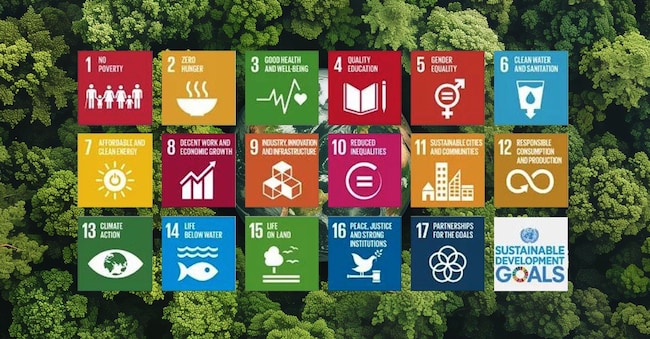
With only five years to go before the 2030 Agenda expires, only 18% of the targets are in line with the goals set by the United Nations. The path towards the 17 Sustainable Development Goals - better known as SDGs - therefore remains uphill: one person in ten still lives in extreme poverty, inequalities continue to widen and the health of ecosystems worsens, compromised by human activities and the effects of the climate crisis.

Sdg 12

In this scenario marked by environmental emergencies, scarcity of resources and increasing concentration of economic power, the circular economy emerges as one of the strategic levers for building a more sustainable future. Its principles, encapsulated in SG 12 dedicated to 'responsible consumption and production', represent a pillar of the 2030 Agenda. On this topic, the Asvis Report 'Italy and the Sustainable Development Goals' takes stock of the national situation, without neglecting the European and global dimensions.

Loading...

Let's start with the general context, which is far from comforting. Between 2015 and 2022, domestic material consumption - the total amount of materials extracted, imported and used - grew by about 23%, reaching 113.6 billion tonnes and exceeding the rate of population growth. Over the same period, per capita consumption increased by 14.8%, from 12.4 to 14.2 tonnes per person.

Electronic waste and food waste

As far as e-waste is concerned, some 96 billion kilograms of electrical and electronic equipment were placed on the global market in 2022, an increase of 50% compared to 2010. The consequence has been a record increase in e-waste, which has now risen to 62 billion kilograms, or 7.8 kilograms per capita, with a forecast of growth to 82 billion kilograms in 2030. In 2022, only 22.3% of the e-waste generated was collected and treated sustainably.

To this picture, already characterised by great contradictions, another one is added: food waste. Every day, families discard enough food to provide more than a billion meals, while one in eleven people in the world suffers from hunger and one in three cannot afford a healthy diet. All this also jeopardises the health of ecosystems: waste generates between 8% and 10% of global greenhouse gas emissions, not to mention the negative impacts on biodiversity. The cost of food waste is estimated at more than one trillion dollars a year.

Italy and Europe

The Asvis Report develops a series of indices to measure Europe's and Italy's progress towards sustainable development. For Sdg 12, the index shows slow progress at the European level, mainly due to the stability of three key indicators: domestic material consumption per capita, material circularity and municipal waste generation per capita. In contrast, significant increases are recorded for the recycling rate and resource productivity (ratio of GDP to domestic material consumption).

The differences between the Member States remain large. Between 2010 and 2024, only Romania and Sweden have worsened, while Finland, Romania and Bulgaria continue to occupy the lowest positions in the European rankings on the circular economy. Among the fifteen countries that have improved their performance, Slovakia and Italy show the most significant progress. In 2024, only the Netherlands did better than Italy on circularity.

In general, the data released by Asvis describe an Italy that is far from achieving the 2030 Agenda. To give a few examples, compared to 2010, Italy is worse in six SDGs: eradicating poverty; guaranteeing clean water and sanitation; reducing inequality; protecting life on earth; promoting peace, justice and sound institutions; and strengthening partnerships for development.

The only really significant progress has been recorded in the field of the circular economy. A virtuous sector, which has now become one of the country's strong points thanks to a path of constant improvement. Among the most significant results are the growth in the share of separate collection of urban waste (+31.3 percentage points), the increase in the circularity of matter (+9.2 points) and the increase in the recycling rate of urban waste (+22.3 percentage points between 2010 and 2022).

Some areas, however, show a swinging trend when compared with the set targets. This is the case with the EU target of 30% circular use of materials - Italy is currently at just over 20% - and the 2030 target of minus 20% in the share of municipal waste produced per capita: in 2023 each inhabitant generated an average of 496 kilograms of waste, only 7.3% less than the 2010 reference value.

The situation is improving on the municipal waste recycling front: with 53.3% already sent for recycling, Italy is on track to reach the 60% target.

The proposals

Although the sector represents one of our country's strengths, now is not the time to lower our guard, not least because Italy's dependence on imported materials remains high: in 2023, almost half of the resources used came from abroad. Accelerating circularity is therefore not just an environmental choice, but a strategy to strengthen the competitiveness of Italian-made products, especially in an international context marked by conflicts and growing tensions, which increasingly sees raw materials as a reason for conflict. It is therefore necessary to relaunch policies linked to the circular economy.

For example, the importance of the design phase of the goods produced, which must become durable, repairable and reusable, should not be underestimated. Not least because in Italy the market for secondary (i.e. recovered) raw materials is struggling to take off, and there is a lack of instruments to measure the real progress of their circularity. To overcome these obstacles, sustainable choices must become more convenient, also thanks to tax levers that reward both those who reduce waste and those who introduce sustainability criteria, including in the public procurement sector.

In this regard, the Asvis Report has identified a number of priorities. Among these is the definition of a national industrial strategy capable of bringing together the various political initiatives, which are currently fragmented, with the aim of orienting the production fabric towards the Industry 5.0 model and the energy transition. Asvis also emphasises the need to invest in renewable energy and artificial intelligence, and to strengthen the network of recycling infrastructures in all regions, so as to close the gap with the most advanced areas in terms of separate waste collection, which in some cases have reached levels close to 90 per cent.

On a regulatory level, the focus is on European directives, such as the Corporate sustainability reporting directive (Csrd), the regulation on the fight against greenwashing and the Corporate sustainability due diligence directive (Csddd). These are measures that impose greater transparency on companies, also in terms of social and environmental impacts. On this, Asvis emphasises that through the simplification of the Omnibus Package, the government must not make the mistake of weakening the sustainability commitments made by companies in recent years.

Civil Society

Attention is then turned to civil society. Informed consumers, aware and equipped with the necessary tools to make more sustainable and responsible purchasing choices, are able to reward the most virtuous companies, stimulating others to innovate and continuously improve, also in order not to risk losing their competitiveness. A fundamental role in this awareness-raising process is played by the world of distribution: it is necessary to act both on citizens' purchasing and consumption choices, and on the offer of supermarkets, restaurants and catering services, also involving consumer associations. Only in this way can the various actors effectively work together towards common goals, such as reducing food waste. In order to enhance the actions of companies, bodies, and citizens, waste must be measured along the entire supply chain, and not only at the level of 'last consumption'.

The Drs

Lastly, Italy, which is one of the main culprits in the EU for the dumping of plastic waste in the sea, needs a Deposit Return System (Drs). According to the latest estimates, every year more than eight billion beverage containers escape the recycling circuits, generating economic losses and significant environmental damage. The introduction of Drs would have an immediate impact: it would make it possible to reduce the dispersion of plastic waste by up to 80%, thus contributing to the achievement of EU objectives and guaranteeing greater availability of resources, including economic ones. A measure that is as simple as it is incisive.

Italian Alliance for Sustainable Development (Asvis)

Copyright reserved ©
Loading...

Brand connect

Loading...

Newsletter

Notizie e approfondimenti sugli avvenimenti politici, economici e finanziari.

Iscriviti