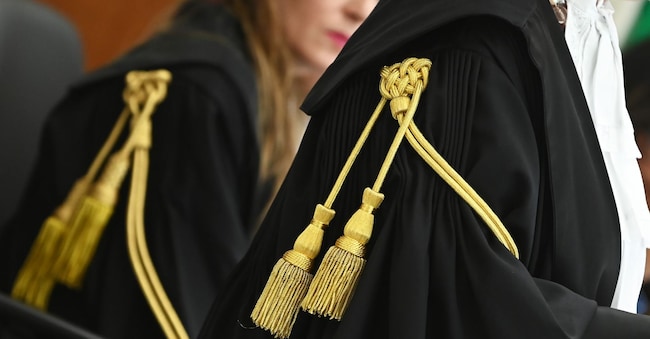
The Examination Board
The commission shall be appointed no later than the fifteenth day following the deadline for the submission of applications, and shall consist of the president of a tax court of first or second instance (who shall chair it), twenty judges selected from among tax judges, ordinary judges, administrative judges, accounting judges and military judges with at least 15 years’ seniority, four tenured university professors, two of whom specialise in tax law and two in the other subjects covered by the examination, two lawyers registered on the special roll of lawyers practising before the higher courts, appointed on the recommendation of the National Bar Council, and two chartered accountants with at least 15 years’ seniority, appointed on the recommendation of the National Council of Chartered Accountants and Accounting Experts.
The preliminary selection test
The preliminary selection, which may take place at various locations and on different dates or in different sessions, will consist of answering – via computer – 75 multiple-choice questions. These must be completed within 60 minutes and will cover a range of subjects from civil law to civil procedural law, including tax law, tax procedural law and commercial law.
The written and oral exams
A number of candidates equal to three times the number of posts available will be admitted to the written examination. Those who have passed the pre-selection stage and are therefore eligible to sit the second stage (on the dates specified in the Official Gazette and on the MEF website) must complete two papers: the first will focus on tax law, the second on civil or commercial law with tax-related aspects. The topics will be selected by drawing lots shortly before the start of the examination.
Candidates who have obtained a mark of no less than 18/30 in each of the essay topics will, however, proceed to the oral examination. If the mark for the first essay does not meet this requirement, the second will not be marked. Results will be announced at least 20 days before the oral examination. The oral examination will cover a wide range of subjects: tax law and tax procedure; civil law and civil procedure; criminal tax law; constitutional and administrative law; commercial law; EU law; corporate accounting and financial statements; basic elements of legal informatics; an interview in a foreign language chosen from English, French, Spanish or German. Candidates will be deemed eligible if they achieve a mark of not less than six tenths in each of the subjects and a pass mark in the language interview. The overall mark – comprising the written and oral components – must not be less than 90 points.
The list of eligible candidates will therefore be forwarded immediately to the Presiding Council of the Tax Courts for approval, together with any comments from the Ministry of Economy and Finance (MEF). The Council will adopt the resolution approving and appointing the successful candidates within 30 days of receiving the list. The decrees approving the ranking list and appointing the successful candidates will be issued by the Ministry of Economy and Finance within 20 days of receiving the resolution. The list of successful candidates will then be published and made available on the Ministry’s website.