
Tax authorities unveil budget plan: income tax cuts and rent relief for young people
Leo at the Forum in Masseria: working to reduce VAT on developer-let properties from 10% to 5%. Extending the 33% income tax rate to earnings of up to €60,000 will cost three billion: “Funded by cuts to tax expenditures”

Key points
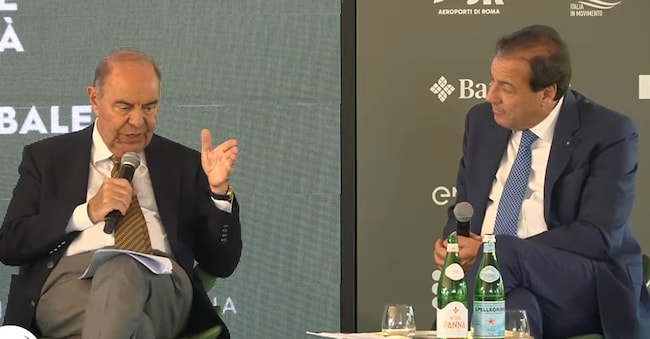
Reduced tax rates on rent for young people’s first homes. Extension of the second IRPEF tax bracket (33%) to cover income up to €60,000, which will cost €3 billion to fund through the reorganisation of tax expenditures. No scope for raising the current revenue or income threshold from €85,000 to €100,000 for VAT-registered businesses under the flat tax scheme. Moving forward with conviction along the path already mapped out in the fight against tax evasion, where the combination of POS terminals and cash registers has resulted in the issuance of 115 million more receipts in the first five months of 2026. Deputy Minister for the Economy Maurizio Leo outlines the broad strokes of the plan for next autumn’s 2027 budget in an interview with Bruno Vespa at the Forum in Masseria, Manduria. All this while remaining true to the mantra that has characterised the Deputy Minister’s statements, namely the need to respect public finance constraints and therefore only if resources permit.
The proposal for a 5% VAT rate on rents
Whilst personal income tax is the most significant issue, the main new development in the preliminary proposals concerns the intention to reduce the tax burden on young people who decide to move out on their own. ‘What we can do is work for young people: that is, for those who want to rent a home, instead of making them pay 10%, we could lower the tax rate to 5 per cent. Here too we need to find the resources, but it is an issue we are considering.’ The reference is to the reduction in the VAT rate which, it should be noted, applies in cases where homes are rented directly from the developer. A move with a dual effect: helping younger people whilst also supporting the new-build market.
A new income tax reduction
The key move, however, remains the changes to personal income tax, which will also serve as the flagship policy with which the government and the ruling coalition aim to present themselves in next year’s elections. ‘We want to implement another small reform,’ explained the Deputy Minister, seeking to reduce the personal income tax rate from 43% to 33% for those in the income bracket between €50,000 and €60,000. That is, the group of taxpayers who make up ‘the famous middle class’. Here, the financial hurdle is decidedly tougher than that of property tax relief for the under-36s. The new IRPEF reform, the deputy minister noted, ‘costs 3 billion’. Realistically, how likely is it that this will happen? On a scale of one to ten, Leo gives a ‘cautious’ score of 7 because ‘we must first see how the situation develops’ regarding the deficit: ‘If things go well in October, we will be able to find the resources’.
Cuts to tax expenditures
However, we also need to fine-tune tax expenditures: a task at which governments and parliaments of different political persuasions have failed. A jungle which, as the Deputy Minister pointed out, consists of 600 measures including ‘deductions, allowances, tax credits, substitute taxes, various concessions and exemptions’. According to Leo, the way forward is through ‘intelligent interventions”, in short a sort of “cherry picking” by adopting a selective approach amongst those measures that are now obsolete or have a limited number of beneficiaries. Although, for the record, it should be noted that a smaller audience does not necessarily mean less fuss or fewer political problems when it comes to making cuts. This realisation also emerged in his response to Vespa when asked, with a “gun to his head”, whether he could find the resources or not. Leo opted for a middle ground with a “Maybe”, quipping that he would have preferred “to be a minister without portfolio; you have more freedom to move around”.
An uphill struggle for the increase in the flat tax threshold to €100,000
Far more complicated, however, is a proposed change to the current €85,000 threshold for the flat tax applicable to VAT-registered sole traders; indeed, in recent days this has come under scrutiny from various quarters – from the European Commission to the UPB – partly due to its disincentive effect on the growth of the economic and professional activities concerned. The Deputy Minister’s technical explanation was as follows: ‘I think it will be difficult to reach €100,000. Because that would mean applying it only for direct tax purposes and not for VAT purposes, given that the VAT mechanism – which is European legislation we must comply with – sets the ceiling at €85,000’. Without, however, forgetting that the battle on this front is also, and above all, political: “I understand the legitimate expectations of my colleagues in the Lega, but I think it is complicated.”


