
Tax reform on finance: waiting for the budget coverage
At Anasf's Consulentia 2026, deputy minister Maurizio Leo explains the next steps. For Undersecretary Freni, consultants are cultural mediators

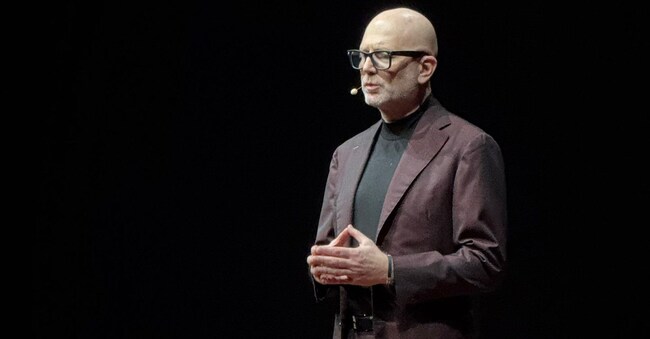
The debate on the future of financial advisory services moves between two extremes that emerged on the second day of Consulentia 2026, the annual event of Anasf, the association of financial advisors: on the one hand there is the relentless drive to "overcome the structural limits" of the profession, and on the other there is the clash with the far less flexible limits of public finance, which condition and brake the long-awaited fiscal reforms in the financial sector. In this tension between the vision of a category without boundaries and the stringent restrictions of the state budget, the figure of the advisor emerges as an infrastructure capable of mobilising immense private savings where public resources can no longer reach.
This fiduciary bridge is all the more necessary in light of the institutional obstacles highlighted by Deputy Minister for the Economy Maurizio Leo, who acknowledges the difficulties of the current tax system, afflicted, meanwhile, by a misalignment between taxation on accrued returns and those actually realised. "The government's objective," he says, "is to standardise the discipline of financial income, studying the compensation between capital gains and capital losses of mutual funds and the alignment of the taxation of pension funds (currently at 26%) with that of pension funds (at 20%). An opening, however, would be linked to investments in the real economy.
The implementation of these measures shows how every reform has to come to terms with the insurmountable limits of the state budget: everything is strictly dependent on finding the appropriate financial coverage in the next budget law.
Spokesperson for the need to overcome the limitations of the category is Luigi Conte, president of Anasf, who outlines an evolution based on the integration of agility, technology and tradition. To explain the crucial role of the consultant, he uses the metaphor of 'Marco', an ordinary citizen who receives a severance package and who, left alone, would risk making rash choices or having his capital eroded by inflation. Conte warns that although artificial intelligence can speed up processes, 'algorithms inevitably tend towards homologation', proposing the same strategies based on statistical averages to everyone. On the contrary: 'the human advisor is able to interpret the unique biography and emotions of each individual, transforming the profession into a true 'infrastructure of trust''.
Undersecretary for the Economy Federico Freni fits into this scenario, taking up the example of 'Marco' to highlight a primary obstacle in our country: widespread financial illiteracy. Freni defines advisors as true 'cultural mediators', called upon to bridge a wide gap between the complexity of the markets and real life. In addition to financial education, the professional must protect and guide the client through the technological bureaucracy: Freni points out that every time an extra password or security token is asked for, the frightened client will inevitably think of deception. It is precisely because of this empathic capacity that is irreplaceable by any algorithm that consultancy is confirmed as 'an essential strategic infrastructure of the country system'.

