Income

Declarations 2025: over 11 million Italians exempt from Irpef

Analysis of 2025 returns reveals a growing net tax but a large number of taxpayers not paying Irpef, with large territorial and income disparities

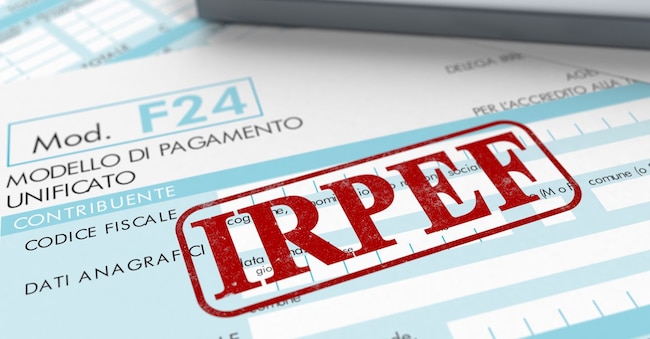
by Marco Mobili and Giovanni Parente

 lucadp - stock.adobe.com

3' min read

Translated by AI
Versione italiana

3' min read

Translated by AI
Versione italiana

The 2025 declarations (on the 2024 tax year) also confirm Irpef's contradictions.

The 'net' personal income tax came to EUR 197.4 billion (+3.9% over the previous year) for a per capita value of EUR 5,790.

Loading...

On the other hand, the declared incomes came close to the 1,100 billion mark (1,076.3 to be exact) with an aincrease of 4.7% (i.e. 48.6 billion more) over the previous year, and the upward trend also affected the average value, which stood at 25,820 euro (+4%).

All this in a macroeconomic scenario that saw GDP growth of 2.8% in nominal terms and 0.8% in real terms, while the national consumer price index grew by 1% in 2024 (compared to 5.7% in 2023).

But, in addition to the stonewall of evasion, which in Italy can never be underestimated, there are aspects that immediately leap to the eye when looking at the data and the bulletin published by the Finance Department. Starting with the fact that the net tax is declared by 34.1 million subjects (79.6% of the total number), but as in a sort of inverted pyramid, the number of those who actually pay is gradually decreasing.

Those who pay nothing

As explained by the Finance Department, 'more than 8.7 million taxpayers declare a net tax of zero. These are taxpayers whose income levels fall within the exemption bands from declaration obligations, taxpayers whose deductions set their gross tax at zero, or taxpayers who only declare income subject to substitute taxation'.

The number, however, is still growing. If we also take into account those whose net tax is fully offset by the supplementary allowance and bonus thirteenth month, those who do not pay de facto Irpef are over 11.3 million.

Almost one euro in three is borne by the middle class

But the 'anomalies' do not end there. The distribution of tax by total income classes shows that taxpayers with non-zero net tax and incomes up to 35,000 euro (76.6% of total taxpayers) declare 34.9% of the total net tax, while the remaining 65.1% is declared by taxpayers with incomes above 35,000 euro (23.4% of total taxpayers).

In particular, 32.1 per cent of the tax is declared in the EUR 35,000 to 70,000 class.

Persons with an enhanced net tax and a total income of more than EUR 300,000 (0.2% of taxpayers) declare 6.6% of the total net tax (in 2023 it was 7.1%).

The appeal of 730 is growing

All in all, more than 42.8 million taxpayers fulfilled their tax declaration obligation, either directly through the submission of the personal income and 730 declaration forms or indirectly through the tax withholding agent declaration (Certificazione Unica: Cu). The total number of taxpayers increased by 0.6 per cent compared to 2023.

And going into detail, 25.2 million individuals used the 730 form, an increase of over 752,000 taxpayers compared to the previous year 

while 8.4 million individuals instead filed the Personal Income Form

The data for the remaining 9.2 million taxpayers not required to submit the declaration directly were acquired through the Single Certification Form (Cu) completed by the tax withholding agent.

In Lombardy, the highest declared average income

The polarisation between northern and southern regions remains.

The highest overall average income is in Lombardy (30,200 euro), followed by Trentino Alto Adige (28,553 euro, with the province of Bolzano reaching 29,850 euro).

At the tail end is Calabria with an average income even below 20,000 euro (19,020 euro).

From employees and pensioners 84.6% of income

Income from employment and pensions constitutes about 84.6 per cent of the total declared income, with income from employment accounting for 54.4 per cent.

As the Finance Department also points out, the highest average income is from self-employment, at EUR 67,510, while the average income declared by entrepreneurs (owners of sole proprietorships) is EUR 28,550.

The average income declared by employees is 24,250 euro, that of retirees is 22,390 euro.

In terms of changes compared to the previous year, an increase in average income from dependent employment (+4.1%) and rpension income (+5.3%) is observed, while for income from economic activity there are decreases in average values.

In particular the income of the entrepreneur in ordinary accounting decreased (-4.5%), as did self-employment income (-4.1%),

income in simplified accounts (-1.6%) and participation income (-1.0%).

All this in a context in which the number of workers with permanent contracts (+1.6%) and those with fixed-term contracts (+1.1%) increased.

The weight of municipal and regional surtaxes

Then there is also the Irpef tax bill. The regional one amounts to EUR 16.2 billion in 2024 (+6.2% compared to 2023).

The average regional tax ranges from a minimum of EUR 300 in Sardinia to a maximum of EUR 790 in Lazio.

Thecommunal one, on the other hand, amounts to a total of approximately 6.6 billion euro, an increase of 6.4% compared to 2023, with an average amount varying from a minimum of 140 euro in the Autonomous Province of Bolzano to a maximum of 280 euro in Lazio and Liguria.

Copyright reserved ©
Loading...

Brand connect

Loading...

Newsletter

Notizie e approfondimenti sugli avvenimenti politici, economici e finanziari.

Iscriviti