
Teaching (and practising) leadership in sailing
Lessons learned at sea during Regatta 2025, an international sailing and networking event dedicated to European business schools

5' min read
5' min read
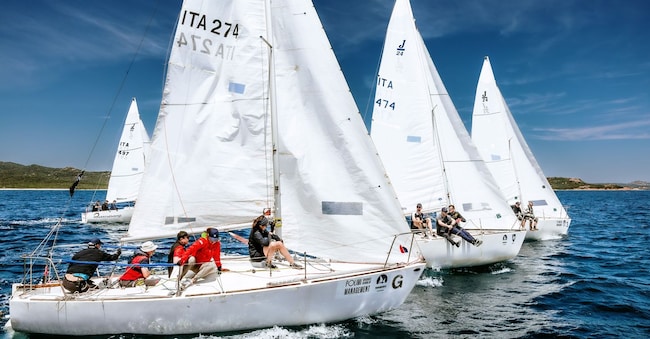
Leadership skills and the ability to value others, interpersonal attitudes and the skills to be a good manager (and a good leader) can also be learned outside of a classic training classroom. For example at sea. And if the sea is the mid-May sea of Cala dei Sardi, a marvellous marina in the heart of the Costa Smeralda, between Cala di Volpe and Porto Rotondo, it means having "breathed in" leadership concepts and theorems by participating in Regatta 2025, the international sailing event organised every year by the Sailing Club of Polimi Graduate School of Management. It is an event that combines a passion for sailing and sporting competition (it is still the Italian leg of the MBA Sailing League, a circuit of international regattas featuring more than twenty of the best European business schools) and the opportunity to do learning and networking in an experiential way.
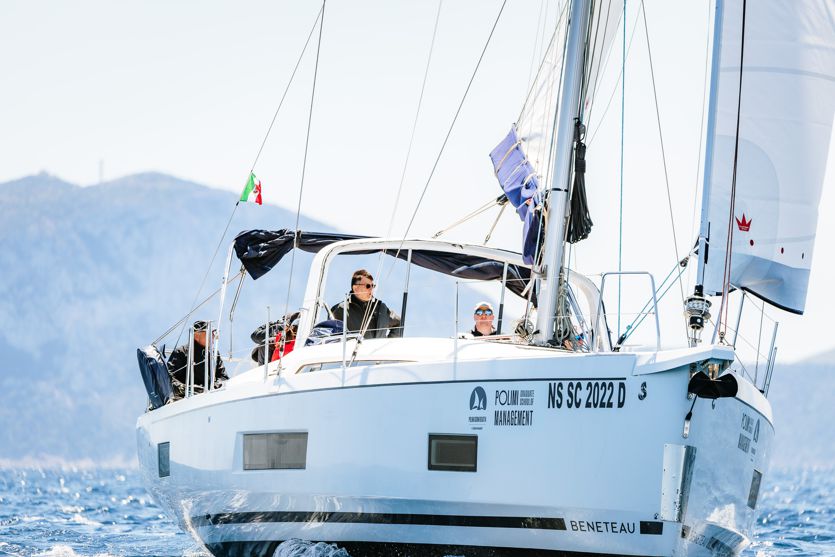
The theme of leadership is one of the glues that marked the activities and sharing moments of the three days, because on J/24 class boats strategy and decision-making are as fundamental aspects as individual skill and respect for roles among the various crew members. Even on cruising boats with experienced skippers on board, the theme of exercising command and directing actions in a targeted manner was central to an approach designed to foster learning and inclusive participation. About a hundred participants took part in this edition, including students, alumni, entrepreneurs and leaders from different continents, and six management training schools competed, namely Instituto De Empresa, London Business School, Bocconi, Oxford, Rotterdam School Of Management, and of course Polimi GSoM.
Paolo Sito, president of the Sailing Club, a former alumnus of the Politecnico business school and the event's master of ceremonies, once again emphasised how sailing is much more than a sport, "an open-air laboratory where leadership, adaptability and team spirit are trained", and how this project was born with the intention of offering the alumni community "a unique context in which to test their skills in a concrete and challenging way".
In an interview with Sole24Ore.com, Sito returned to the personal experience of his master's degree, describing it as 'decisive and very important for his professional career and beyond', and to the 'magic monent' (it was spring 2010) that saw him make the decision to get on a sailing boat for the first time, joining the crew that would represent the MIP (the then business school) of the Milan Polytechnic at an international regatta scheduled a few weeks later in Athens. And that very first regatta, as the manager recalled with a smile, was the opportunity to experience his first lesson in leadership among the waves: "The skipper taught us the concept of knowing how to take responsibility and make strategic decisions, fully transferring to us the meaning of relying on a reference and competent figure in the knowledge that we were in the right hands. The skipper was Ugo Alvazzi Del Frate, still a leading member of the Sailing Club, and his lesson in leadership took place in the cockpit of a boat that had gone in the opposite direction to all the other crews and at the end of the regattas came second out of twenty participating boats. "Genius cannot be questioned, it can only be admired," Sito wrote in a post a few years later recalling that first experience, emphasising how one can also be a leader "with a few words but the right ones" and how "one should not be afraid when one realises one's projects with great awareness".
Rules that Gianfranco Bacchi, president of the Yacht Club Cala dei Sardi and 122nd captain of the Amerigo Vespucci, knows very well, because few people like him are used to living, as he defined them, "in floating communities made up of individuals with different languages". A project like the GSOM Polimi Regatta, he emphasised on the sidelines of the event, 'constitutes an unmissable opportunity to explore interpersonal relationships, read reactions and understand instinctive gestures, because teamwork is not just the fruit of synchronisation but the result of constant work to find that set of gestures and words that allow the mission to be seen from a single perspective'. Indeed, it only took a few minutes of acquaintance with Bacchi, the only one to have commanded the Vespucci for two consecutive years (in the two-year period 2020-2021) and the second to have steered it within the canal and the port of Taranto, to recognise his leadership charisma. "Making strategy," he explained to us on board the Regatta jury boat, "is starting from certain information, and the value of strategy comes from how this information is managed to make the best decisions. An example? All it takes is a stick with a string hanging from it to understand the exact direction of the wind and to position the buoys marking the race course in the most suitable spot.

