
La Scala Theatre: tensions over contract renewal
The main trade unions have declared a state of industrial action. Among the issues to be resolved is a 15 per cent increase in annual pay

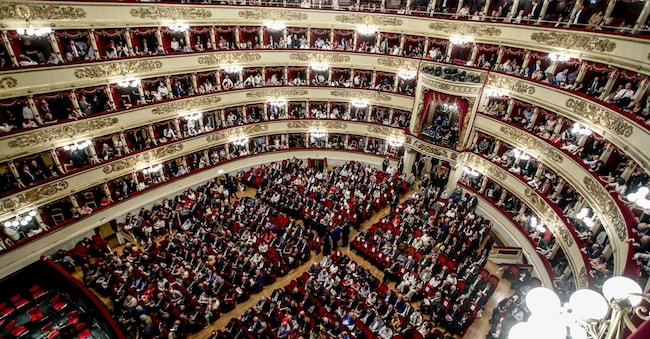
It is proving to be an uphill struggle for the new company-wide agreement for workers at La Scala. The main trade unions – CGIL, CISL, UIL and FIALS – have in fact declared a state of industrial action following the sixth meeting with management.
The trade unions have declared a state of industrial action, ordering an immediate halt to all overtime work. At the heart of the dispute is the demand identified as a priority for the renewal of the single collective agreement for the period 2027–2030: a 15 per cent increase in gross annual pay for all staff from January 2027. This demand has been put forward by workers’ representatives to restore purchasing power following years of high inflation and to recognise the professional expertise of theatre staff.
However, the trade unions’ assessment of how the negotiations are progressing is negative: ‘We cannot accept that, in the face of a specific and well-founded pay demand, the talks should continue without any concrete responses emerging,’ reads a joint statement. Our platform stems from the need to restore purchasing power and provide adequate financial recognition to all workers. We are not asking for a token gesture. We are calling for the work of the people who keep the theatre running every day to be properly valued. And on this point, we are not prepared to back down.”
The 15 per cent increase, along with the other requests, represents a significant financial commitment for the theatre, which the board of directors will discuss at its next meeting, scheduled for 12 October.
Another issue concerns the reorganisation of allowances and working conditions: there are sectors in which those with the longest service can reach 12 pay steps, whilst for younger staff they are capped at five. “For us,” said Dario Emanuele of the CISL, interviewed by ANSA, “it is important to guarantee allowances to certain colleagues who have never received them” and “to ensure there is no unequal treatment between categories”. The CUBS (which is, however, currently in a state of industrial action) has a different set of demands; amongst other things, it has called for a fixed allowance of 500 euros for all staff and a 10 per cent increase in the basic salary.

