
Technital for securing the Petacciato landslide and the A14
The Niscemi-like phenomenon will soon be definitively stopped thanks to a system of wells
by Barbara Ganz
Key points
An intervention worth a total of EUR 27 million, aimed at definitively securing the town of Petacciato, in Molise, which is affected by one of the largest and most significant landslides in Europe, and two infrastructures of national importance such as the A14 motorway and the Adriatic railway line, fundamental corridors connecting Southern, Central and Northern Italy.
The experience
The project was developed by Technital - an internationally active Italian engineering company from Verona, specialising in the design and supervision of large complex infrastructures and land protection works - as part of a multidisciplinary team, integrating engineering, geology and advanced monitoring skills; the tender for the works is currently underway.
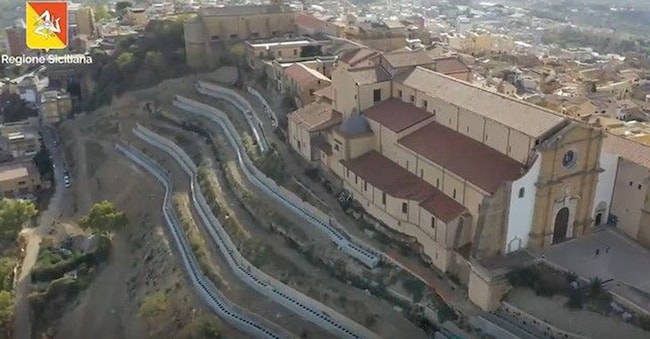
The Petacciato project is part of Technital's long experience in the field of hydrogeological risk mitigation. Among the most significant interventions is the one on the Rupe di San Gerlando in Agrigento, on which the Cathedral stands, completed two years ago. In that case, thanks to an articulated system of consolidation and drainage works, the site was made safe as part of an intervention promoted by the Sicilian Region and the Government Commissioner for the fight against hydrogeological instability, restoring stability to a context of extraordinary historical and cultural value.
The Molise case
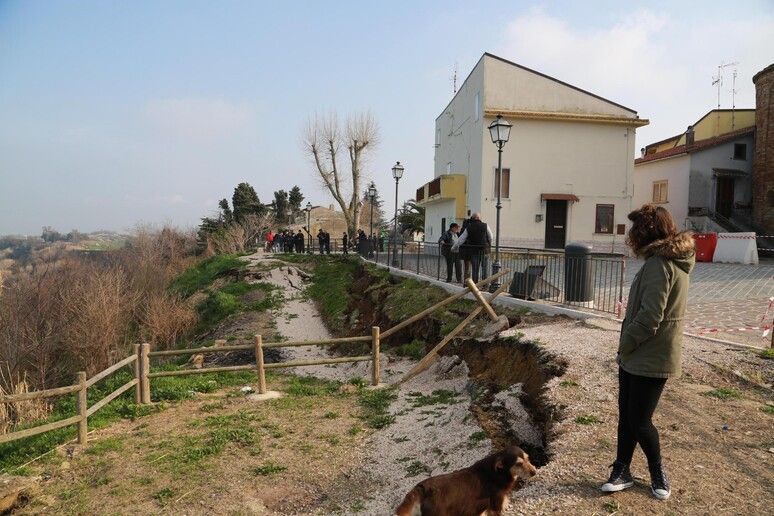
The Petacciato landslide affects the north-eastern slope downstream of the built-up area and presents a complex dynamic, linked in a decisive way to the presence and circulation of water in the subsoil, which affects the stability of the loose soils and sliding surfaces. Starting from an in-depth geomorphological, geological and geotechnical analysis, the project identified an intervention strategy based on deep drainage hydraulic works, capable of intercepting and regulating the water flows that feed the landslide movement.
The design solution envisages the construction of large-diameter draining wells, conceived to reduce the interstitial pressure inside the landslide body and favour its progressive stabilisation. An advanced monitoring system will accompany the intervention in the different phases, allowing the continuous control of the slope evolution and the effectiveness of the works carried out.

