Technologies and processes: the circular economy enters the factory
In the Sole 24 Ore-Statista list a number of companies that have managed to turn waste management into industrial leverage

Key points
No longer just downstream recycling, but design, durability, waste recovery, secondary raw materials, packaging and supply chain. The circular economy is changing grammar: from environmental practice to industrial leverage. This is also demonstrated by the European path towards the new Circular Economy Act, expected in 2026, with which Brussels aims to create a single market for secondary raw materials and to double the European circularity rate to 24% by 2030.
Consumer goods
Among the companies included in the Sole 24 Ore-Statista Sustainability Leader list, the red thread of circularity runs through different sectors. In the FMCG sector, it passes mainly through packaging, materials and waste recovery. Ferrarelle for example - a new entry in the 2026 ranking together with Bolton Group - starting from post-consumer bottles produces R-Pet, sustainable food-grade plastic to be placed on the market as new bottles. On the other hand, Bolton Group, with brands such as Rio Mare, Simmenthal and Palmera, links circularity to packaging, collaboration with WWF Italia to assess the sustainability of packaging and waste reduction in operations. Valsoia, on the other hand, focuses on plastic reduction, the environmental impact of beverages throughout their life cycle and the possible valorisation of okara, the residue from soya processing, as well as the creation of an ecological area dedicated to assimilable waste.
Elleci's two mainstays
If in large-scale consumption the first ground is mainly packaging, in industry circularity enters the production cycle. For Elleci, a company specialising in sinks, washbasins and kitchen and bathroom solutions, the starting point is not the waste, but the product. "The first real sustainability criterion is durability, to overcome the logic of use and replace," explains Graziano Traversa, chief operating officer of Elleci. For the company, sustainability develops along two complementary lines: on the one hand, the recovery and internal reuse of waste materials generated during the production process, and on the other, the design of a new business model in which even the product at the end of its life can be recovered, regenerated and reintroduced into the industrial process as a new raw material. The company's Roadmap 2030 has set measurable targets: to reach at least 50 per cent recycled or renewable materials in production. Starting with the recovery of waste: "Through shredding and regeneration processes," says Traversa, "we are developing technologies that will allow us to recover over 90% of the waste generated by the production cycle and reintroduce it into the formulations, replacing part of the virgin quartz.
Battistella: waste as a strategic resource
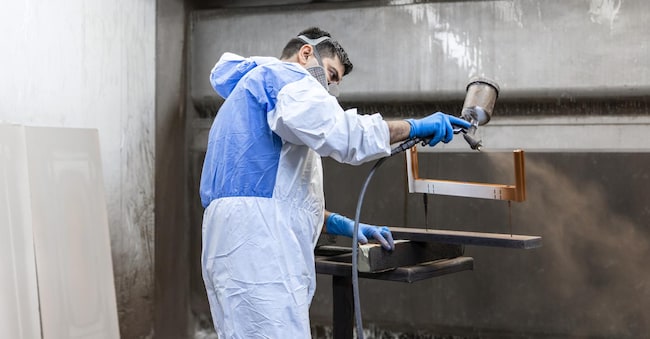
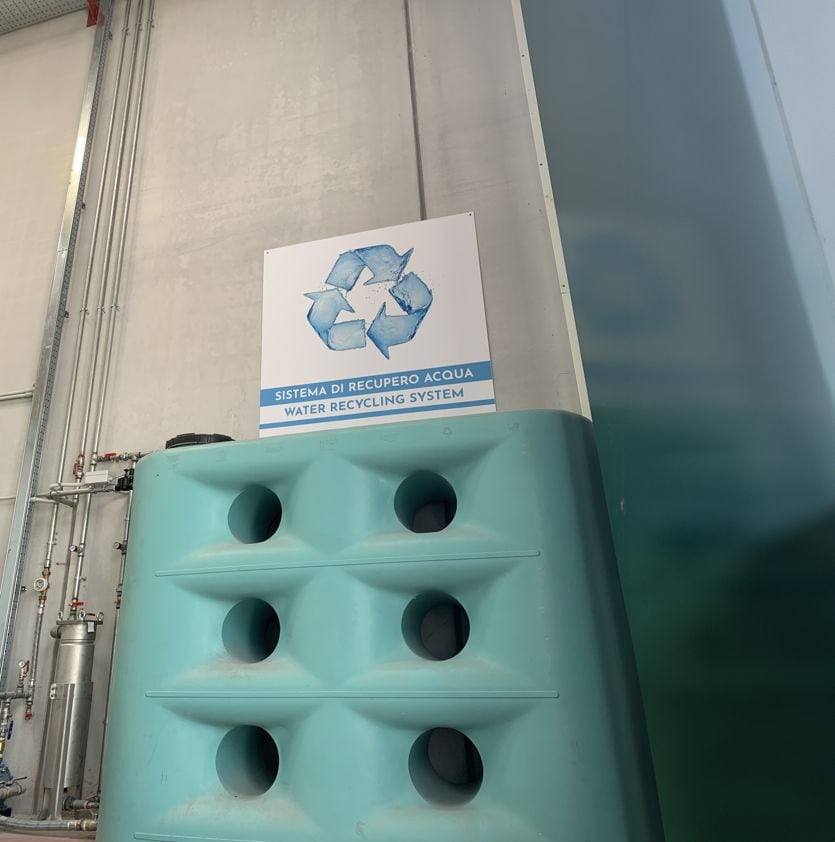
Even in the wood-furniture sector, circularity takes the concrete form of waste. Within the Battistella Group's production process, over 93% of the materials used are of recycled origin and 90% of the procurement budget goes to Italian suppliers. "For us today, the circular economy is a concrete industrial model, not a slogan: it means integrating materials, processes and supply chain in a coherent way to reduce waste and environmental impact," says Alberto Battistella, general director of Battistella Company. In fact, wood waste, explains Michele Colombari, sustainability & certification director of Battistella Company, "is not simply considered an unavoidable by-product, but a real strategic resource. Shavings, sawdust and offcuts are collected and reintroduced into the production cycle, mainly to make recycled wood panels, and the non-recoverable portion is valorised as biomass. Automation also helps to minimise waste: 'Already in the design phase, advanced software optimises panel cutting. In production, the machines guarantee precision and repeatability, limiting errors, defects and rework". Further actions implemented by the group include organic water-based coatings that improve air quality in both production and home environments, water recovery and recyclable packaging.
Gefran: Circularity as value for the supply chain
In industrial automation, however, the theme shifts from materials to processes, and circularity becomes a value for the entire supply chain. For Gefran, a Brescia-based multinational specialising in sensors, components and automation solutions, circularity also concerns the impact of technologies on customers. "The circular economy is linked to the very nature of the products we make: sensors and components with high technological content, destined for industrial plants and multiple application sectors," explains president Maria Chiara Franceschetti. "Working on circularity means paying attention to the materials used, the management of the waste generated - with a view also to reducing waste as much as possible - and the functionality of our solutions, which can favour a more efficient management of production resources for the end customer as well." In 2025, Gefran began assessing the environmental impact of its products through a study of their entire life cycle, from materials to production, to use and end of life. On the packaging front, already 100% of the material used is recyclable, 79.7% is easily degradable and 70.4% of the waste produced by the group has now been sent for recovery. "Product innovation can also become a sustainability lever for industrial customers when it makes processes more controllable, measurable and efficient," adds Franceschetti.