
Technology and international support for the LIUC of the future
President Grassi: “We have reaffirmed the founding values of 35 years ago, but our approach must evolve”

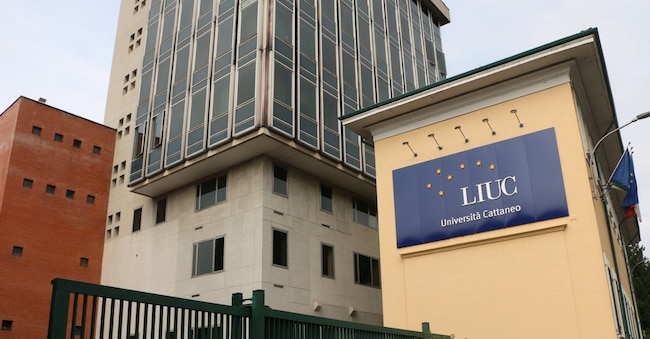
The integration of artificial intelligence and an international focus. And then close ties with businesses and external partnerships, with the potential to go even beyond the current curriculum. These are the guiding principles of the new strategic plan that LIUC in Castellanza is preparing to launch, in the year in which the university – founded by entrepreneurs from Varese – celebrates (with the official event on Wednesday 14th) its 35th anniversary. “The values of that time remain valid,” explains LIUC President Roberto Grassi, “but naturally our plans change, as is only right in a world that is constantly evolving.” At the heart of the project remains its close ties to the business world, for a university that has trained 15,000 young people over the years and is now seeing rising enrolment figures.
“The entrepreneurs’ initial vision,” explains Grassi, past president of Confindustria Varese, “was to invest in know-how, in the knowledge that skills are the main driving force behind any possible development. The university’s new strategic plan builds on this idea, incorporating new technologies into teaching and internal methodologies, and strengthening its international dimension – an area in which we are already engaged through 152 partnerships.” The latest figures from LIUC show a rise in enrolment, in both master’s and bachelor’s degree programmes – a result that is by no means a given for a relatively small university situated a short distance from the major university hubs in Milan. ‘Our small size, however, is also an asset,’ explains Grassi, ‘and allows us, for example, to change course quickly and flexibly, taking into account changes in the labour market, demographics and technology. It also enables us to foster more direct relationships between lecturers and students here on campus. The figures are proving us right, with enrolment on the rise, although we do not want to expand too far, so as not to compromise the quality of our programmes.’ The university focuses on engineering and economics, though these areas may be expanded by exploring potential collaborations with other institutions. ‘We’ll see,’ adds Grassi, ‘it’s one of the possibilities we’re considering. We are, however, aware of the solid foundation we are building on, bearing in mind that one year after graduation, 93 per cent of economics graduates are in employment, with similar figures for engineering, where the rate rises to 100 per cent five years after graduation. As an entrepreneur, I can say that the calibre of these young people is truly high.” The university’s reorganisation has also affected its management structure, with changes to almost all senior management roles, whilst the long-standing partnership with Confindustria Varese, a founding partner of the university, continues in parallel.
“Activities to develop new start-ups are already under way,” explains Grassi, “and we are implementing many of the projects set out in the Mill masterplan, which involves relocating the headquarters of the local Confindustria to this area, launching new laboratories and creating spaces dedicated to new entrepreneurship. “In general, looking back on what has happened, we owe a debt of gratitude to the 300 founding members – entrepreneurs who, way back in 1991, set themselves the challenge of how best to develop the skills needed for this region.” Mill (Manufacturing, Innovation, Learning, Logistics) – an accelerator to be established within the campus – will act as the control centre for the new developments in the area.


