Games

Is technology too expensive? Gen Z is rediscovering the charm of analogue

Consumer electronics are at risk of becoming a luxury, so young people are rediscovering ‘dumb’ phones, cameras, music players and retro gaming. It’s called ‘anemoia’: nostalgia for an era one has never actually experienced.

4' min read

Translated by AI
Versione italiana

4' min read

Translated by AI
Versione italiana

The iPhone Duo, Apple’s foldable mobile phone, can cost as much as 3,869 euros. But it is not just Cupertino that is raising prices. The cost of DRAM memory has increased fivefold in a year due to the success of AI, and prices for electronics in shops have risen by up to 20 per cent. And according to experts, they won’t fall for at least the next two years. Smartphones, PCs, tablets and smartwatches are at risk of becoming luxury items.

And young people – Gen Z, in short, those under thirty – seem to have found a way out: the analogue world. The term to learn is ‘anemoia’, which we can translate as a longing for an era one has never experienced first-hand. Millions of people are rediscovering physical media such as Walkmans, cassettes, iPods and Game Boys.
Loading...

Probably as a reaction to the hyper-connected and ‘frictionless’ digital world championed by Silicon Valley, basic (‘dumb’ or clamshell) mobile phones are gaining ground, chosen deliberately to limit the role of technology in everyday life. On social media, the hashtag #nostalgia and the revival of 1990s pop culture are forging community ties and a sense of shared humanity.

It is difficult to explain why young people of Generation Z seek refuge in the aesthetics and objects of the past. Perhaps it is to escape the anxiety and conformity of a hyper-digital world driven by artificial intelligence.

Those who spent their youth in the 1980s and 1990s like to think that a commercial rebellion is underway – a sort of critical re-evaluation of the mobile phone.

The smartphone has become a universal attention-grabber that constantly fragments our focus. Meanwhile, scientific studies and legal proceedings have laid bare the slot-machine-like nature of social media, which might – though this is merely a suggestion – have driven Gen Z towards retro technology.

The modern alternative seems to be to replace the individual functions of the telephone not with old, obsolete objects, but with modern devices which, to put it simply, serve a single purpose, do one thing well, and are characterised by cutting-edge design, clearly defined limits and a strong tactile element.

In the background – and this is, as always, the writer’s own speculation – there may be a broader critique of the current economic model (‘owning nothing’), dominated by streaming services and digital subscriptions where users no longer own material goods or content. Returning to physical devices and tangible storage represents a small act of resistance to reclaim one’s own memories and real-life experiences.

But what products are we talking about? For example, Kodak Charmera, a pocket-sized mini digital camera created by the company Reto.

Inspired by the iconic 1987 disposable Fling, it combines modern technology with a retro feel: it has a tiny screen (less than an inch) and physical buttons, forcing users into an imperfect, tactile and spontaneous experience, a far cry from the clinical precision of smartphones.

Loading...

Light Phone III is a phone that doesn’t want to do what phones usually do: no browser, no social media and no app store from which to install anything. Made of aluminium, it features a physical scroll wheel, a battery that can be replaced with a screwdriver, and a 3.92-inch matt monochrome AMOLED display — the e-ink screen from the previous model has been ditched as it was too slow. The LightOS operating system offers only ‘tools’: phone, messages, music, notes and text-based navigation. No browser, no social media, no app store from which to install anything. It costs around $699: in 2026, subtraction costs more than accumulation.

Moving on to music, Sony NW-A306 (~€350) lets you access your music library offline, without anyone else deciding what comes next. It restores the album as a form: beginning, middle, end. And it has a physical scroll wheel, which, after ten years of touchscreens, feels a bit dizzying.

When it comes to accessories, I was struck by the Freewrite Wordrunner. It’s a bit extreme: e-ink plus a mechanical keyboard, no browser, no tabs open alongside your writing. It’s the only known way to stop yourself from ‘quickly checking something’ in the middle of a paragraph.

Under the ‘e-reader’ heading, there’s the Boox Palma 2 Pro (€400). In case you didn’t know, it looks like a smartphone, but it isn’t. When you switch it on, there’s a book.

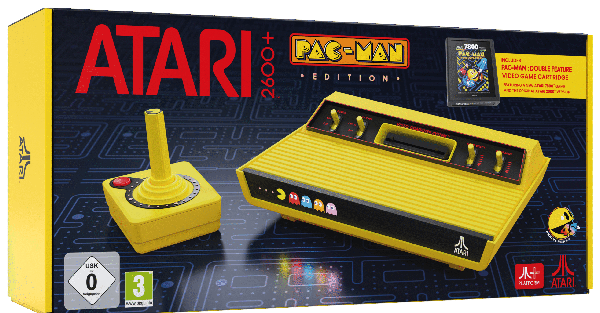
Finally, there are video games, which are perhaps the symbol of this return to analogue. Retrogaming has long since ceased to be a niche phenomenon. The practice of playing (and collecting, and preserving) video games from past generations — generally those released before 2000 — has a distinct market that is now expanding to include younger generations as well.

At last, young people will realise just how much harder (but how much more enjoyable) it was to play in the nineties. A note: the ending of the article is along the lines of ‘what do you lot know?’, aimed at the very young. I apologise, but it just came out that way; it wasn’t meant to be nostalgic at all. Not in the slightest.

Copyright reserved ©
Loading...

Brand connect

Loading...

Newsletter

Notizie e approfondimenti sugli avvenimenti politici, economici e finanziari.

Iscriviti