Innovation

Tef: 130 million in 15 months. Science becomes business

By moving into the new Bovisa hub, the Tech Europe Foundation is taking a further step towards achieving its objectives, following the merger between Polihub and Bocconi For Innovation and the launch of its programmes

by Giovanna Mancini

3' min read

Translated by AI
Versione italiana

3' min read

Translated by AI
Versione italiana

An open project, a platform ‘that systematically transforms science into business’, to quote its CEO, Luca de Angelis. The Tech Europe Foundation (TEF) was set up to fill a gap that has for too long characterised Italy and Europe and which, in recent years – driven by the acceleration brought about by artificial intelligence – has created a huge gap between them and the United States and China.

“Today, the world’s largest global companies are increasingly research-intensive organisations; just look at the latest IPOs: Anthropic and OpenAI are conducting cutting-edge research, whilst SpaceX is producing products of the highest engineering standard,” observes de Angelis. At the same time, product time-to-market is becoming ever shorter. Europe seems to be left out of all this, and not because of a lack of raw materials, capacity or research quality, nor even a lack of funding.”

Loading...

Italia’s lag and potential

What is lacking in our country, according to Tef’s CEO, “is a mechanism that generates and supports ideas”. To achieve this, three things are needed, which are currently absent or lacking in Italia: incentives for breakthrough research (i.e. focusing on high-risk, high-impact technologies), managerial capital and, above all, a culture of growth.

“This is what we were born to do,” explains de Angelis, “and we’re doing it with the ambition of launching a thousand start-ups a year, carrying out over 300 research projects and raising a billion – the minimum amount needed to get us back on track.” The operating model (“authentic and home-grown”, as the CEO puts it) is that of a non-profit infrastructure which supports research originating from universities – where ideas are born – and nurtures them by integrating them with managerial capital and, finally, helps to connect them with industry and investors.

What has been achieved in 15 months

If this is the vision, the results are already tangible after just 15 months of operation: established in early 2025 and now supported by six founding members (the Polimi Foundation, Bocconi University, Ion, Fsi, the Milan, Monza, Brianza and Lodi Chamber of Commerce and the Ennio Doris Foundation), Tef has raised around 130 million to date, launched five out of six products (the sixth is due in the autumn), funded 111 research projects, supported 78 start-ups and engaged 1,135 people.

Among the most significant milestones in this journey was the merger, last January, of the innovation divisions of two of Italy’s leading universities: the Polihub at the Politecnico di Milano and B4i (Bocconi For Innovation) at Bocconi University, together with the associated venture capital fund, which have all come together to form Tef. An ‘extremely courageous’ move on the part of these two universities, emphasises de Angelis. The Foundation has also established a number of international collaborations with prestigious partners such as MIT, ISSNAF, Creative Destruction Lab in the US, and Rise Europe and UnternehmerTum in Europe.

The new development in the Bovisa neighbourhood

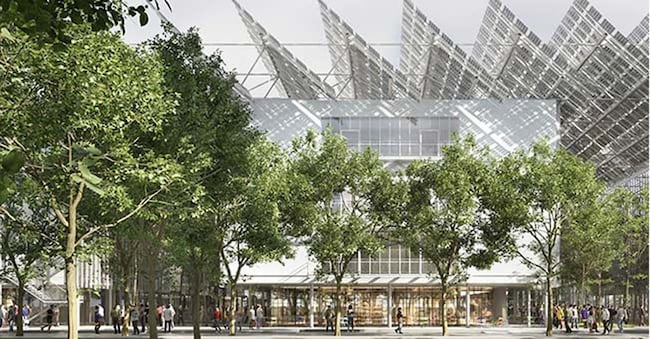
Today marks another symbolic step forward, with the offices having moved, a few days ago, into the first building to be completed within the new Politecnico di Milano campus, designed by Renzo Piano, which is taking shape in the Bovisa district and is due to be completed between 2027 and 2028. Tef will occupy 30,000 square metres within this campus, alongside the Polytechnic’s laboratories and facilities.

The five initiatives launched to date are the research fellowships (93 in total), the Ignition programme, aimed at students (with 200 teams involved so far), the CDL-Milan Programme for start-ups (55 of which have expressed interest to date), the TEF Rocket programme to fund researchers; Foundry, for which registration is already open and which will launch in the autumn, bringing researchers together to determine, over nine months, whether their idea can be turned into a business; and an accelerator programme due to launch in the autumn. With the launch of its latest product, Tef will achieve the structure envisaged at the outset of its journey. It remains, however, open to new influences and collaborations in order to continue growing.

Turning ideas into businesses

“When we started building Tef, we didn’t know whether the Italian ecosystem was lagging behind others due to a lack of raw materials or because there was no mechanism in place to process those raw materials,” observes de Angelis. “Well, these figures show not so much that we’ve done a good job – we’re too new to say that – but that, simply by opening our doors, we’ve tapped into a need, an unspoken demand. We’ve received a huge number of ideas.” These young people, the CEO notes, are no different from those living in Chongqing or San Francisco: ‘But there is something that happens during and after their studies which makes them a little apprehensive,’ concludes de Angelis. ‘Our mission is to provide the tools and skills to overcome these obstacles and turn ideas into businesses.’


Copyright reserved ©
Loading...

Brand connect

Loading...

Newsletter

Notizie e approfondimenti sugli avvenimenti politici, economici e finanziari.

Iscriviti