
Tehran: 'Distance with the US reduced'. Rubio confirms progress
Iran's openness to the latest proposal. For the US Secretary of State 'positive signals'. But the regime insists: 'We will not hand over the uranium', and Trump retorts: 'We will take it'
The new proposal presented by the United States 'has reduced the differences to a certain extent'. The positive assessment of the text - the umpteenth delivered by the White House to Iran - was filtered by the regime in Tehran yesterday through the semi-official Iranian Student's News Agency. No other details were released, but the negotiations, at this stage, are also clinging to these few words, in order to take a step forward from the fragile truce to a peace agreement. The same Iranian agency added, however, that 'for a further rapprochement it is necessary for Washington to put aside the temptation to continue the war'.
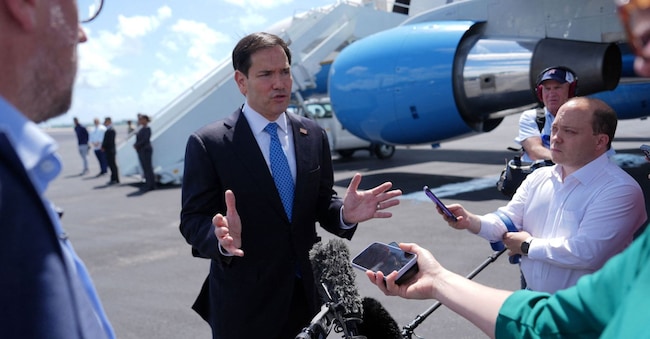
On the American side, Secretary of State Marco Rubio, speaking to reporters in Miami yesterday said that "negotiations with Iran have made some progress" and that "there are positive signs": "But," he added, "I don't want to be too optimistic, let's see what happens in the next few days". Donald Trump had already said he was willing to 'wait a few days to be able to start serious negotiations' with Iran. But as always he had also insisted on threats: 'Believe me, if we don't get the right answers, the situation will evolve very quickly. We are all ready for an agreement, but also - he said - to resume the raids against Iran'.
Negotiations are continuing, messages between Washington and Tehran are intensifying. Almost three months after the attack decided by the United States and Israel, and six weeks after the ceasefire began, the whole world expects a breakthrough in the conflict. Pakistan's mediation is becoming increasingly active, with China in the wings. Pakistani army chief Asim Munir, who reportedly maintained direct contact with Trump, was expected in Tehran yesterday. Pakistani Prime Minister Shehbaz Sharif, on the other hand, will be on a mission to China from Saturday to also seek Beijing's support, after the Chinese president called a possible resumption of US bombing of Iran "unacceptable". And in Beijing - between Trump's visit and Vladimir Putin's - the Iranian foreign minister, Abbas Araghchi, was also received in recent days. While the head of the Pentagon, Pete Hegseth, is also planning a mission to China.
The negotiations and the exchange of messages - managed by Pakistan with the total support of the Persian Gulf countries - are based on the 14-point proposal prepared by Tehran a few weeks ago, said the Iranian Foreign Ministry: the goal is an immediate understanding that would see Iran reopen the Strait of Hormuz and the United States lift the blockade of Iranian ports. Within the next thirty days, talks would resume, starting with the Iranian nuclear programme.
The disagreements between the United States and Iran remain very strong: precisely on the nuclear issue, as well as on Hormuz. On closer inspection, the differences are the same as they were before the war, aggravated by the blockade of the Strait and the military campaign launched by Israeli forces against Hezbollah in Lebanon. The Iranian Foreign Ministry has made it clear several times that the commitment to end the fighting must include "all fronts, including Lebanon".


