
Ten years of policies for women: much against male violence, too little for work
The voices of parliamentarians who have held the Equal Opportunities delegation in the past. To understand what has been done and what remains to be done

Key points
- The opinion of former Equal Opportunities delegates
- Advances in anti-violence legislation
- Risk of backward steps?
- Insist on concrete implementation
- If criminal law is not enough
- The long march against work penalties
- Mothers' services and leave: unresolved knots
- The difficulties in increasing the recruitment of women
- The Family Act and the need for a multidimensional approach
- Without continuity, policies fail
- Government bet on family centres
Ten years, six governments and countless laws later, are Italian women better off or worse off? What were the laws that made history? Which new programmes? More successes or more failures? Drawing up a balance sheet is not easy. But at first glance, always bearing in mind the undeniable achievements of female representation in Parliament now consolidated at around 35% (it was 5% in the first legislature) and the breaking of the glass ceiling at Palazzo Chigi with the arrival of the first female prime minister in the history of the Republic, Giorgia Meloni, one thing strikes us: the concentration of the legislator's attention on the drama of violence, with a vast and articulated production of regulations, and on the other hand the repetitiveness of measures to promote female employment. Bonuses variously distributed, and not very incisive. A questionable squint, especially considering how much the lack of economic independence weighs among the documented causes of violence against women and looking at the data: female employment improves, but too slowly. We remain at the bottom of the list in Europe, with a rate of less than 55 per cent.
The opinion of former Equal Opportunities Delegates
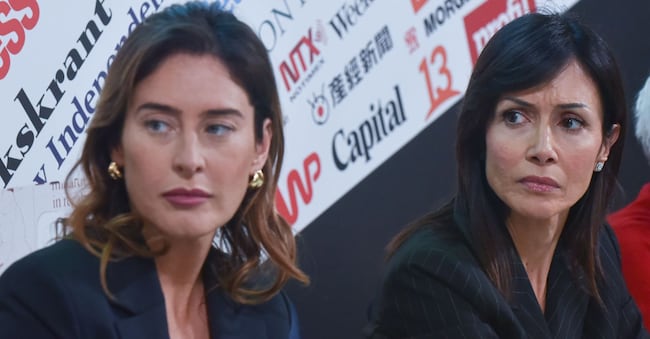
We questioned on the subject of women's policies pursued in the last decade four parliamentarians who in the past have exercised the delegation for Equal Opportunities, now attributed together with those for Family and Natality to the minister Eugenia Roccella: Maria Elena Boschi, deputy of Italia Viva and undersecretary to the Prime Minister's Office during the Renzi government; the president of Azione Elena Bonetti, minister for Equal Opportunities and the Family both in the Conte 2 Executive and in the team led by Mario Draghi; the MP Mara Carfagna, now secretary of Noi Moderati, who was minister for equal opportunities in the Berlusconi government and for the South in the Draghi executive; the Pd MP Maria Cecilia Guerra, deputy minister for labour and social policies with responsibility for equal opportunities in the Letta government and undersecretary for the economy in the Draghi era. Four women close to women. Among them currently only one - Carfagna - is in the majority. A necessary clarification, in light of their statements.
Advances in anti-violence legislation
Stalking in 2009, Code Red in 2019, the offence of feminicide punishable by life imprisonment in 2025. And the White paper for training drafted in 2024 by the technical-scientific committee of the Anti-Violence Observatory of the Equal Opportunities Department: an enlightened compendium of best practices. Where Italy has made an undeniable qualitative leap has been in the legislation and guidelines for combating violence against women, thanks almost always to the ability of women to unite in a transversal front, beyond party and line-up fences. Already since 2009, four years before Italia transposed the Istanbul Convention, the evolution of legislation on the subject has been tangible. Mara Carfagna knows this well. She was the 'mother' of law 38/2009 that introduced the crime of stalking or persecutory acts into the penal code. A revolution for many women. "We have taken enormous steps in terms of legislation: we now have a set of laws at the forefront in the West," she says, "and I also remember those against forced marriages or in favour of orphans of feminicide. From a cultural point of view, we are struggling more: the equality enshrined in the Constitution remains a goal and a hope, it is not yet a fact of reality'.
Risk of backward steps?
For Maria Cecilia Guerra, 'first of all today we should avoid taking steps backwards. Since 2013, with the ratification of the Istanbul Convention and Law 119, which gave it initial implementation, and then with the measures to follow, the awareness that violence against women is mainly perpetrated within domestic walls and in emotional relationships has grown a lot'. But Guerra, like other parliamentarians in the wide field and the network of anti-violence centres, disputes 'the strenuous opposition to the introduction of relationship education in schools and the devolution of the law on consent initially voted unanimously in the House, because they mark a setback on the cultural level, on the one hand, and on the possibility of obtaining protection in trials, on the other, which is very serious and worrying'.
In his opinion, the instruments already in place should be made more effective: 'The woman who reports and obtains the removal or the ban on approaching her violent partner should not be left exposed to the danger of revenge. Women with children, who denounce violence, should no longer risk being separated from their children: criminal and civil justice must talk to each other more effectively and quickly, and the absurd theory of parental alienation, in all the declinations given to circumvent its prohibition, must be vigorously opposed. The issue of the training of all those who come into contact with women who suffer violence and do not always know how to act: magistrates, health workers and law enforcement agencies, must also be tackled and relaunched. Considerable progress has also been made in terms of risk analysis, which is fundamental as a prevention tool'.


