
Ten years after the Paris Agreement world still off course, greenhouse gases on the rise
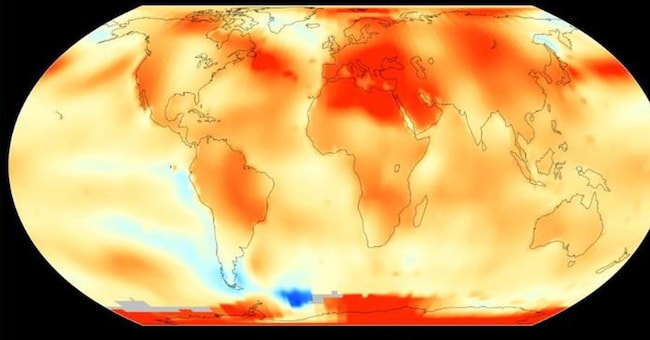
Ten years after the Paris Agreement, Ghg emissions in 2024 are 1.3% higher than in 2023 and 4.7% higher than in 2019

Key points
- Grassi (Ipcc): light and shade picture
- Measure to act
- Forests
A dieci anni dall’Accordo di Parigi le emissioni globali di gas serra (i cosiddetti Ghg) viaggiano ancora fuori rotta. Nel 2024, secondo il rapporto Edgar del Joint Research Centre della Commissione Ue diffuso il mese scorso, il loro aumento è stato dell’1,3% rispetto al 2023: hanno così raggiunto 53,2 miliardi di tonnellate di CO2 equivalente - senza contare quelle derivanti dall’uso del suolo e dalla deforestazione - il livello più alto di sempre. Le otto economie a maggiori emissioni - Cina, Stati Uniti, India, Ue, Russia, Indonesia, Brasile e Giappone - hanno contribuito insieme al 62% del totale. Ma le uniche due aree in controtendenza sono state l’Unione europea e il Giappone. I Ventisette hanno registrato -1,8% portando così la quota sul totale globale al 5,9% rispetto al 6,1% del 2023. Il Giappone le ha ridotte del 2,8 per cento. Tutti gli altri Paesi hanno invece mostrato un segno positivo: +0,8% in Cina, +0,4% negli Usa, +0,2% in Brasile, con aumenti più marcati in Indonesia (+5%), Indi
Grassi (Ipcc): light and shade picture
"The picture,' stresses Giacomo Grassi, the only Italian member of the UN's Ipcc task force on greenhouse gas inventories, 'is one of light and shadow. Global emissions continue to increase due to fossil fuels, but at a lower rate than ten years ago. In particular, he points out, 'in the EU, greenhouse gas emissions have decreased by 37 per cent compared to 1990, while GDP has grown by 68 per cent. This shows that it is possible to combine economic growth and sustainability. While the EU is in line with the 2030 climate objectives, the challenge now is to stay the course, exploiting the opportunities offered by the transition: innovation, competitiveness and greater energy security. Emissions in the US have dropped by five per cent compared to 1990, while China has quadrupled them and Brazil has doubled.
There is still a long way to go. According to the latest Emission Gap report by UNEP (the UN environmental programme), greenhouse gas emissions should fall by 42% by 2030 compared to 2019 levels in order to limit global warming to within 1.5 degrees at the end of the century (compared to pre-industrial times) as required by the Climate Treaty. Last year, however, they moved in the opposite direction, rising by 4.7% compared to 2019.
In this global context, Grassi notes, 'we find ourselves at a crossroads: on the one hand, worst-case climate scenarios now seem less likely, thanks to the transition taking place. On the other hand, the slowdown in the US climate commitment risks slowing down progress, just when it would be necessary to accelerate, bridging the gap between promises and actions'. But beware, he warns: 'The risk of slowing down does not mean stopping. Renewable energies continue to grow worldwide, both in industrialised and emerging countries. The road to a low-emission economy is now marked out and the transition to cleaner energies and electrification is unstoppable, for physical, economic and geopolitical reasons'.
Measure to act
Cruciali saranno gli impegni (i cosiddetti Ndc, nationally determined contributions) che i governi porteranno alla Cop 30, quest’anno a Belém in Brasile dal 10 al 21 novembre. «Un dato interessante – afferma Grassi - riguarda la Cina, oggi il principale emettitore mondiale. Al recente summit dell’Onu a New York ha annunciato l’obiettivo di ridurre le emissioni del 7-10% entro il 2035 rispetto al picco, che si spera sia raggiunto già nel 2025, grazie della rapidissima diffusione di solare, eolico e veicoli elettrici». Il Brasile ha promesso una riduzione netta tra il 59 e il 67% entro il 2035 rispetto al 2005, mentre la Ue, pur ribadendo la sua ambizione climatica, è in ritardo nella presentazione del nuovo Ndc. Per ora i ministri dell’Ambiente hanno approvato una dichiarazione d’intenti, in cui si afferma la volontà di ridurre le emissioni di gas serra tra il 66,3% e il 72,5% entro il 2035.


