
Tennis: those magnificent 29 world number ones
This Sky docuseries profiles the tennis players who have reached the top of the rankings since 1973 – that is, since the rankings were computerised: a retrospective which, in itself, is a history of tennis, albeit an elite one

Jimmy Connors’s mischievous look is the same as it was fifty years ago; Pete Sampras is unrecognisable without his black mop of hair and perpetually shy demeanour; Muster still can’t quite believe he was able to make a comeback after the accident that shattered his knee; Ríos used to draw huge crowds in Chile: these are just some of the 29 protagonists of Aces. The No. 1s in tennis, the four-part docuseries on Sky Documentaries (streaming on Now) that celebrates the tennis players who have reached the top of the world rankings since 1973 – that is, since the advent of the ATP and computerised rankings. In short, ever since recognition became objective rather than dependent on journalists’ opinions.
The retrospective is, in itself, a history of tennis over the last fifty years – albeit an elite one. Archival footage alternates with the voices of the protagonists, as they look back today on the feats of yesterday. They reminisce, comment and lay themselves bare. They reveal what we, whilst enjoying the matches, fail to fully grasp. They explain how they felt emotionally, and they all agree that being world number one is an unparalleled experience. Maintaining that position, however, is the hardest part; you barely have time to savour the feeling before you’ve already become a target – the player to be dethroned.
Unforgettable rivalries emerge. Duels that have defined decades, figures who have left their mark through periods of absolute dominance, only to be forced to make way for their successors and find themselves unable to believe they have lost their unbeaten record. Borg’s topspin against the volleys of McEnroe, Agassi’s flair versus Sampras’s consistency, Edberg’s elegance pitted against Becker’s power. The series, which also features pundits and journalists, opens with the greatest of them all, Ilie Nastase, followed by the Australian John Newcombe, with his forays to the net and his love of the good life. Soon, however, he appears: Jimmy Connors, a competitor who pushed the boundaries of fair play; ‘For me, being number one was everything,’ he hisses. Little did he know he would soon have to contend with a long-haired, handsome and inscrutable Swede, whose name means ‘bear’. Borg was the first player of the Swedish era (by the 1980s there would be five in the top ten) to reach the summit. “I hate losing,” says Björn, conceding defeat to the bad boy Mac, a man destined for greatness, a talent like few others. The impetuous and irreverent American would remain at the top for 170 weeks – an enormous feat – yet there was someone who would soon surpass him by a further 100 weeks. He is a young man from Czechoslovakia; he doesn’t exactly exude charm, but he possesses an unrivalled sense of discipline and the goal of becoming free and wealthy. His name is Ivan Lendl: he makes it – and how he makes it. Until the ice in his eyes and his reign at the top melted away in the face of a relentless tide – that of Borg’s successors. First came the blond, curly-haired, cheerful (and consistent on court) Mats Wilander, then Edberg, a player of rare class with a sensational backhand volley. The 1990s belonged to Stefan and to a German who won Wimbledon at the age of 17 – something almost too incredible to believe. Boris Becker dived in, attacked and triumphed, match after match, eventually surpassing that Scandinavian grace.
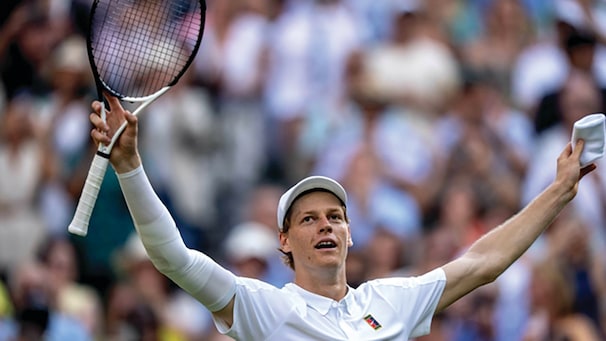
We are still a long way off the big three, who dominated the top spot without interruption from 2004 to 2016. The turn of the millennium and the start of the 2000s brought with them strong but fleeting players, such as Moya or Kafelnikov (a player who won Roland Garros in both the singles and doubles in ’96: who could still manage that?), Rafter or Safin, Kuerten or Hewitt. They might have stood a better chance had it not been for the emergence of a Swiss player who won over the fans like no other, perhaps not even as much as Rafa Nadal, his arch-rival. Roger Federer claimed the record for 310 weeks. When the Spaniard arrived to challenge him for success on all surfaces – and established himself as the greatest on clay – for many years it was thought that no tennis player was capable of beating the two dominant figures. But then Novak Djokovic entered the fray, and he has not yet had his final say. They became a trio etched into the history of tennis. Perfectionism, resilience and a thirst for victory drive the Serb to shatter every record (by the end of 2025, he had reached 428 weeks at the top). There was just enough time for a brief interlude for Andy Murray and – en passant – for Daniil Medvedev, before a new pair of world number ones emerged, a partnership now fractured by injuries: Carlos Alcaraz and Jannik Sinner. Different in character and in their approach to matches, but driven by the same unbeatable desire to surpass themselves. The world is waiting for them in the final to savour the challenge, which is always unpredictable. Only one player’s ailing wrist and the other’s fragile knee could have jeopardised their progress and paved the way, in 2026, for Sascha Zverev: he is the thirtieth world number one (omitted from the list due to space constraints). We’ll see for how long.
Aces. The world’s number one tennis players


