
Teresa Mattei and her fight for a free Florence
4' min read
4' min read
On 18 August 80 years ago in Florence, there was fighting in the streets, house to house, in a city at the point of exhaustion, deprived - with the exception of Ponte Vecchio - even of its bridges destroyed by the retreating Germans. Seven days earlier, an insurrection had broken out that would continue until 1 September, when the liberation from Nazi-Fascism would become definitive. In the meantime, the National Liberation Committee had installed its leadership: Mayor Gaetano Pieraccini, the historic socialist leader, at his side Mario Fabiani, a communist, and Adone Zoli, a Christian Democrat. The councillor for Public Works was Ugo Mattei, an exponent of the Partito d'Azione.
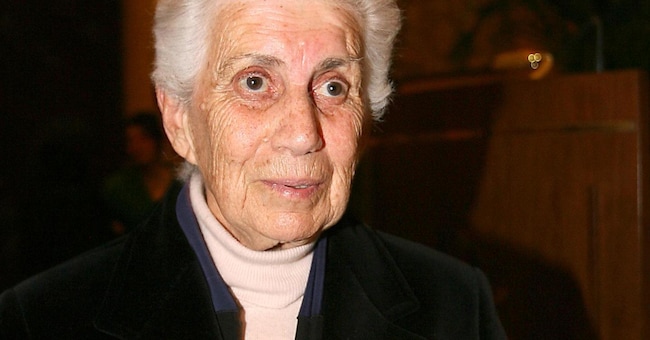
A young woman of 23, unaware of the prominent political role that awaited her but fully aware of the battle in progress, played her part in the guerrilla war: she was partisan Teresa Mattei, the third daughter of Ugo and the Jewish writer Clara Friedmann, who had always been an active anti-fascist in a family where the values of democracy and freedom were the priority. She had absorbed them from an early age, displaying a particular flair and courage, if it is true that when she was 16 her father had sent her on a mission to Nice to bring money to the brothers Carlo and Nello Rosselli.
Not only that: a year later, in 1938, she refused to listen to her science teacher's lecture on the Aryan race, a decision that cost her expulsion from all the schools in the Kingdom (she managed to graduate from private school thanks to the intervention of Piero Calamandrei, a friend of her father's, and then enrolled in the Faculty of Philosophy). It is not surprising that in 1942 Teresa Mattei joined the Communist Party with her brother Gianfranco: both determined to oppose the regime, they found the Pcd'I better organised and more widespread than the other political formations. They were part of the Gap, Patriotic Action Groups, in the front line of the Resistance after 8 September, moving between Florence and Rome.
Information to be passed on, sabotage, bombs to be planted... the partisan Chicchi (this is her battle name) is less conspicuous with her mild air, managing to carry out even the most risky actions. Her brother has a tragic fate: he is betrayed and arrested, along with Giorgio Labò, in the Via Tasso prison in Rome. Gianfranco Mattei is a promising chemist, teaches at the Milan Polytechnic, works with Giulio Natta (future Nobel Prize winner in 1963). It was easy for him to develop the explosives used against the Nazi-Fascists. On 1 February 1944, he was arrested in Via Giulia: he was tortured to such an extent that he committed suicide, fearing he would not be able to stand it. He hanged himself a week later with the belt of his trousers, after writing a note to his parents and brothers, begging them to be as strong as he was.
Teresa Mattei's struggle, further fuelled by despair over the loss of her brother, did not stop. It was she - as she declared in an interview years later - who pointed out Giovanni Gentile to the two Gap exponents who shot him dead in front of the gate of his villa in Florence, guilty of having intellectually legitimised Fascism and of having adhered to the Republic of Salò. It is she who places a bomb near the Arno hotel, where the head of the German police resided ("that time I wore lipstick": no one would have suspected). It was she again who led the Women's Defence Groups in her city, which were multiplying in northern Italy and making an essential contribution to the cause.


