
Termini Imerese is now banking on innovation
Innovation hub launched to support small and medium-sized enterprises. A hearing is to be held today at the Sicilian Regional Assembly on the redevelopment of the former Blutec factory

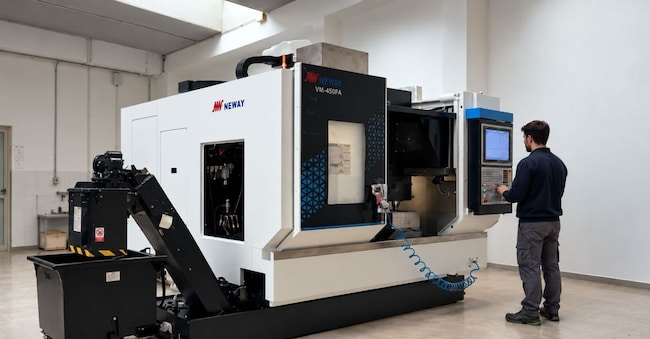
At the Officina 4.0 in Termini Imerese, there is a five-axis CNC machine. A small business can bring in a component design, simulate the machining process and produce a prototype before deciding whether to invest in a machine. This is one of the services offered by the Innovation Hub that Meccatronica Cluster Sicilia launched yesterday in the industrial area near Palermo. In the same area, almost fifteen years after the last car rolled off the assembly line, the future of the former Fiat site – later known as Blutec – remains tied to an industrial plan that has not yet been made public.
The two events took place within a 24-hour period. Present at the centre’s opening were the mayor, Maria Terranova, the chair of the Sicilian Regional Assembly’s Committee on Productive Activities, Gaspare Vitrano, and the regional councillor, Edy Tamajo. “I have seen first-hand the innovation and cutting-edge technologies; I have met recent graduates who have found employment opportunities at the Innovation Hub and entrepreneurs who have returned from the North and are investing here,” said Tamajo. Today at 11.00 am at the Palazzo dei Normanni, the committee will once again address the issue of the former Blutec site. Representatives from Pelligra, Nicolosi Trasporti and Caec, the special commissioners and the trade unions are expected to attend.
In July, Commissioner Fabrizio Grasso had highlighted deviations from the timetable, whilst Sebastiano Caggia, CEO of CAEC, had indicated September as the date for the presentation of the revised plan and reported that around 65 workers were already in permanent employment. By 2024, 350 had been transferred to the acquiring company, which retains only the name ‘Pelligra’: it is now 70.22 per cent owned by Nicolosi Trasporti, followed by CAEC with 19.78 per cent, whilst Pelligra retains a 10 per cent stake. The company was considering a further twelve months of redundancy payments. One possibility remains: a freight village on part of the site, but the question is which businesses will set up there and how many workers will be able to return.
The mechatronics cluster, on the other hand, addresses the challenges faced by companies that are already in production. The Hub, funded by the Region to the tune of 1.5 million euros, provides shared access to 3D scanners, robots and software to identify faults in plant equipment. “The launch of the Innovation Hub represents an important step for businesses: a place where technology, expertise and professional skills are made available to tackle the challenges of digital transformation and artificial intelligence,” says Cluster President Antonello Mineo. Even a company outside the consortium can work with the Hub’s technicians and involve universities, research centres and suppliers to trial a solution. The Academy will complement the trials with courses for technicians and production staff. For SMEs, the aim is to bring onto their own production lines what they can currently test in a shared workshop.


