
Tesla, Musk thinks about artificial intelligence, but now it is necessary to sell cars
Focus. In spite of the bad quarterly report, the stock has made a bang. The bet is on the low-priced electric car: now, however, words must be followed by deeds

5' min read
Le ultime da Radiocor
Gas: sale del 2% a 74 euro, QatarEnergy estende forza maggiore su Lng
Borsa: Europa in cauto rialzo con focus su greggio, Milano parte a +0,1%
***BTp: spread con Bund fermo a 92 punti, rendimento al 4,54%
5' min read
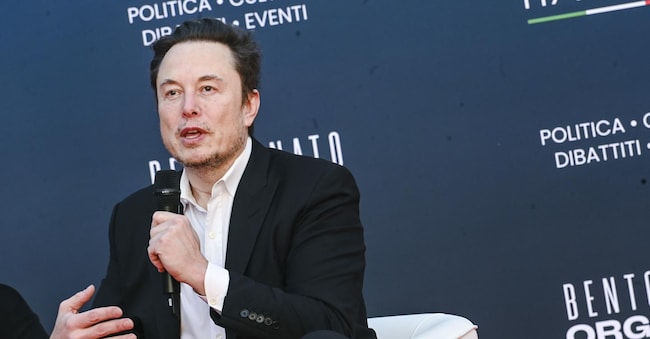
Don the one hand the very negative first quarter figures for 2024. On the other hand, the stock on the stock market, which, after the publication of the quarterly report, soared (+20.52% in the following two sessions). This is the paradoxical context that has recently characterised the world of Tesla. So much so that one wonders: what happened? What happened was that, in between, there was Elon Musk's conference call with investors. A meeting in which the group's founder played a dual character. First, he played the role of manager, promising concrete business developments. Then he assumed the role - more congenial to him - of visionary strategist. A mix that so far has appealed to a large part of the operators.
Low-cost car
.In particular, with regard to the concrete activity as a car maker, the South African entrepreneur indicated that Tesla will be able to launch the long-awaited 'low-cost' vehicle in the first part of 2025. The topic in question, on closer inspection, is not without its thorns for the US car maker. For some time now, in order to cope with the slowdown in sales - due to competition from China itself - the company has been aiming to manufacture an inexpensive electric vehicle. However, at the beginning of April, Reuters reported that Tesla had abandoned its plans for a 'low-cost' car (the Model 2) to be manufactured in its plants in Texas, India and a third state. Musk, for his part, reacted harshly: he called the news agency a 'liar'. Then, during the discussion of the quarterly accounts, he outlined his plans. A plan that, surprisingly enough considering Musk's radicalism, constitutes a compromise. The new vehicle will combine elements of both the current production platform and the 'next generation' one under development. In other words: the cost savings -on this front- will be lower than previously estimated, but the group will also have lower capital expenditure as there will be no new 'low cost' factories to open.
Investors
The speech, to see the reaction on the stock market, was music to the ears of investors. However, in the face of the company's defaults on new products (just think of the Cybertruck's delays), there are those who point out some perplexities. The future low-cost vehicle 'brings with it many questions,' writes Ubs in a report, 'which the company has not really answered. A first question is: "what are" these cars really, "and to which buyer are they addressed?" Furthermore, says Ubs - "a lower cost may not be sufficient due to the lower prices of used Teslas". Finally: 'what is the timeline? Elon Musk mentioned 2025, but Tesla has had difficulty launching even refurbished products in the past'. The Swiss bank's misgivings are not isolated. Morgan Stanley points out that 'the new model strategy seems clearly "scaled back"'. It is an approach 'more akin to Toyota or Kaizen-style "continuous improvement" (...) rather than a major' turnaround. A context where, moreover, 'the Chinese might be able to quickly copy any conventional (non-autonomous) Electric Vehicle (EV) development'. In short: the doubts are there.
The positive option
.True! The stock market - which is always right on the investment issue - has rewarded the approach. More. Several analysts appreciate the new approach. 'I think it's good,' says Elliot Johnson, chief investment officer of Evolve Etf, 'that, on the one hand, the company is not going headlong into a factory expansion project', ignoring the challenges of the market; and that, on the other hand, 'the new model takes advantage of the production lines' already in place. "The intention", then, "to speed up the launch of new models, including the most affordable ones," echoes Madeline Ruid, Research Analyst at Global X, "could be a positive sign". Carmakers that manage to launch "more affordable EV models in the US in the next two years, around $30,000 or less, could gain a competitive advantage". That said, however, the basic objection remains: within the market positivity - represented by the bullish flow in the stock market - there are discordant voices. Comments that, those who are not loyal Musk followers, must take into account.
The visionary strategy
Yeah, keep in mind. With respect to the conference call, it is worth noting - here is the second role played by the South African manager - another front. That of the artificial intelligence platform and autonomous driving. 'Tesla is an Artificial Intelligence company,' Musk commented. Those who do not believe that (the group, ed.) is going to have autonomous (driving) should not invest in it'.


