
Tesla exceeds expectations, cash flow remains positive
First quarter revenues of $22.39 billion, earnings per share of $0.41, free cash flow of $1.444 billion
Tesla reported unexpected free cash flow of $1.44 billion in the first quarter, bucking expectations of a massive cash burn during the period (related to investments in Ai and robotaxis) with shares up 3.4 percent in after-hours trading. Adjusted earnings per share were 41 cents for the period, higher than the 34-cent average of analysts' estimates compiled by Bloomberg. This is the second consecutive quarter in which Tesla's earnings have exceeded expectations. Helping the profit were one-time increases related to warranties and tariffs, along with higher vehicle prices.
The Austin, Texas-based carmaker also reported revenues of $22.39 billion for the three months ended 31 March, up from the same period last year, although slightly below analysts' average estimate of $22.6 billion, according to LSEG data. The figure is still above the analysts' consensus published by Tesla itself in recent days, which set the bar at $21.417 billion. The increase over the first quarter of last year is 16 per cent, with revenues from the automotive business, in particular, rising from 13.967 billion in the first quarter of last year to 16.234 billion this year.
Loading...
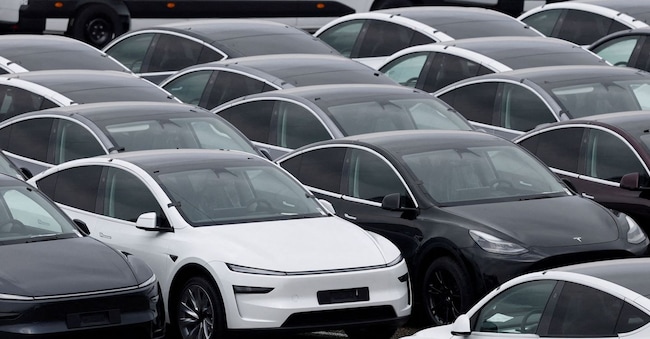
Tesla delivered fewer vehicles than Wall Street had predicted in the first quarter, but deliveries were up 6.3% year-on-year, when protests against Musk's far-right political views had weighed on demand (however, the previously reported figure of an excess inventory of 50,000 cars, produced but not yet sold in the first quarter, weighed on performance). Tesla's core automotive business came under pressure from competitors introducing new models, often at lower prices. The expiry of US tax incentives for electric vehicles accentuated this difficulty. In 2024, Tesla had cancelled plans to build a platform for cheaper electric vehicles, instead introducing lower-priced 'Standard' versions of its best-selling models, Model 3 and Model Y, to attract more price-sensitive buyers. However, analysts have cut their estimates for annual deliveries, with some predicting a decline this year.
The results are an encouraging sign after Tesla reported weak vehicle sales in the first three months of 2026. The company is working to increase production of cars, batteries and robots at six plants, according to plans outlined by CEO Elon Musk in January. At that time, the company said it expected to commit $20 billion this year in capital expenditures, more than double last year's total. Tesla said it had seen "continued growth in demand for our vehicles" in parts of Asia-Pacific and South America, along with a pick-up in North America and the Europe-Middle East region. "We are focused on optimising our product portfolio, with an emphasis on vehicles designed for a fully autonomous future," the company explained. "We have continued the global launch of the Model 3 and Model Y trims, including the introduction of the Model YL in markets outside of China and more affordable versions of both models. We have also begun deliveries of the Cybertruck in the United Arab Emirates and expect to begin mass production of both the Cybercab and Tesla Semi this year.
Wall Street expects the company to deliver 1.67 million units in 2026, which would represent a 2.4 per cent increase, according to data from Visible Alpha. Investors have increasingly turned their attention to the hoped-for push into autonomous driving technology and robotics. Tesla's energy generation and storage unit emerged as a key strength, supported by continued demand for utility-scale batteries that support renewable energy and help stabilise power grids (revenues in this area, however, slowed sharply in the quarter, down 12%). Tesla began rolling out its robotaxis in Dallas and Houston on Saturday, marking a further expansion of its nascent service in the US after launching in Austin, Texas, last year.
Copyright reserved ©


Brand connect
Loading...
