
Tesla sinks on Wall Street. From Musk 'unprecedented damage'
The Texan company seemed to be sheltered from tariffs, but JPMorgan lowered its earnings per share estimate because it put an 'underestimated' consumer reaction into account

3' min read
3' min read
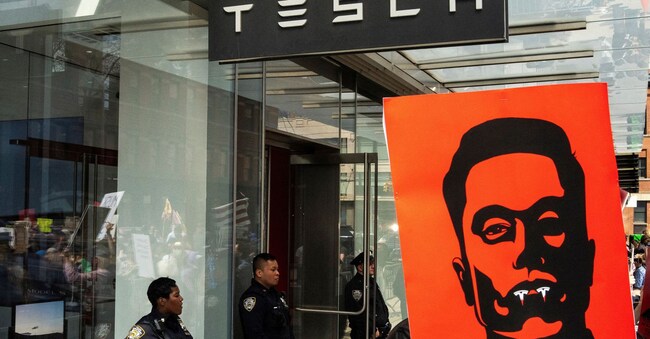
'Unprecedented brand damage'. With these words Ryan Brinkman, a JPMorgan analyst who is one of the most sceptical about Tesla, justified the new cut in the earnings estimates of the group led by Elon Musk. It is a heavy assessment, which reflects not only the more serious drop in deliveries than expected (-13% year-on-year in the first quarter, with peaks three times higher in Europe, contained by the March rebound in Italy and Spain), but also the reputational crisis that Tesla is facing due to the political prominence of its CEO.
The Texan electric car manufacturer is still the most capitalised in the world, with $770 billion. But in the final session of the week it lost even more than 10%. And since the start of President Trump's tariffs, the balance is even more negative.
On 2 April, when the delivery figures were released, just hours after the announcement of new global tariffs in the White House Rose Garden, the markets had reacted with an initial drop in the stock, but it closed sharply higher. The reason? Rumours that Musk is about to leave his position as a super consultant on a 130-day term to return to Tesla.
However, sales quickly regained momentum. Brinkman in its report lowered its earnings per share estimate to $0.36 for the quarter (from $0.40), and to $2.30 for the full year (versus $2.70 estimated by Bloomberg analysts on average). A reduction reflecting a profound change in climate: 'We may have underestimated consumer reaction,' the analyst wrote, referring to the wave of protests and vandalism halfway around the world, from California to Germany. Violent reactions precisely to the political Musk, who on several occasions has expressed his sympathy for positions of the populist and extreme right.
Tesla therefore seems to discount more Musk's outspoken, histrionic, provocative attitudes (e.g. the cheese hat during a recent election rally in Wisconsin, when he also handed out $1 million cheques to two attendees) and the drastic cuts in federal employees, which the prospect of being less exposed to the tsunami of tariffs in the markets. Tesla manufactures all the vehicles it sells in the US in California and Texas. Yet even the Austin-based manufacturer will suffer increased costs for imported components. So much so that Musk was quick to point out that in any case there will be a 'not insignificant' bill to pay..


