
From textile waste to yarns without traceability: seizures in Naples and Prato
Tight controls uncovered irregular shipments of textile waste and yarns without correct labelling, leading to charges and seizures for violations of safety and traceability regulations
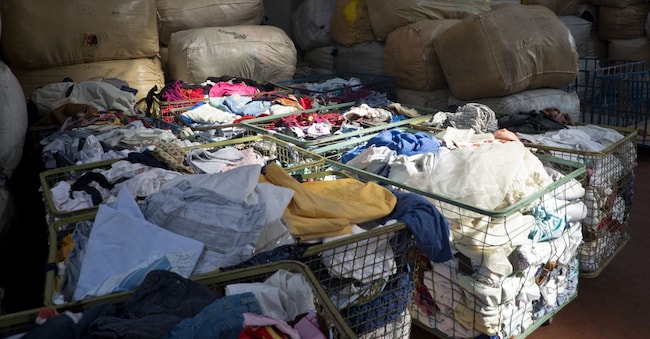
From textile waste to yarns without any traceability. Between ports and warehouses, the clampdown has been triggered with controls and, in some cases, seizures. The latest, in order of time, is at the port of Naples, where officials from the Naples Customs and Monopolies Agency Office, together with soldiers from the Provincial Command of the
Guardia di Finanz seized several containers, destined for Nigeria, containing 1.3 tonnes of textile waste, classified as non-hazardous special waste, which, 'based on the accompanying documentation, should have contained junk items instead'.
Container controls
Two people were also reported during the operation. The seizure was triggered after a series of checks and inspections in which officials from the Adm Office and the Financial Police identified sacks containing used clothing, shoes, and bags, 'coming from the collection activity in urban centres, classifiable as textile waste as they did not undergo the prescribed selection and sanitisation processes'. Moreover, 'The analysis of the documentation submitted by the parties,' the Guardia di Finanza announced in a notice, 'made it possible to ascertain that the two companies that had organised the shipment of the containers did not have the necessary authorisations for waste treatment.
Lights also lit in other EU countries
For some time now, the Guardia di Finanza and the Customs Agency have turned the spotlight on the trade in goods declared as second-hand, instead of being classified as textile waste. This fact was highlighted at the end of the 'Jco Demeter XI' operation carried out for Italia by the Guardia di Finanza and in which customs in other countries also participated.
A Prato yarn operation
In Prato, but it is the news of recent days, in the operation Legal Trade, focused on the control of import chains of products of non-EU origin marketed by wholesale dealers in the district, the military of the Guardia di Finanza, in two points of sale of a company specialising in the sale of yarns for industrial use, placed under seizure 246,860 spools of yarn for industrial use, each 15 thousand metres long. The pieces, according to the reconstruction of the military, would have carried 'labels indicating only the place of production (China), without specifying the necessary details referring to the subjects qualified as importer and or distributor of the goods, which are compulsory by the Consumer Code'.

