
Thaad, how the US anti-missile system that will protect Israel from air strikes works
The new air defence system is designed to strike short-, medium- and intermediate-range ballistic missiles before they impact populated areas or sensitive targets

2' min read
Key points
2' min read
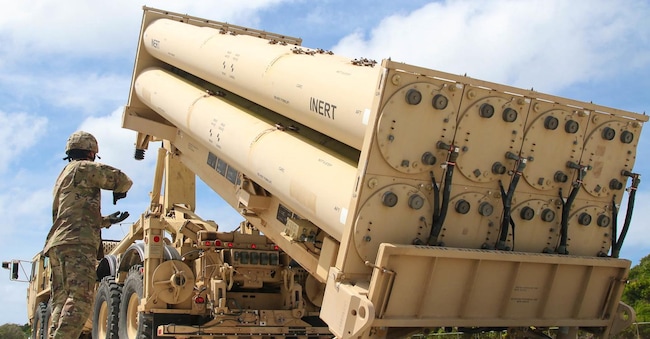
One of the most powerful US anti-missile systems, capable of intercepting missiles even at 200 kilometres, will be used to defend Israel against air attacks. It is called Thaad (Terminal High Altitude Area Defens (Thaad) and it is what will be sent to Israel to upgrade the Israeli air defence system (the timeframe has not yet been indicated) and which could be useful in the event of a new Iranian attack. An extra defence tool also in light of the attack Tehran fielded two weeks ago with the launch of almost 200 missiles.
A system to target ballistic missiles
.The new air defence system is designed to strike short-, medium- and intermediate-range ballistic missiles before they impact populated areas or sensitive targets. 'Thaad has the capability to intercept missiles inside or outside the atmosphere,' reads the descriptive notes on the Lockheed Martin manufacturer's website. 'The system has no offensive capabilities and does not have the capability to strike buildings. In addition, it can operate with other missile defence systems and is easily transported around the world'.
Radar and interceptors
.The Thaad defence system is considered, as also reconstructed by CNN on its site, one of the most powerful anti-missile systems with a capacity to intercept ballistic missiles at distances between 93 and 124 miles, or 150 and 200 kilometres.
It uses 'a combination of advanced radar and interceptor systems' to operate.
One of the characteristics of interceptors is that they are 'kinetic', i.e. they 'eliminate incoming targets by colliding with them rather than exploding near the incoming warhead'.

