
That dream box called the San Siro
Colombo and Monti recount the 100 years of the stadium, a history of football, boxing, business, culture and faith: the country's electrocardiogram

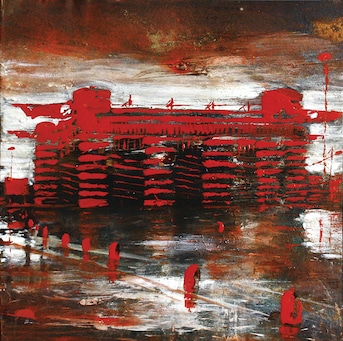
Certain stadiums are libraries of history and stories, of goals, near-goals, tears and adrenaline. San Siro is the Magna Charta of these libraries of grass and concrete, and someone is going to tear it down (will they?) to make room for modernity, albeit in a delayed burst. Whoever signed the deed of 5 November 2025 with which Milan and Inter will pay 197.75 million euros to the City of Milan for the purchase of the area comprising the Meazza and surrounding areas with the idea of erecting a new cathedral to Milanese football, should first have read The San Siro Century in 100 dates (plus one) to remember, written by Claudio Colombo and Fabio Monti. The habit of the two authors - journalists of calibre, facts and figures - with the essentiality of the chronicle (less is more always) makes a history, that of San Siro, even greater, which is not only the history of football, but of business and entrepreneurs, of musical culture and faith. It is the history of the country, it is Italia. San Siro is the track of the electrocardiogram of a Merckx or a Pantani, and it belongs to everyone: 'This book is meant to be a tribute to an important chapter in the great novel of Milan,' write Colombo and Monti. 'A tribute that winds its way through the labyrinths of time, with the tale of one hundred days (plus one) to remember, selected by the authors in a spirit of free will and with many apologies for absences. ... These are events that have consecrated San Siro as one of the most recognisable symbols of the city: the secular cathedral of memory and heart'.
The dates are one hundred like the years of the stadium's existence: on 19 September 1926, Adalberto di Savoia, Duke of Bergamo, inaugurated the San Siro stadium (in honour not of the bishop of Pavia, but of the small church of San Siro alla Vepra in Via Masaccio 20, built in the mid-15th century). The visionary and charismatic Piero Pirelli, president of AC Milan, wanted it with one distinctive feature: it was a stadium just for football, English-style without an athletics track. And the engineer Ulisse Stacchini, who signed the project with Alberto Cugini, questioned him after the inaugural Milan v Inter 3-6 derby: "If the fashion for football were to pass, what would we do?" Pirelli replied seraphically: 'It will never happen. By now, football has broken through in the world'. That stadium, with 26 thousand seats and 9 thousand standing, was built by 120 workers in 13 months, at a cost of 5 million lire. In the beginning it was only the home of AC Milan, not the noble Ambrosiana could leave the central Arena. And already the World Cup semi-final between Italia and Austria on 3 June 1934 was sold out. Pirelli had seen it right: the perimeter of the stands was completed with the curves and the capacity rose to 55,000. It was 1939 and San Siro was just in time to see Piola's handball goal in Italia v England. But the winds of war blew impetuously and, during the conflict, the stadium remained closed, power was low, trams did not run and even Milan played in the Arena.
After the war, it was the Italian national team that reopened San Siro in 1946, where many of the Invincibles played on 30 April 1949, four days before the Superga disaster. The Italia of reconstruction also had time for sport, and architect Armando Ronca designed the second ring in the mid-1950s supported by ellipse-shaped ramps, almost like modernist spindles in the sky of Milan, and the seats rose to 85,000, with the first night match in 1957 thanks to 180 floodlights. San Siro is a cavalcade of aspirations and concreteness, it is a mirror of a reborn Italia. In 1980, the first ring was renovated for the European Championship and the stadium, on the initiative of the newspaper 'La Notte', was dedicated to Giuseppe Meazza. Ten more years, and for Italia 90, the third ring was built.
On the pitch, it is a parade of stars: Piola, Skoglund, Liedholm, Angelillo, Lodetti, Rivera, Mazzola, Pelè, who in 1963 was booed by the players. It is a Panini album of epic matches: grande Torino's last Italian game (1949), Giacinto Facchetti's first goal (1961), Rocco's tears for AC Milan's eighth Scudetto (1962), Inter's Champions Cup against Benfica (1965), the first moviola for a Rivera goal (1967), the unbeaten goals record (1972, AC Milan-Atalanta 9-3), the women's first in Italia-Scotland in 1974 with 10 thousand fans and the 'Corriere d'informazione' writing: "So let's accept the idea that our sisters, wives, girlfriends, girlfriends, cousins, sisters-in-law, wear braghette, t-shirts, (bolted) shoes and play football. What's wrong with that? It's clear that women's football will break through sooner or later in Italia'.
Then came the Milan of Berlusconi, Sacchi and the Dutch, the Inter of the triplete with Mourinho, Zanetti and President Moratti, and also memorable concerts (Bob Marley, Bob Dylan, Bruce Springsteen, the Stones) and the oceanic crowds for Cardinal Martini, Pope Benedict XVI and Pope Francis. And there was the time (and temple) for boxing and rugby and, on 6 February 2026, even the five circles with the opening of the Milan-Cortina Games, so that San Siro became Olympic. Now that a scenic promenade 55 metres above the pitch has been opened, time seems to blur away. Global football requires functional stadiums, business machines, made of skyboxes and fan zones: perhaps it was enough to act as in Madrid or Barcelona, where they renovated Bernabéu and Camp Nou one piece at a time. We have dragged our feet amid quarrels and paperwork and the plan is to build the new San Siro for the 2032 European Championships and demolish the 'old' stadium, leaving only part of the current Curva Sud.


