Intervention

This is why simplification in Europe also needs the contribution of states

Over the past year, the European Commission has embarked on a simplification programme unprecedented in its scope and ambition, with the ultimate goal of ensuring that the Union's rules work for Europe's citizens, businesses and growth. However, the Commission will not succeed in simplifying alone.
by Valdis Dombrovskis*

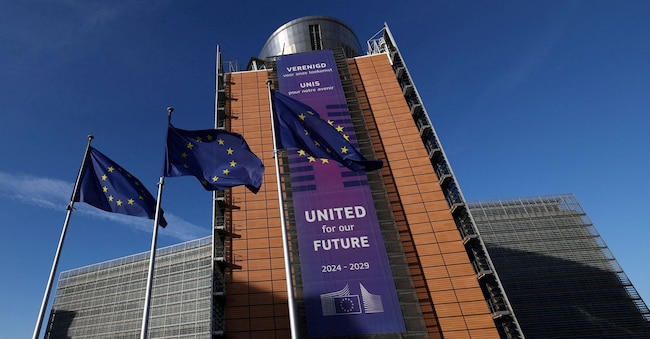
La sede della Commissione Europea a Bruxelles

3' min read

Translated by AI
Versione italiana

3' min read

Translated by AI
Versione italiana

Less bureaucracy and more growth: that is what the European economy needs. Over the past year, the European Commission has embarked on a simplification programme unprecedented in scope and ambition, with the ultimate aim of ensuring that EU rules work for citizens, businesses and growth in Europe.

We are moving swiftly and decisively. Ten far-reaching proposals are already on the table, which should save EU companies at least €15 billion per year. We have done more to simplify EU rules in the last year than in the previous ten.

Loading...

However, this is only the beginning. Determined not only to maintain the momentum but to accelerate it, we have taken the simplification programme to the next level: by 2029 we will review the entire body of EU law to identify obsolete and unnecessary obligations and overlaps, and remove them. Every area will be examined, no stone will be left unturned. This is the 'deep cleansing' that President von der Leyen called for.

However, the European Commission will not be able to simplify on its own; the EU and national institutions must live up to the goal in their actions, from the adoption of legislation in Brussels to implementation on the ground. We must all push in the same direction to achieve a clearer, simpler and smarter regulatory system.

As far as it is concerned, the European Commission has put simplification at the heart of the action, no policy area excluded. As last year, a strong simplification dimension will characterise most new proposals in 2026, and the number of delegated and implementing acts initially planned for 2026 will be reduced by 30%. However, the acts that the Commission adopts each year are mostly technical implementing acts that do not introduce new rules, but explain how to apply existing ones. The point is not to count laws, but to determine whether Europe is evolving in a way that favours investment or complicates it.

The urgency is clear. Today, excessive and often overlapping regulatory requirements increase costs, discourage investment and divert resources away from innovation - a problem particularly acute for smaller companies, which already have limited resources. The cumulative effect stifles overall productivity and growth.

Conversely, simplification creates conditions conducive to dynamism. This is not an ideological proclamation, it is a practical observation. In a recent OECD report, the OECD highlights the underlying problem: in the EU, 3.9 per cent of employees are employed in compliance monitoring functions, compared to just 1.7 per cent doing research. Europe needs more people working in laboratories and fewer stuck filling out forms.

Changes must produce concrete effects, not be merely cosmetic. They must introduce a tangible difference in the daily functioning of businesses and in the lives of citizens. That is why the Commission systematically interacts with stakeholders in different sectors through 'implementation dialogues' and 'fact checks', which allow it to identify what works and what needs to be improved. In 2025 alone, it held more than 50 implementation dialogues, engaging directly with more than 1 000 stakeholders from various backgrounds: companies, associations, national administrations, NGOs.

When businesses benefit from the situation, so will the European economy. Even small changes can quickly produce a multiplier effect: if replicated for hundreds of thousands of small businesses across Europe, the overall savings in time and cost quickly become substantial. Applied systematically, these benefits can cumulate and improve Europe's overall competitive position. Their effect will also be seen on the labour market, as they will create jobs for European citizens.

The major simplification initiative on due diligence and corporate reporting obligations for sustainability purposes will soon become law. It will exempt more than 80 per cent of companies from complex or excessive reporting requirements, protecting smaller companies and redirecting due diligence obligations to where they are really needed. It is a clear example of how smart regulations can achieve the desired objectives and at the same time considerably ease the burden on businesses.

For too long, Europe has experienced lower growth rates than it could and should have. While others are growing faster, Europe is losing economic weight and, in a world where size matters, this makes it more vulnerable and limits its ability to defend its values and interests. In essence, it diminishes its sovereignty.

We tried to push the European economy with the brake on. The result was predictable: Europe has not lived up to its growth potential. Simplification is an opportunity to rectify the course, remove the brake and unleash the full potential of the Union.

*Valdis Dombrovskis is European Commissioner for Economic Affairs and Productivity and for Implementation and Simplification

Copyright reserved ©
Loading...

Brand connect

Loading...

Newsletter

Notizie e approfondimenti sugli avvenimenti politici, economici e finanziari.

Iscriviti