
Capital gains tax at 110 applies only to the portion of the property that has been purchased
As far as the inherited property is concerned, it is irrelevant who carried out the renovation work

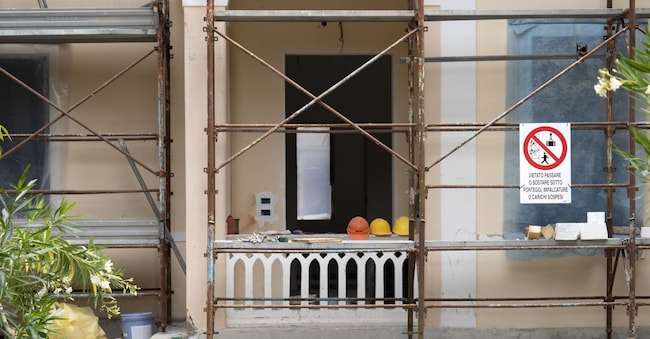
The sale of an inherited property is not subject to tax on the ‘superbonus capital gain’ , regardless of whether the subsidised building works were carried out by the deceased or by the heir , in line with the general rule, pursuant to Article 67(1)(b) of the Tuir, according to which the acquisition of the property by inheritance excludes tout court the taxation of the capital gain on any sale, as it does not constitute a speculative transaction.
This exemption from the ‘superbonus capital gain’ has been definitively clarified by yesterday’s response from the Italian Revenue Agency, No. 158, confirming the indirect interpretation provided by legal scholars, based on response No. 208/2024. In the latter, in fact, the Agency, whilst excluding the application of the ‘superbonus capital gain’ for all ‘properties acquired by inheritance’, did not specify whether this principle applied only if the ‘superbonus works’ had been carried out ‘prior to the inheritance from the deceased’ or whether it might also apply in cases where ‘superbonus works’ were carried out ‘after the inheritance by the heir’; ‘it was precisely this lack of distinction’, according to the document issued by the National Council and the Foundation of Chartered Accountants on 1 July 2025, that legitimately led one to believe that, even in the view of the Italian Revenue Agency, there was no ‘distinction to be made between the two different scenarios’.
However, if half of the property sold was not acquired through inheritance and the other half was inherited (a classic case of an inheritance received from a spouse), the ‘superbonus capital gain’ is calculated on the non-inherited portion (response 208/2024). Answer 158/2026 confirmed that this rule applies even if the superbonus works were carried out not by the co-owner selling the property, but by another co-owner of the same property.
Sworn statement
Furthermore, Answer 158/2026 confirmed that, if the taxpayer is unable to determine the ‘purchase price or construction cost of the asset sold’, they may, for the purposes of determining the capital gain, use the ‘value resulting from a specific sworn valuation report, drawn up by a qualified professional’ and, only in the case of properties ‘acquired or constructed more than five years prior to the date of disposal’, historical values may be adjusted to current prices by revaluing them using the ISTAT index (in line with response 86/2026).
No contribution towards building costs
Finally, yesterday’s response clarified that, if the co-owner of the property who transferred their share has not ‘incurred any expenditure on the subsidised works’ under the 110% superbonus, but these were incurred by another co-owner, who subsequently also assigned the relevant tax credit to a third party, for the purposes of determining the so-called ‘superbonus capital gain’, the ‘purchase price or construction cost of the transferred property cannot be increased by the expenses incurred’ by the co-owner, not even ‘for those components not covered by tax relief’.

