
The fires in 2026 have already destroyed an area almost as large as Rome
2,076 fires since the start of the year. 1,200 square kilometres have been reduced to ashes – just under the area of the municipality of Rome

Key points
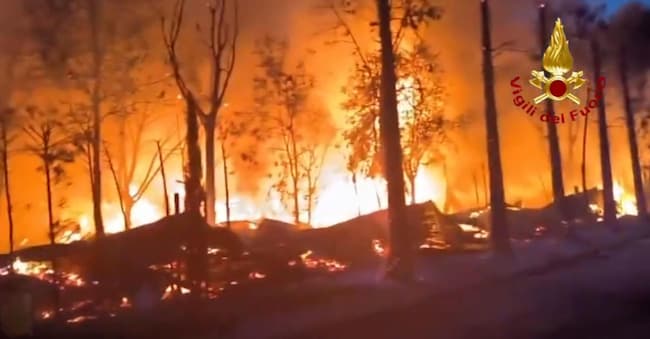
The area burnt by wildfires is increasing. And 2026 is proving to be a particularly critical year in Italia, with the total area burnt among the highest in recent years. From 1 January to 15 September 2026, there were 2,076 major forest fires were recorded, covering a total burnt area of more than 1,200 square kilometres – just under the municipal area of Rome.
200 square kilometres
The estimates, based on updated data from ISPRA on the fires, show that the area of woodland affected by the fires amounts to almost 200 square kilometres (16 per cent of the total area affected by the fires). Specifically, 78 square kilometres of oak and mixed woodland were affected, 65 square kilometres of tall scrub, holm oak and cork oak woodland, 44 square kilometres of evergreen coniferous forest, 0.26 square kilometres of larch forests and 11 square kilometres of unclassified wooded areas.
Sicily hardest hit
As at 15 September 2026, major forest fires were reported in all Italian regions. Sicily was the hardest-hit region, accounting for 55 per cent of the total area burnt nationwide. Calabria and Puglia both account for around 10 per cent. In northern Italia, the worst-affected region is Piedmont (4 per cent), whilst in central Italia it is Abruzzo (4 per cent).
In 2026, too, the province of Agrigento was the hardest hit by wildfires, with a total area burnt of 222 square kilometres and approximately 15 square kilometres of forest affected.
The role of ISPRA
“Today we have data and knowledge that enable us to better understand the scale of forest fires, the damage they cause and their impact on ecosystems, biodiversity and the landscape,” says Maria Alessandra Gallone, President of ISPRA and SNPA. ‘We know what we are up against and what the consequences of fire are for our natural heritage. This knowledge must be translated into concrete action: we have the coming months leading up to next summer to strengthen prevention measures, improve our response capacity and promote more informed land management.’

