
The AI paradox: it drains energy but makes the electricity system more efficient
Growing energy demand threatens to put pressure on an Italia system already dependent on foreign countries

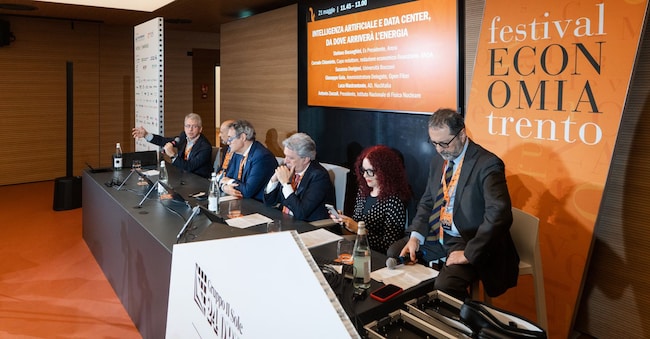
TRENTO - Artificial intelligence is likely to become one of the main drivers of energy consumption growth, but at the same time it could help make the electricity system more efficient. This was one of the themes that emerged during the conference "Artificial Intelligence and Data Centres, Where Energy Will Come From", which brought together managers, academics and representatives from the energy sector. And put opinions and ideas on the table.
According to the former president of Arera, Stefano Besseghini, AI, for example, introduces a kind of paradox: 'Artificial intelligence algorithms also provide a better solution to the issue of how to manage energy. Sure, on the one hand they increase the need for electricity through data centres and digital infrastructure, but on the other hand they offer tools to optimise energy consumption. Besseghini pointed out that Italy's energy system has been at a standstill for about ten years at around 300 terawatt hours of annual consumption, partly due to deindustrialisation. "Electricity consumption in Italia is not growing. That is why data centres and AI are very desirable objects for the energy sector, because they bring about growth in demand,' he explained.
On the infrastructure front, Professor Susanna Dorigoni pointed out that the growth of AI poses technical, environmental and economic problems. "The challenge is not only to cover a growing energy demand, but to adapt the entire infrastructure system," she explained. Not least because data centres require continuous and constant energy, which makes it difficult to power them exclusively with intermittent renewable sources. "The risk is that the use of fossil fuels will also increase".
The topic of digital infrastructure was instead addressed by Giuseppe Gola, CEO of Open Fiber, according to whom Italy has substantially closed the European gap in fibre deployment. Significant gaps remain, however, on the actual use of networks and the adoption of digital services. "Fibre is the fundamental enabling factor" for AI and data centres. It is also 'not powered'. According to simulations quoted at the conference, 'if we completely replaced copper with fibre, we would save around EUR 1 billion per year'.
One of the most discussed topics was nuclear power. Luca Mastrantonio, ceo of Nuclitalia, argued in this regard that the growing energy demand linked to AI risks putting further pressure on an Italia system already dependent on foreign countries. "We start from a short energy system," he explained. "We have been dependent on foreign countries for years and now the variable of AI and data centres is also added". According to Mastrantonio, this infrastructure requires 'continuous, scalable, price-stable and decarbonised' energy. And, in his view, "only nuclear power has all four of these characteristics". With efficient nuclear power 'the overall cost of energy is lower', he said, arguing that this would also indirectly favour renewables.


