
The Airbus cargo aircraft has taken off to compete with Boeing
Even before it went on sale, the A350F had already secured 115 orders from 14 customers, accounting for 60 per cent of the market. The first delivery is scheduled for the end of 2027.
by Mara Monti (Toulouse)
 Aggiungi Il Sole 24 Ore
ai preferiti su Google
Key points
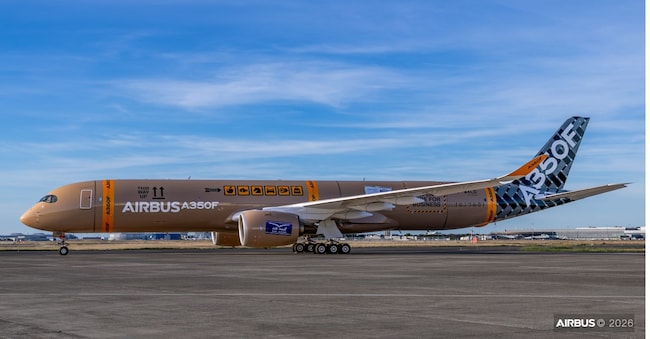
Airbus’s new-generation cargo aircraft, the A350F, took off at 10.30 am from runway 14R at Toulouse Airport, with five pilots on board. After a four-hour flight over France, it returned to the Airbus hangar to begin the final phase – certification – which will take around nine months, before being delivered to the first airline by the end of 2027. “We haven’t yet decided who the launch customer will be,” said Julien Poyou, head of the A350F project, during a briefing in Toulouse. “There are two names on the list: Singapore Airlines and CMA CGM.”
Market trends
The take-off comes two years behind schedule compared with the programme, which began in 2021, immediately after the Covid pandemic, when demand for cargo during the pandemic had effectively saved the airlines’ finances. This trend continues to be sustained even during this crisis triggered by the outbreak of war, which has sent jet fuel prices soaring: in the first six months of the year, demand in the cargo sector rose by 4.7 per cent, despite a 9.6 per cent slump in traffic in the Middle East. Europe stood out during this period, with growth of 5.8 per cent, followed by Africa at 10.9 per cent and Asia at 8.6 per cent.
Airline orders
Even before sales began, the aircraft had already secured 115 firm orders from 14 customers (KLM, Air France, Etihad, Turkish Cargo, Cathay Cargo, Singapore Cargo, Silk Way, Korean Air, Martinair, MNG Airlines, Air China Cargo, Avilease and the latest order from the US-based Atlas Air for 20 aircraft), as well as one unnamed customer. The A350F has thus achieved a market share of 60 per cent, ahead of the Boeing 777-8F.
“Despite these difficult times, the sector is holding up well,” explained Crawford Hamilton, head of cargo marketing. “Demand remains strong, buoyed by e-commerce and the AI boom: both of these factors are helping to cushion the impact of the crisis.”
The launch of a new aircraft is now a rarity in the industry, mainly because manufacturers have to focus their efforts on addressing delays in aircraft deliveries. For the A350F and its passenger version, the A350, Airbus plans to produce 12 aircraft per month from 2028 onwards. The advantage of using the same platform as the passenger version allows airlines to be more flexible in terms of pilot deployment and aircraft maintenance.


