
The algorithm rides: the right bike for every cyclist
The start-up idmatch has developed a bike fitting system: based on the data it works out the best position for the body and configures accessories

3' min read
3' min read
A scientific approach to bicycle positioning through digital. Starting from this idea, two former boys from Romagna, Matteo Paganelli and Luca Bartoli, launched the start-up idmatch, which stands for Identity Matching System, in 2010. Heart and head born in the lands of Pantani, with the venture capital of Bepi Bigolin, a Veneto entrepreneur and soul of the Selle Italia group that used to make saddles for the Pirata of Cesenatico. Capital that since 2016 has helped the development of idmatch until it became what it is today: the global bike fitting system, a reference in the two-wheel industry, which, based on principles of biomechanics and ergonomics, allows every cyclist - from amateur to professional - to find the ideal position that combines performance and comfort. "Our system," says Matteo Paganelli, idmatch brand manager, "is currently the most advanced thing there is for getting into a correct position on a bicycle. Pedalling as well as possible, but above all without hurting yourself'.
3D scanning process
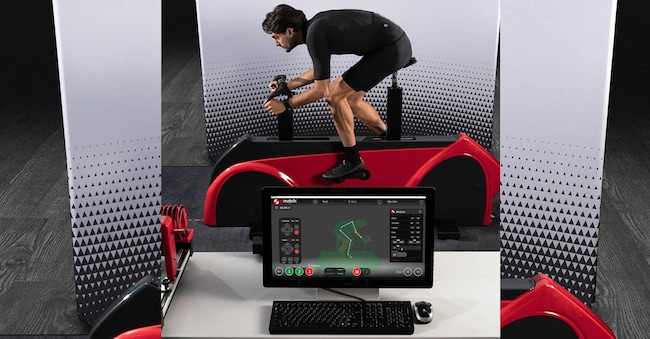
.Idmatch is in fact the first bike fitting analysis system that does not involve the use of markers, i.e. pointers placed on the cyclist's body. But it is based on data acquisition through a 3D scanning process that, thanks to specific proprietary software, automatically recognises the joint points of the joints. The data collected are cross-referenced and deposited in a database on the cloud, which is constantly updated through the data collected in the 260 bike lab idmatches spread around the world today, containing the morphological information of over 85,000 people.
The second stage of the process is the adaptation of the cyclist's morphology to the bike. During the test, the cyclist pedals on a smart bike connected to the digital system that adapts to his or her measurements in real time by combining information from the database with the cyclist's data. 'The core of the product,' Paganelli explains, 'is the cloud with the data collected in the past and in real time that are combined by our patented algorithm and give suggestions to the smart bike based on machine learning - the system self-learns and continuously updates itself - which adapts the position of each body with the most efficient angles in position and performance. Three-dimensional scanning of the cyclist's body also improves the accuracy of the readings and allows movements to be analysed in all three planes of space.
Personalised design
.The result of the analysis allows the cyclist to find the correct position on the bike and the ideal configuration of all accessories for the three contact points: handlebar, saddle and pedals. "We - continues the idmatch brand manager - always aim for comfort as our first goal. Feeling good. From there we work on positioning, looking for the ideal setting to improve performance".
Idmatch allows optimal adjustment for various types of two-wheelers - road, downhill, gravel, time trial, triathlon, mountain bike, track and so on - and allows customisation of the fit in all its aspects, through other digital services developed over the years. Foot fitting: 3D scanning to analyse the morphology of each cyclist's feet with a 3D printing system has perfected the customised production of insoles for bike shoes. Another system developed is the Cleat fit, which allows the millimetric positioning of cleats on shoes.


