
The Fondazione Anno Zero Ets is launched: refurbished PCs and local AI for students to turn electronic waste into opportunities for social inclusion
The Foundation collects devices that are no longer in use by businesses, organisations and private individuals, refurbishes them with open-source software and distributes them free of charge to students, providing them with training courses on how to use the open-source artificial intelligence tools installed locally. The presentation to the Chamber of Deputies

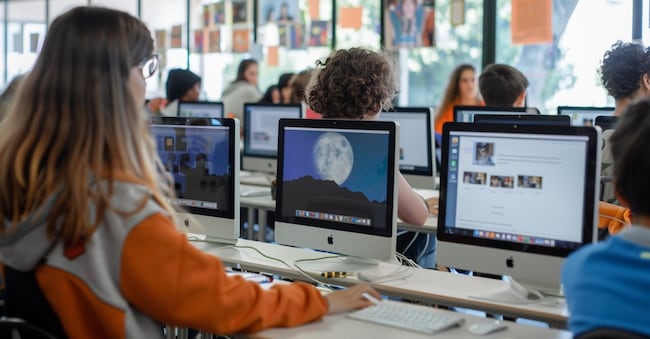
To collect computers, tablets and electronic devices that companies, organisations and private individuals no longer use, refurbish them and deliver them free of charge to those who cannot afford to buy one, along with on-premises artificial intelligence systems and the skills to use them. This is the mission of the newly established Fondazione Anno Zero ETS, a third-sector organisation with its registered office in Milan and operational headquarters in Livorno, which was presented today to the Chamber of Deputies in the presence of several MPs, representatives of trade associations, entrepreneurs and local authorities.
Processing and the supply chain
Every donated device undergoes the same verification and refurbishment process, without exception, and is then delivered free of charge to children, families, students, the elderly, migrants, schools and third sector organisations. It belongs to the recipient, with no fees or subscriptions. Along with the device, the Foundation provides digital training programmes and artificial intelligence tools that run locally on the device itself. The first project will take shape in Livorno, in collaboration with a local school.
‘Never before have we been surrounded by so much technology, and never before have we possessed so little of it,” explains Andrea Arienti, president of the Anno Zero Foundation. “Studying, working and accessing public services today all happen via a screen, and those without the tools and skills are excluded from part of civic life. Our response starts with devices that already exist and are thrown away, and extends to artificial intelligence that operates in people’s homes, under their control. We want technology to be a tool entirely in the hands of those who use it.”
The figures behind the problem
In companies and organisations, the replacement of IT equipment follows renewal cycles determined by commercial and accounting considerations rather than by the actual condition of the machines, which in most cases are still fully functional at the time of disposal. In 2025, the volume of commercial electronic waste processed in Italia rose by 18.2 per cent compared with the previous year (2025 WEEE Management Report). At the same time, data on Italian schools highlight just how widespread the lack of digital tools is.
According to the report “Artificial Intelligence: An Educational Challenge” by the Con i Bambini-Openpolis Observatory, only 40.7 per cent of state school buildings have a computer room, with this figure falling to 33.8 per cent in the most remote municipalities. When it comes to artificial intelligence, Italia ranks third from last in the European Union: 51.9 per cent of young people aged between 16 and 19 have used generative AI tools in the last three months, compared with a European average of 66.4 per cent. And amongst Italian teenagers who do not use them, 8.6 per cent say they do not do so because they would not know how, a proportion higher than the European average of 7.3 per cent.

Brand connect


Newsletter Scuola+
La newsletter premium dedicata al mondo della scuola con approfondimenti normativi, analisi e guide operative
Abbonati