
Armory show with optimism and openness

3' min read
3' min read
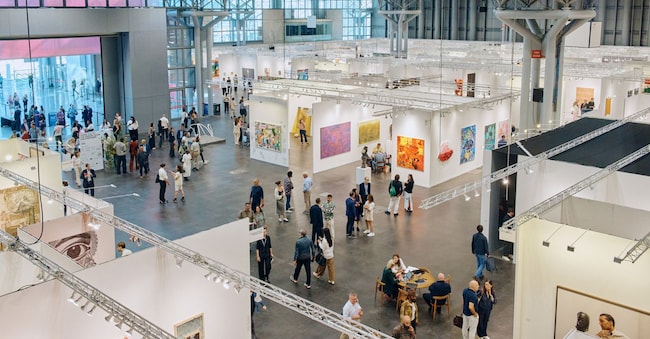
In the global calendar of fairs, the Armory Show continues to stand out as more than a place of exchange: it is a laboratory of languages and perspectives that influences the way museums, critics and collectors imagine contemporary art. What was once regarded as an art supermarket is now a device capable of directing curatorial priorities and broader cultural conversations. The 2025 edition clearly demonstrated this, offering a solid and well-structured layout.
The fair did not limit itself to the usual formats. Alongside Galleries and Solo, Function and Platform were redesigned to accommodate hybrid practices and independent looks. Presents, reserved for younger galleries, proved to be the beating heart: new and sometimes risky proposals that gave rhythm and vitality to the fair. Focus, curated by Jessica Bell Brown, focused on the US South, no longer as a cultural periphery but as a generating centre of multicultural stories and diversity. The works of RF. Alvarez, Aineki Traverso, Baldwin Lee, and Gee's Bend's famous quilts intertwined social memories and affective genealogies, restoring complexity to an often reductively narrated territory. Platform, curated by Raina Lampkins-Fielder with the Souls Grown Deep Foundation, continued the reflection with installations by Thornton Dial and Mary T. Smith. Function finally showed how art and design can dialogue in new and harmonious ways at the boundaries of classical definitions.
If painting occupied most of the stands, not always with memorable results, it was textiles that imposed itself as the language of renewal. Secrist|Beach focussed on Jacqueline Surdell, who presented a monumental rewriting of Giotto's Last Judgement (1303-1305) in ropes and printed fabrics: a vibrant work in which historical stratifications and political urgencies intertwined. Retro Africa surprised with the freedom with which it explored black aesthetics, constructing an unconventional discourse. Baro Galeria chose a minimalist but incisive reading of Joanna Vasconcelos. Patel Brown presented Alexa Kumiko Hatanaka with works on paper that combined traditional techniques and strong sign intensity, evoking the union of environmental and psychological fragilities.
Italy too made its voice heard with consistency and variety, confirming the vitality of a scene that knows how to move between research, tradition and new urgencies. Studio G7 brought Franco Guerzoni's meditative depth to New York: layered surfaces of lime and pigments evoked frescoed walls consumed by time, fragments that resurface and immediately seem to dissolve. Not a simple archaeological evocation, but a poetic reflection on the passing of time and the fragility of visual memory: works that ask for slow listening, far from the clamour of the fair. Secci Gallery chose painting instead, proposing a dynamic stand that investigated the shifting boundary between abstraction and figuration. Here painting appeared unstable, traversed by erasures and fading, a sign that the medium remains a perennial workshop of reinvention. Francesca Minini presented a body of work including Francesco Simeti, who was able to transform the innocuous beauty of ceramics into a political medium. The strength of the work lay precisely in this short circuit: baroque seduction coexists with criticism, producing fascination and disorientation. Together, these three presences delineated a multifaceted Italy, offering an image capable of questioning rather than pleasing, confirming the solidity of the country in the international dialogue that the Armory Show stages.
What emerged from this edition was a tone of openness and optimism. Director Kyla McMillan, in her first fully staged edition since the takeover of Frieze, gave the fair clarity and an inclusive scope, capable of bringing together emerging and established, minority voices and established traditions. The Armory Show thus avoided the showcase effect, presenting itself as a living organism traversed by stories and materials. In a panorama in which many fairs appear repetitive or shamelessly court sensationalism, this edition reaffirmed the Armory's role not only as an unmissable marketplace, but as a sensitive mirror of the cultural present.

