The Armory Show six-figure art sales
The fair season starts again, with Frieze and Art Basel in the spotlight. In New York, the event seeks to attract new collectors from other American cities and focuses on proposals by local curators


4' min read
Key points
4' min read
The 30th edition of The Armory Show (6 to 8 September at the Javits Center) closed with over 50,000 visitors and marked some important steps in the history of the contemporary art fair. It was the first edition under the leadership of the new director, Kyla McMillan, who was appointed at the beginning of June, and a full year - the takeover took place in the summer of 2023 - within the Frieze brand owned by the Endeavor Group, which, in the US, also acquired the Chicago Expo. Only time will reveal the impact of these changes on New York's longest-running art fair, which has always attracted visitors from the most important regions of the United States and North America. However, what is worrying are two aspects of the art market, namely we are at a time when people are reconsidering fairs and at the same time the autumn art market calendar is becoming increasingly busy, leading collectors in the current slowdown to make more considered choices. Frieze Seoul was held concurrently with the American fair, then back to the Old Continent with Frieze London (also owned by Endeavor) and Art Basel Paris a few weeks later.
Some 235 galleries participated in The Armory, of which 55 for the first time, from 30 countries, and as in previous editions, none of the "mega" galleries - David Zwirner, Gagosian, Hauser & Wirth and Pace Gallery - participated. Despite the global appeal for The Armory, the link with New York is still very strong, even though it is trying to attract new art collectors from Philadelphia, Baltimore and Washington, as well as entrusting a number of historic local curators with the organisation of the various sections.
The Sections
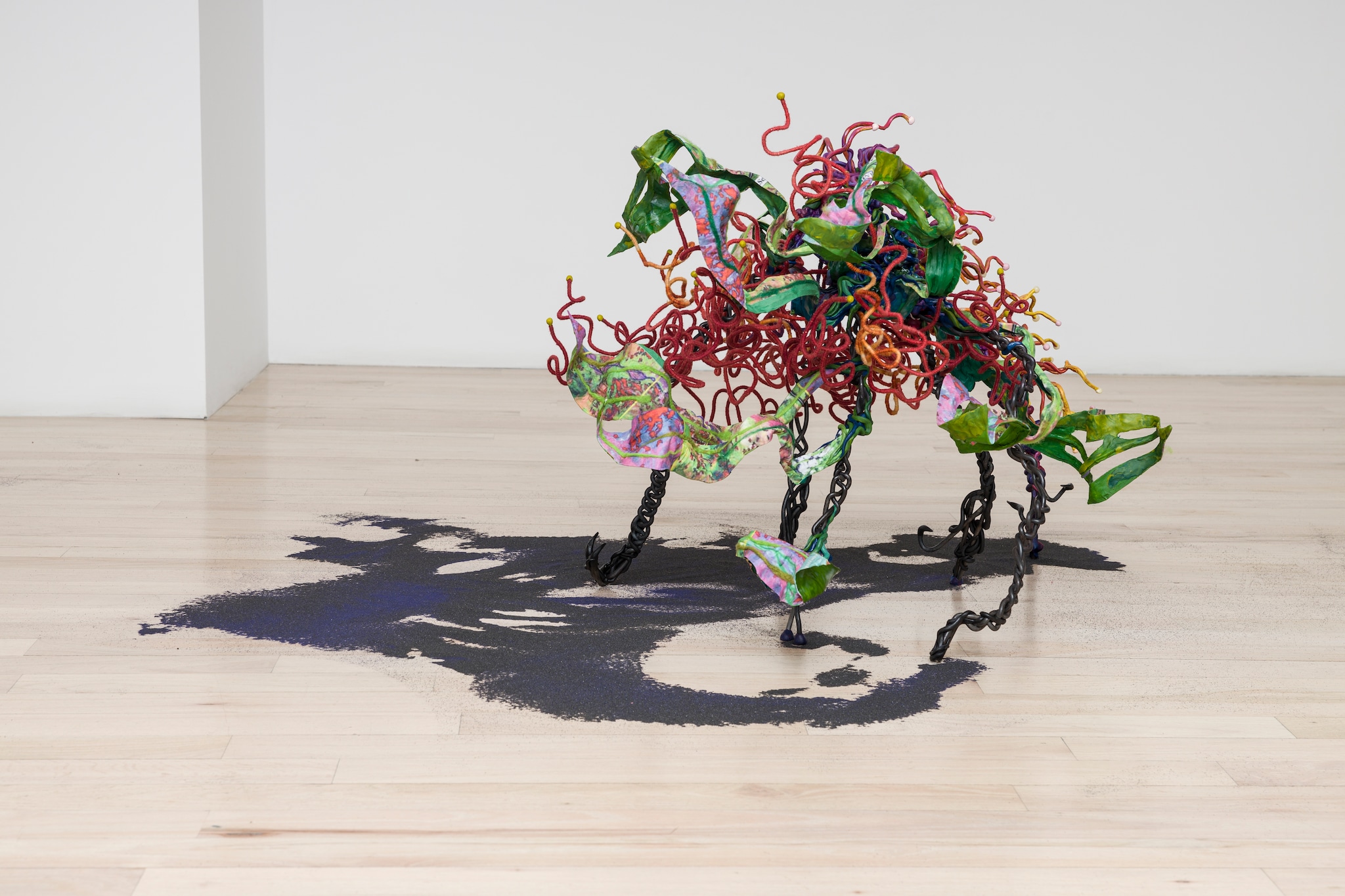
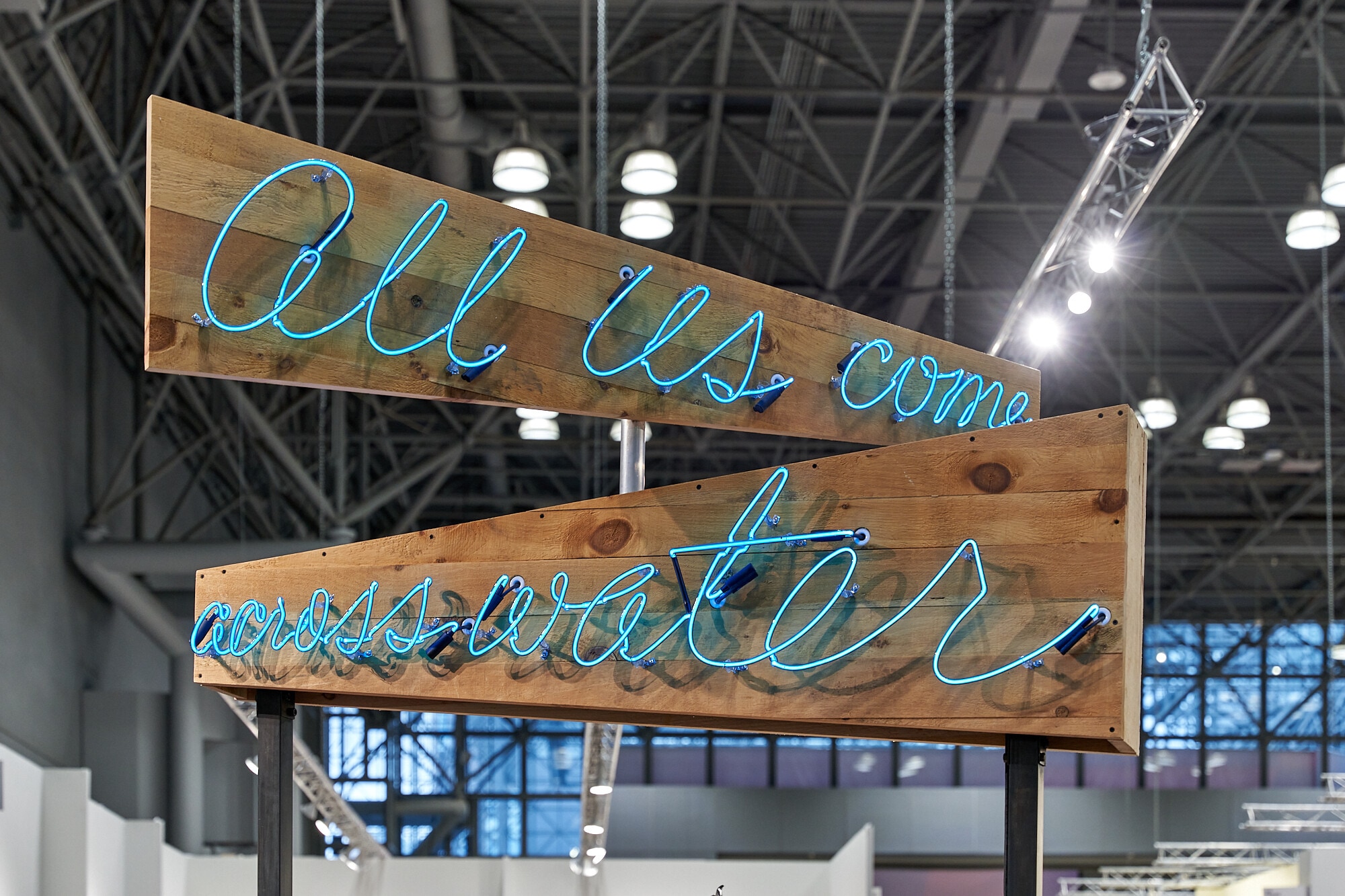
.Among them Eugenie Tsai, long-time senior curator of contemporary art at the Brooklyn Museum, proposed in the Platform section 'Collective Memory' 12 installations aimed at rethinking the narratives of art history. Among the sculptures was Joana Vasconcelos's giant fabric work adorned with LED lights and handmade crochet, initially created to stimulate conversation between high fashion and the domestic crafts often associated with women. Another work, 'The Landing', a rotating neon sign informs us that 'we all cross water' along with woven ceramic sculptures. Created by artist Anina Major, born in the Bahamas and living in the United States, who learnt the technique of weaving from her grandmother, a straw seller at the market, the work won the Pommery 2024 prize worth $25,000. Other artists in the section included Nari Ward, Sanford Biggers, Karon Davis and Nicholas Galanin.
Robyn Farrell, senior curator of The Kitchen, organised the Focus section, which pays tribute to the 'experimental' or research spirit of the inaugural fair in 1994, but also to the first 'Armory Show' in 1913 (called the International Exhibition of Modern Art), where avant-garde European art shocked and amazed the American public.
Lauren Cornell, chief curator of the Center for Curatorial Studies at Bard College, curated the conference programme 'Curatorial Leadership Summit. Summit', which was attended by artists such as Isaac Julien, one of the stars of the recent Whitney Biennial, who was present with a black-and-white video installation in Victoria Miro's booth (the gallerist sold five of the six editions of Once Again... Statues Never Die, 2022 for between $350,000 and $450,000).